The Phantom · A personal reflection
Rex: The Boy Who Was Simply There
Memories of the Phantom’s foster son, and a few thoughts about the place Lee Falk gave him.
Meeting Rex out of order
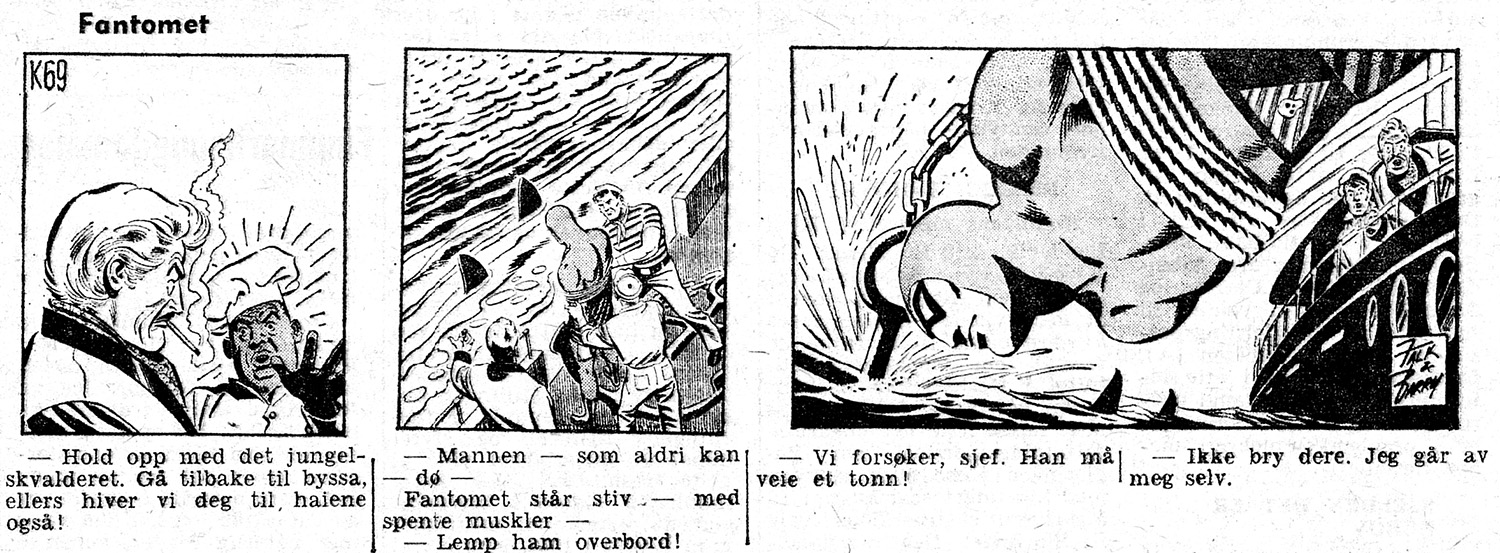
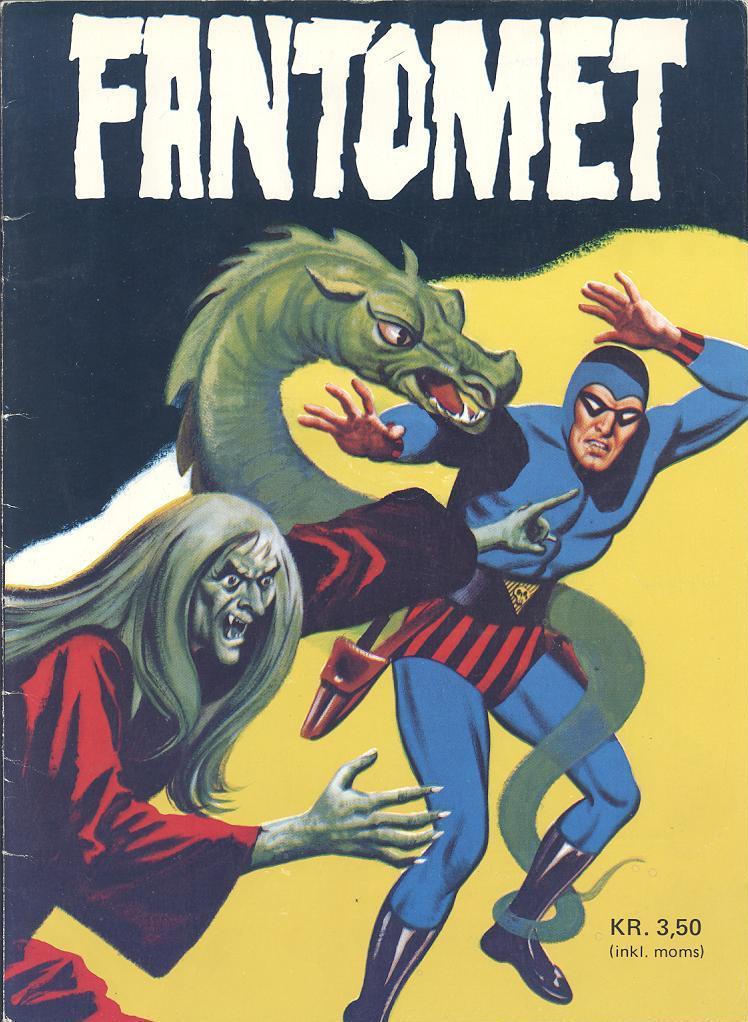
For many of us who grew up reading the Norwegian Fantomet magazine, the Phantom’s world arrived in an order quite different from the one Lee Falk had written. We read what the magazine chose to publish, without necessarily knowing where a story belonged in the newspaper strip. Rex is a good example.
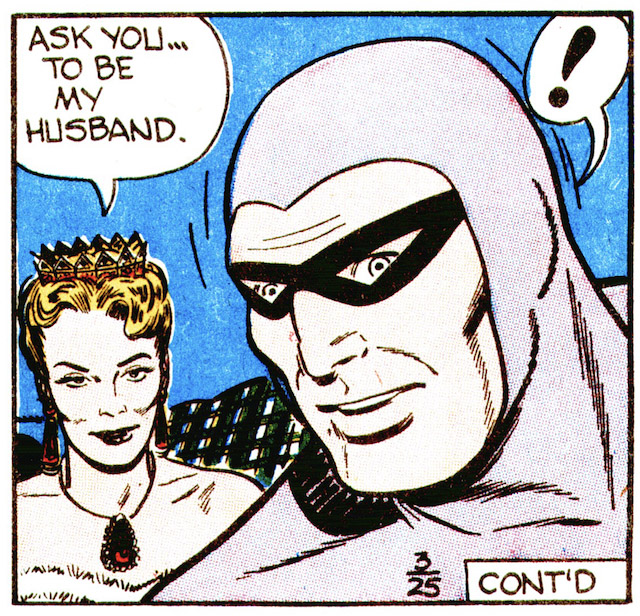
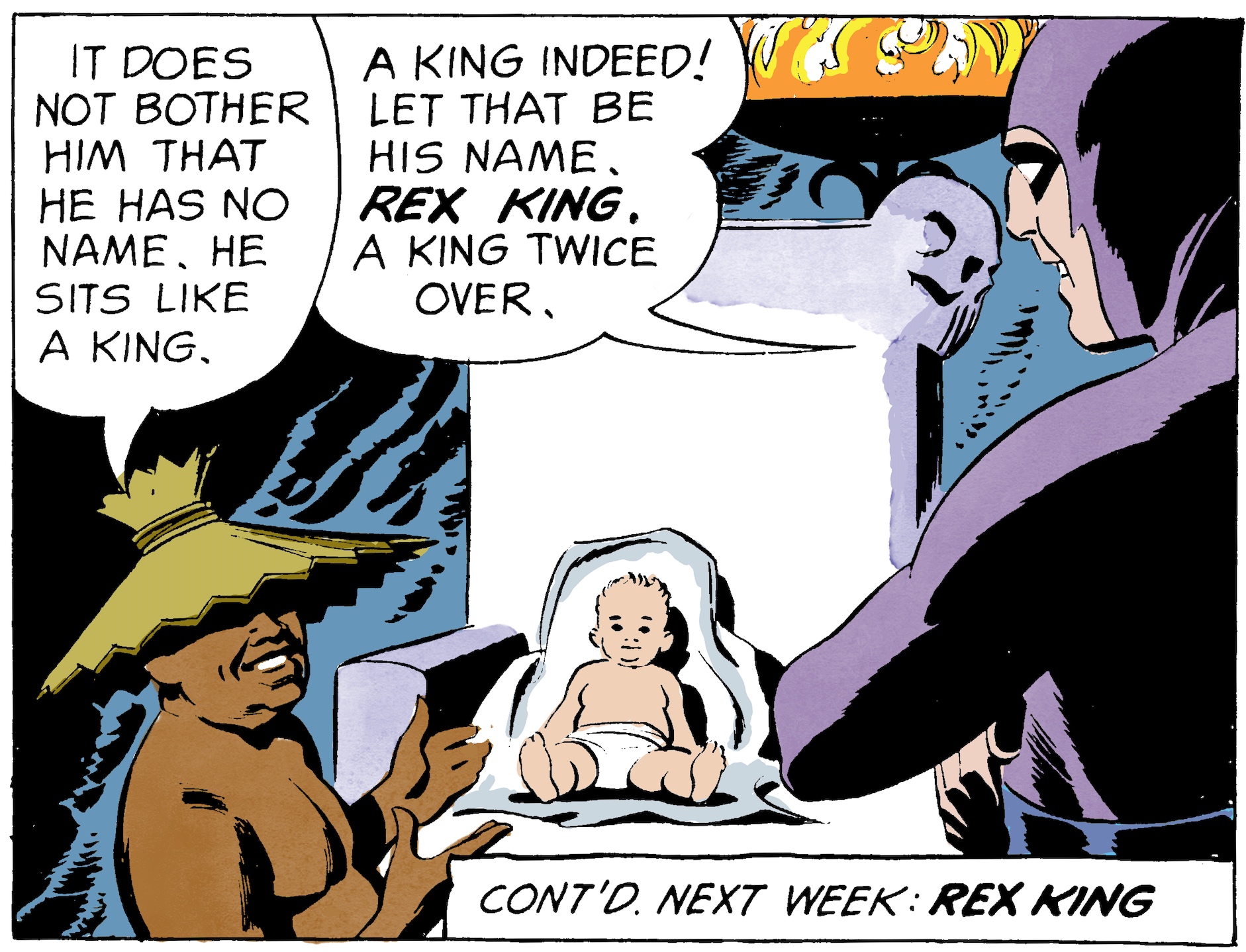
Falk and Sy Barry introduced him in S068 — Rex King, published in American newspapers from 15 May to 11 December 1966. Yet, although the Norwegian magazine printed several Sunday adventures in black and white, rearranged for the comic-book format, this particular story did not appear there until 2001.
The first Rex story in the Norwegian Fantomet was instead D106 — Rex, the Missing Heir, originally published from 23 June to 4 October 1969, and printed in the magazine in 1971. More daily and Sunday adventures featuring Rex followed. As far as I remember, we accepted him without much further explanation.
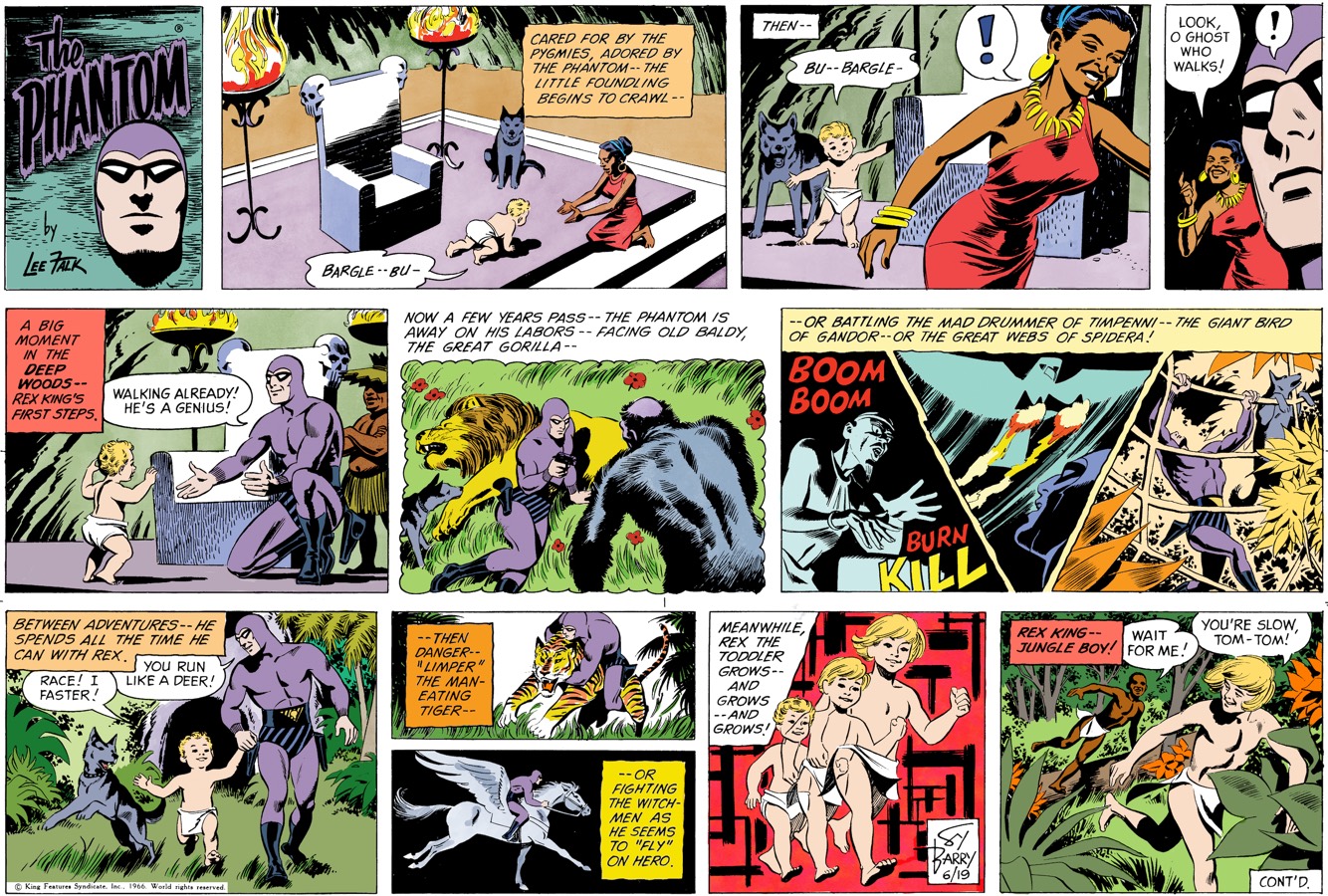
I cannot honestly remember whether I was puzzled. Rex was simply there. He belonged in the jungle, he belonged with the Phantom, and that seemed enough.
The colour annual carrying 1977 on its cover finally gave us the 1966 introduction as Hittebarnet. The album was actually published in 1976, a small distinction worth making when looking back through the Norwegian editions. My memories concern the magazine and albums I read; they are not a claim that Rex had been absent from every other Norwegian publication.
Reading the introduction later filled in a gap. It also reminded me how easily a young reader accepts a character long before learning where he came from.
Why a boy in the Deep Woods?
Why did Falk bring Rex into the strip?
I have wondered whether his own family life influenced the decision, or whether he wanted to give the adventures a stronger appeal to children. I have not found a statement that connects Rex’s arrival to a particular event in Falk’s family. What we can see is what the character made possible.
Rex gave Falk another way into an adventure. A boy could ask about a strange object, an old jungle saying or something in the Chronicles, and the Phantom could answer with a story. His curiosity provided a natural reason to explain things that adult characters might already understand.
He could also get into trouble himself. Together with Tom-Tom, Rex gave us a child’s view of the Deep Woods: a place of friends, discoveries and extraordinary animals, with danger never very far away. Kateena the lioness and Joomba the elephant belonged naturally in this world. For a young reader, the idea of having such companions hardly needed explaining.
To me, there is an obvious family resemblance to the jungle boys of other adventure stories, including those associated with Tarzan. I see that as a comparison, rather than proof of a particular influence on Falk. Rex fitted comfortably into the adventure reading of the sixties and seventies.
He also showed us the Phantom caring for a child long before the wedding and the twins. The man who frightened criminals could be patient, protective and willing to explain. That added something valuable to the character without requiring every story to become a family adventure.
An heir to the Phantom?
The question of an heir is more intriguing.
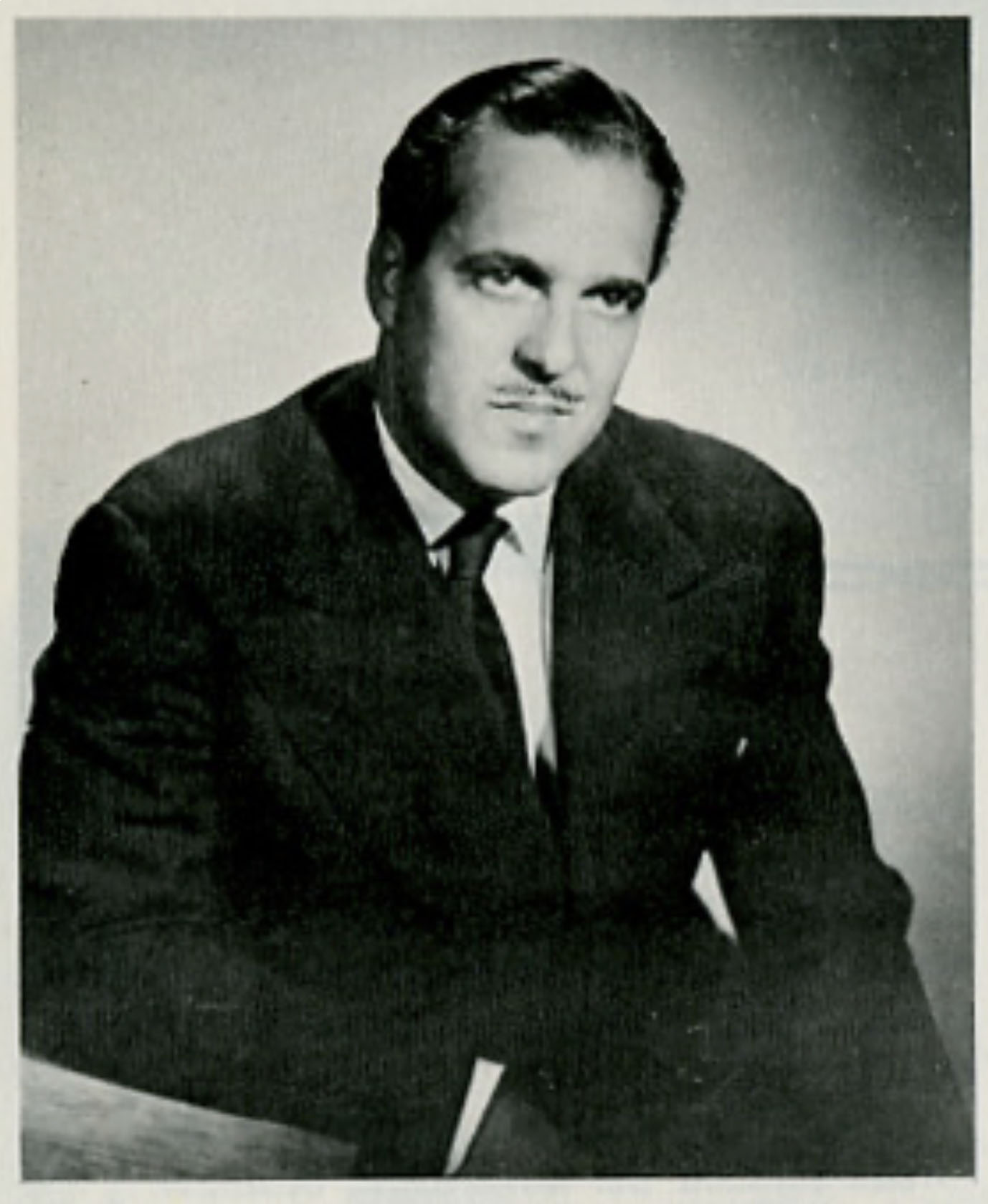
In a published account of Falk’s 1964 interview with Alain Resnais, Falk is described as being reluctant to marry the Phantom and Diana. He remembered losing some of his enthusiasm for Tarzan when Tarzan became a husband and father, and said that he had considered finding an heir for the Phantom in another way.
That is an interesting thought to set beside Rex’s introduction two years later. It leaves room to wonder whether a foster son might once have offered Falk a possible answer. It does not establish that Rex was created to become the next Phantom.
As a reader, I can see why the possibility is attractive. Here was a boy growing up close to the Phantom, learning from him and sharing his world. But belonging to that world and inheriting the mask are two different things. I would hesitate to turn a possibility into a plan that Falk had definitely settled on.
Perhaps Rex offered useful opportunities without Falk needing to decide his entire future. A continuing strip can develop one story at a time. Not every promising character has to arrive with a final destination already chosen.
Rex in the Scandinavian stories
For Norwegian readers, Rex also became familiar through the stories produced by Team Fantomen, alongside the newspaper adventures. Those are separate contributions to the character, even when they use much the same setting and relationships.
My impression is that the Scandinavian writers generally made good use of what Falk had supplied. Rex could take a leading role, explore with his friends, cause concern for the Phantom or provide the starting point for a tale from the past. In that respect, they continued a pattern that had worked well before the Phantom’s marriage.
A closer look at the Egmont stories has shown me Rex and Tom-Tom still being used as two young boys as late as 1987, and possibly beyond. Team Fantomen continued to let their questions introduce a story and to involve them in the adventures themselves. My impression, however, is that fewer stories gave them the leading roles. Their usefulness had not disappeared, even if their place in the storytelling had become smaller.
One concrete example is The Boy Detectives from 1982, written by Donne Avenell and drawn by Georges Bess, in which Rex and his friends want to investigate crimes after reading Sherlock Holmes. It is an easy idea to understand: children trying to put their reading into practice, with the Phantom nearby when the adventure becomes serious.
I cannot point to one particular Scandinavian change that, for me, defines Rex. What I remember more strongly is his continued presence. He was part of the familiar cast, and there was plenty a writer could do with him.
A different inheritance
After the Phantom married Diana in 1978 and the twins arrived in 1979, the family had changed. Looking back, I feel that Rex’s position became less straightforward. With several children around the tree house, there was a risk that their roles would overlap.
For my part, the wedding felt a little premature. I think the Phantom and Diana could quite comfortably have waited a few more years. That would have left more room for Rex in the King Features newspaper stories, much as the Swedish writers continued to use him and Tom-Tom. Rex still offered plenty of possibilities as a boy growing up in the Phantom’s world, and I would have liked Falk to explore more of them before moving on to the next stage of family life.
Whether Falk felt the same way is another matter. That is my reading of the situation. What he actually did was give Rex a family history and an inheritance of his own.
The earlier Rex, the Missing Heir had already explored his wish to find his parents, through people who falsely claimed to know his identity. The decisive answer came in D149 — Tale of Rex, published from 18 January to 11 September 1982. Rex’s mother was Lisandra, the daughter of the ruler of Baronkhan. She had died giving birth to him, and his father had died shortly afterwards. His grandfather was still alive, and the lost boy proved to be his heir.
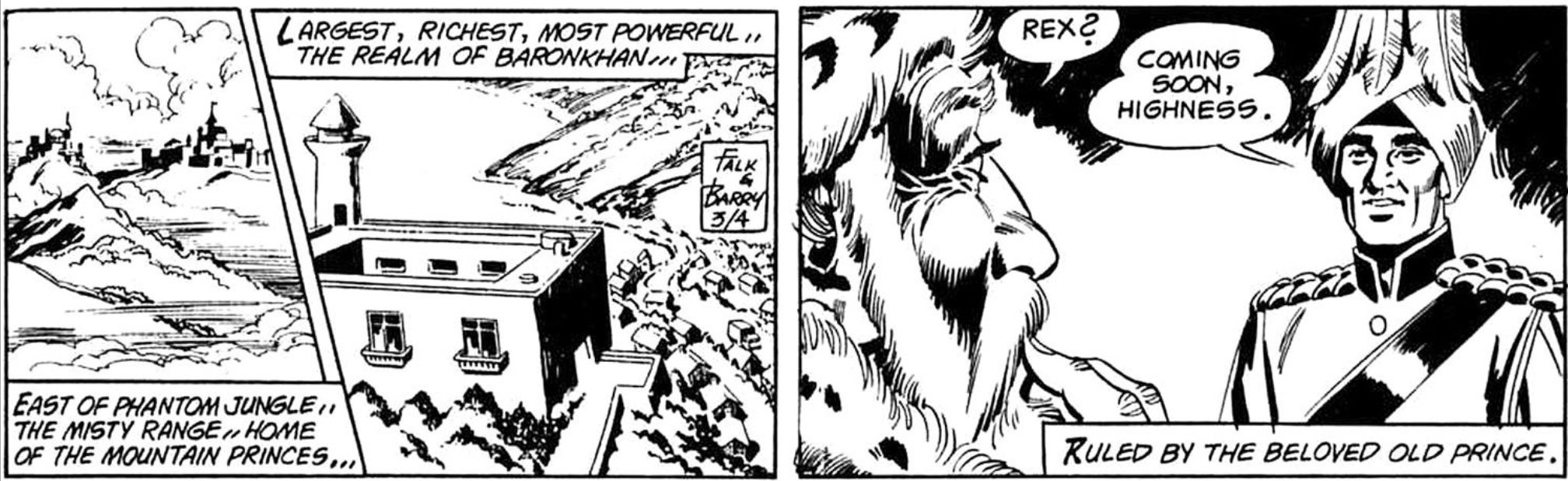
Further adventures developed the connection with Baronkhan. In D159 — Ruler of Baronkhan in 1986, the grandfather’s death made Rex the ruler himself.
This seems to me a practical and quite imaginative way of moving him out of the centre of the Phantom’s household. Rex acquired duties, relatives and enemies of his own. The Phantom still had reason to help him, while palace intrigues and threats to the young ruler supplied new adventures.
Rex had become an heir, after all. The inheritance was a principality rather than the Phantom’s mask.
Still part of the family
Eventually, Rex seemed to become a quieter presence. There were further stories, but he no longer occupied quite the place he had held in the jungle adventures I remembered.
He was not forgotten. Falk developed his relationship with Princess Alicia, and later writers returned to his responsibilities and romantic life. Tony DePaul’s The Love Triangle, drawn by Paul Ryan in 2009, brought Alicia and Captain Lara into that part of his story. Team Fantomen also continued to revisit Rex and Baronkhan, including The Man with Six Fingers by Claes Reimerthi and Alex Saviuk in 2017.
For me, though, Rex will always be connected first with the Deep Woods: the boy with his friends and animals, asking questions and occasionally finding more adventure than he expected.
I met him before I properly understood his introduction. Perhaps that is why he never seemed to need one. Rex was simply there, and for a young Norwegian reader, that was enough.