Explore and save favourite stories →
Phantom Stories That Have Stayed with Me
Personal favourites from a lifetime of reading the Phantom stories.
A story can become a favourite for many different reasons. When you first read it, and what stayed with you afterwards, can matter as much as its reputation. The earliest adventures, such as The Singh Brotherhood (D001) and perhaps The Phantom Goes to War (D016), may be very good stories. But I had already been reading the Phantom for well over ten years before I encountered them. By then, other adventures had shaped my attachment to the strip, and these early stories never quite inspired the same enthusiasm in me.
This is a personal selection, arranged chronologically by the original starting dates. Their order reflects when they appeared, rather than how I would rank them. Some belong here because of childhood memories, some because I appreciate them more as an adult, and others because they introduced something important to the Phantom’s world. There is no fixed number, and the selection may grow or change as I return to the stories.
All were written by Lee Falk. The artists brought different qualities to his stories, and the relationship between the drawings and the storytelling is part of what I want to explore. Both daily and Sunday adventures are included.
The Ray Moore years
Ray Moore’s early drawings have a distinctive atmosphere. Their appeal to me has grown with time. I came to these stories later, and my appreciation of their style is consequently different from the attachment I formed to McCoy through my earliest reading.
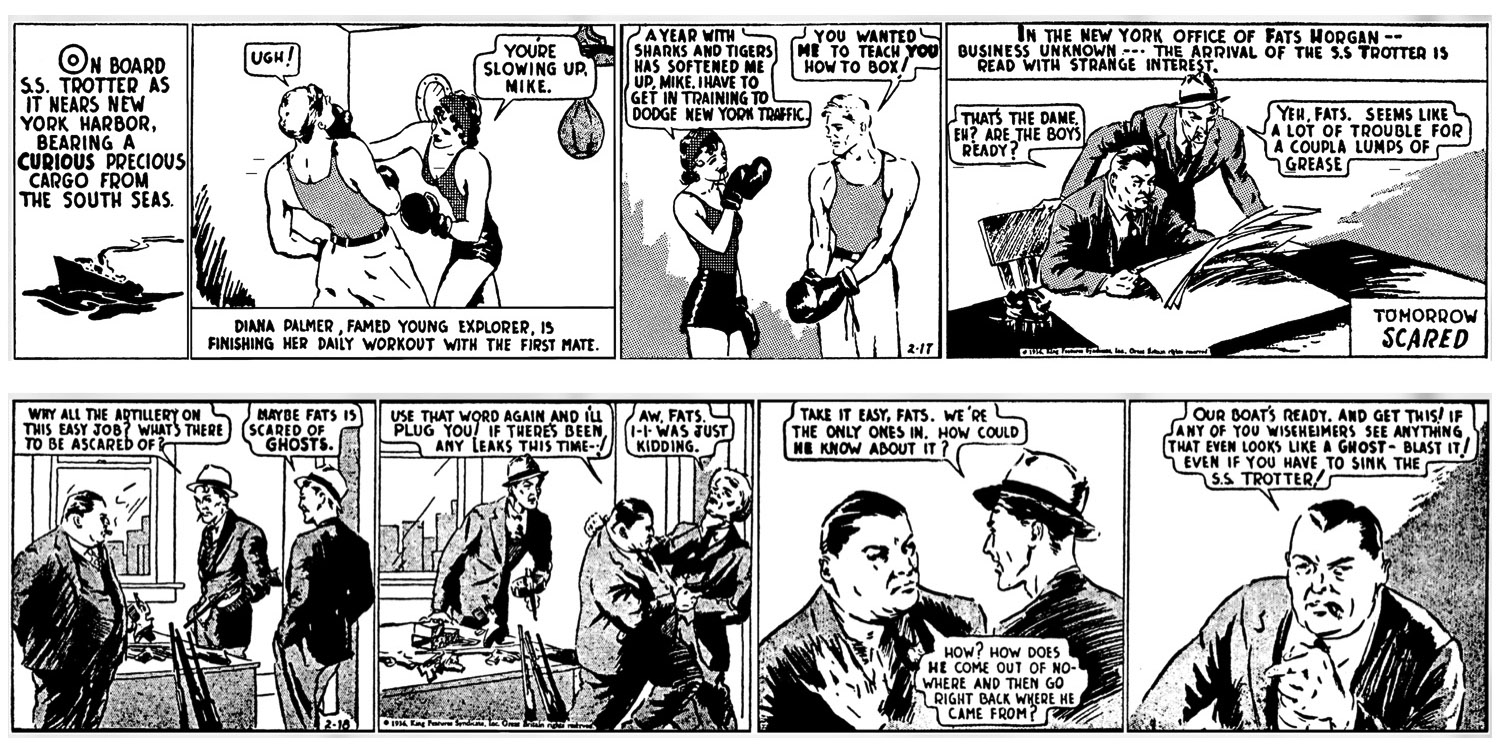
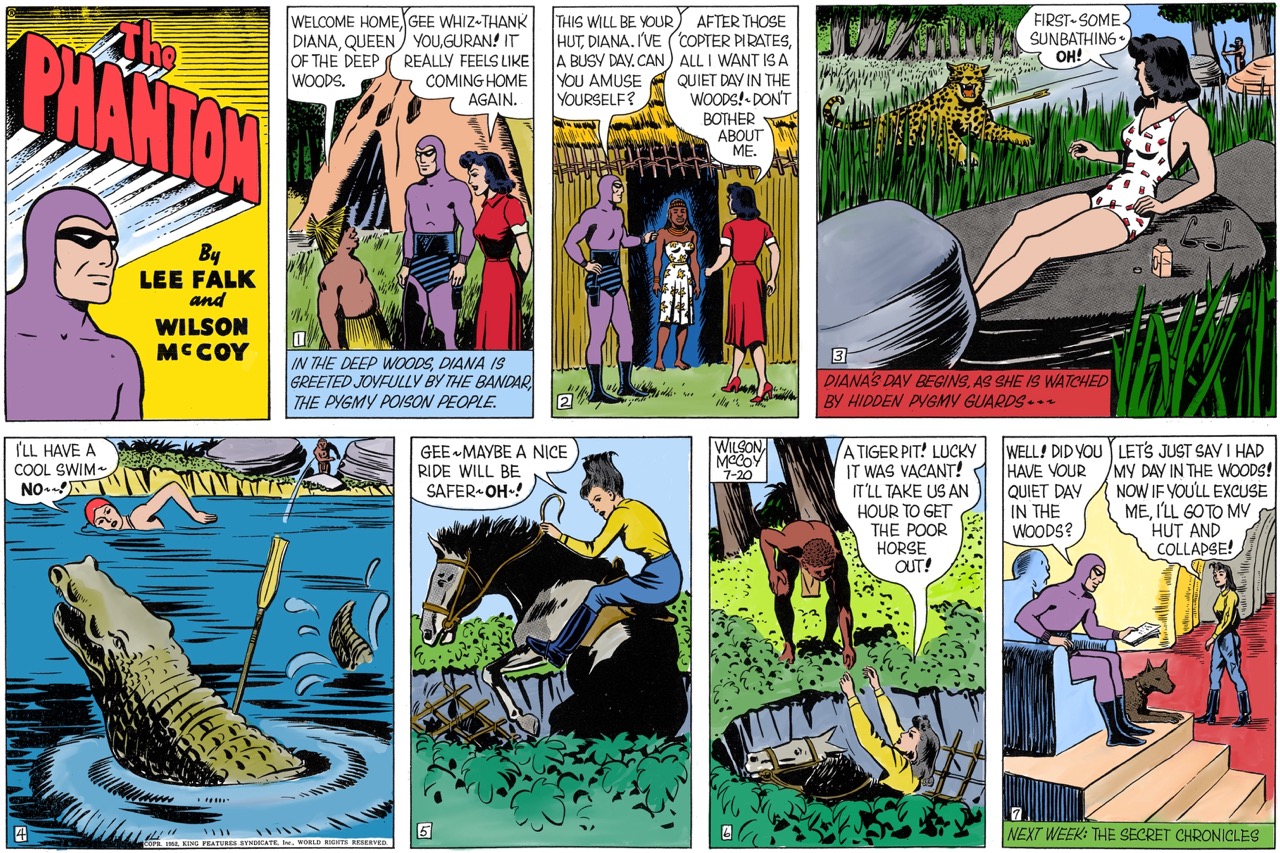
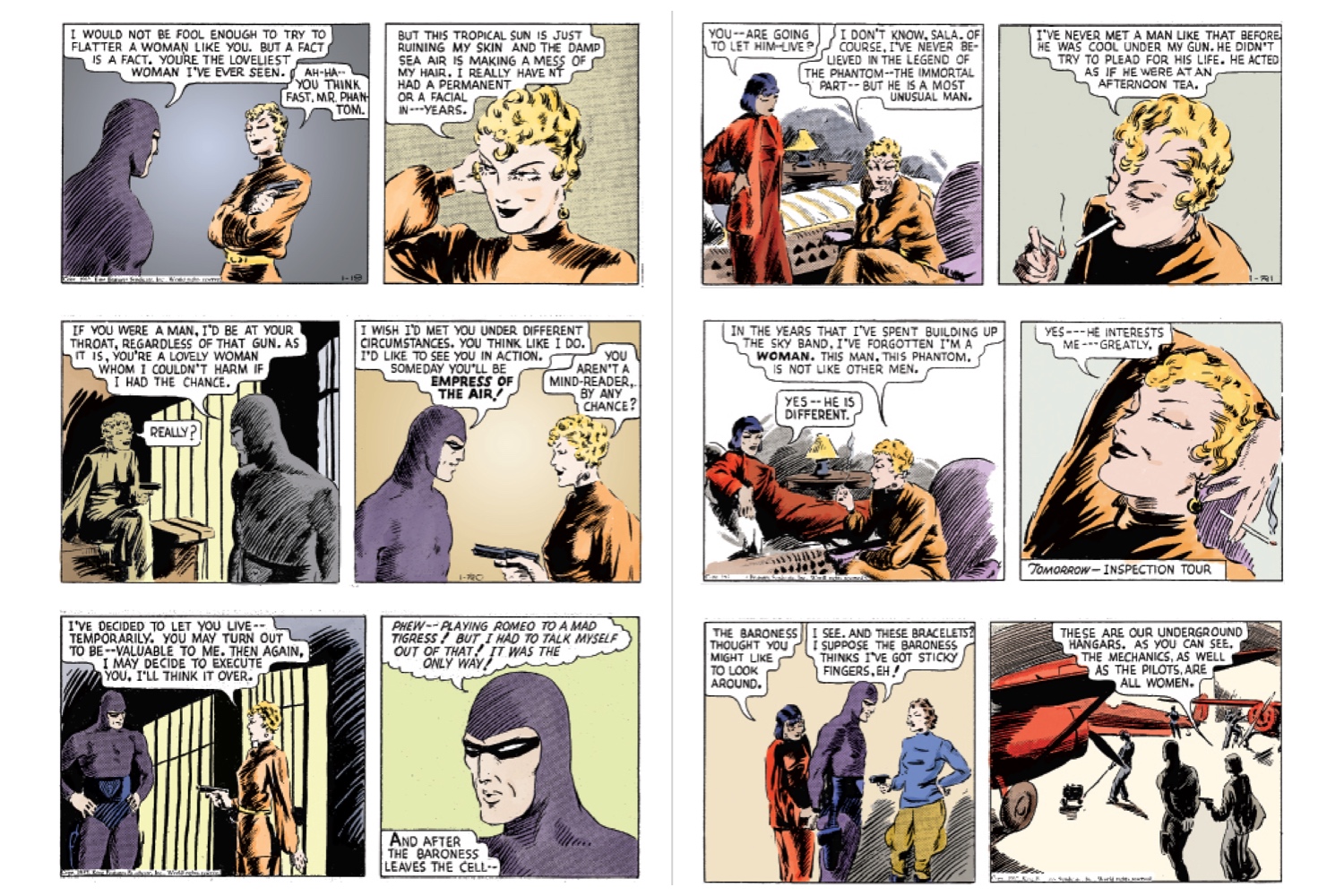
D002 — The Sky Band
I did not know this story for many years. My appreciation of the early Ray Moore adventures came later, when I returned to them as an adult. They have a character of their own, and I have gradually learned to enjoy them on those terms.
I include The Sky Band partly because of a theme Falk would return to repeatedly: the Phantom’s battle with a band of female pirates. Looking back from the later stories, it is interesting to encounter this theme so early in the strip’s life.
There is also a great deal of humour here. For me, that is an important part of its appeal. Moore’s early Phantom can be mysterious without making the whole adventure solemn, and the mixture of danger and amusement gives the story an energy I appreciate more now than I might have done as a boy.
The Wilson McCoy years
With Wilson McCoy, this selection enters the period most closely connected to my early reading. His style is part of the memory: an extraordinary feat, an amusing incident or a piece of the Phantom legend can remain inseparable from the way he drew it. The stories below show how much variety Falk could build around that familiar Phantom.
D039 — The White Monkey
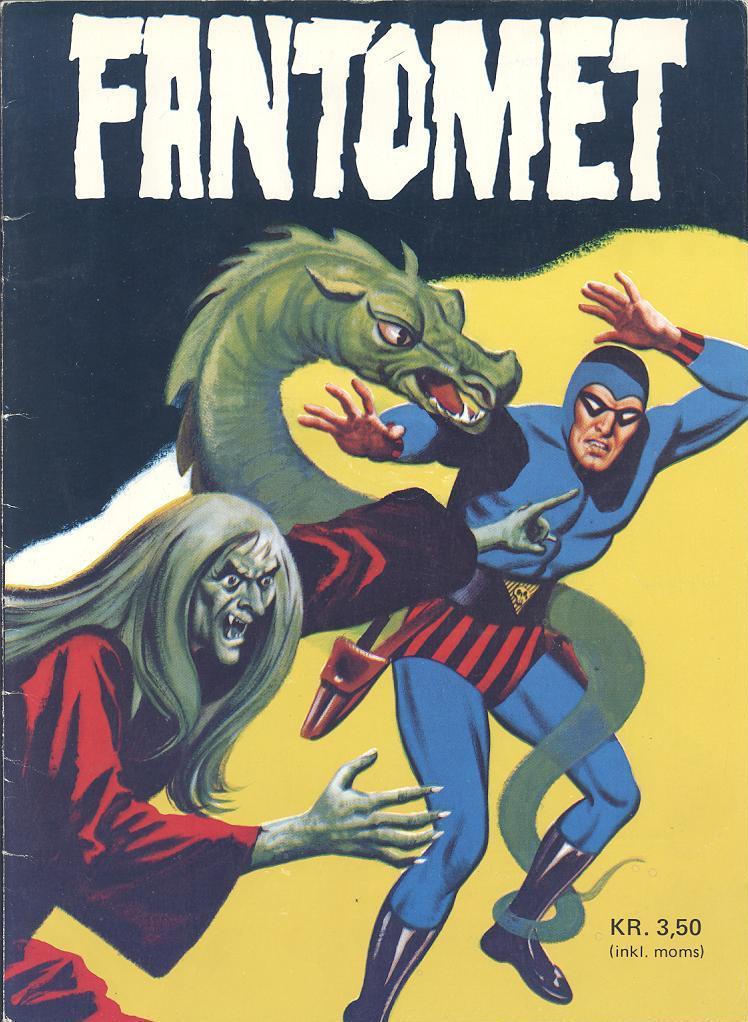
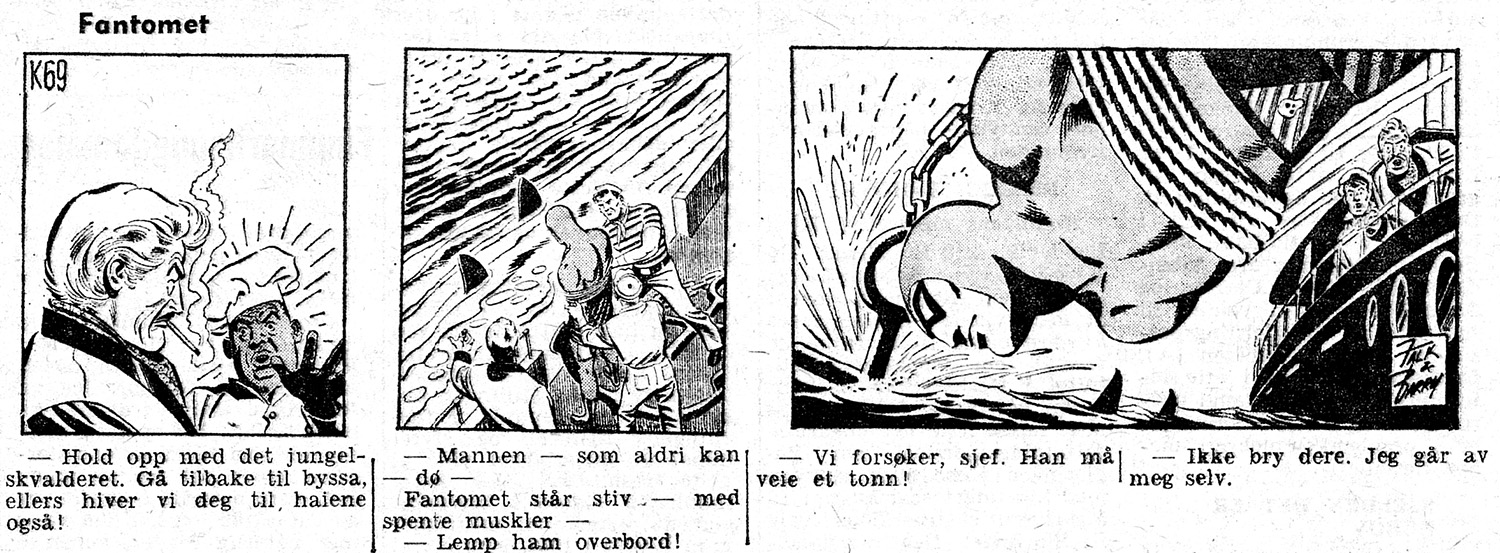
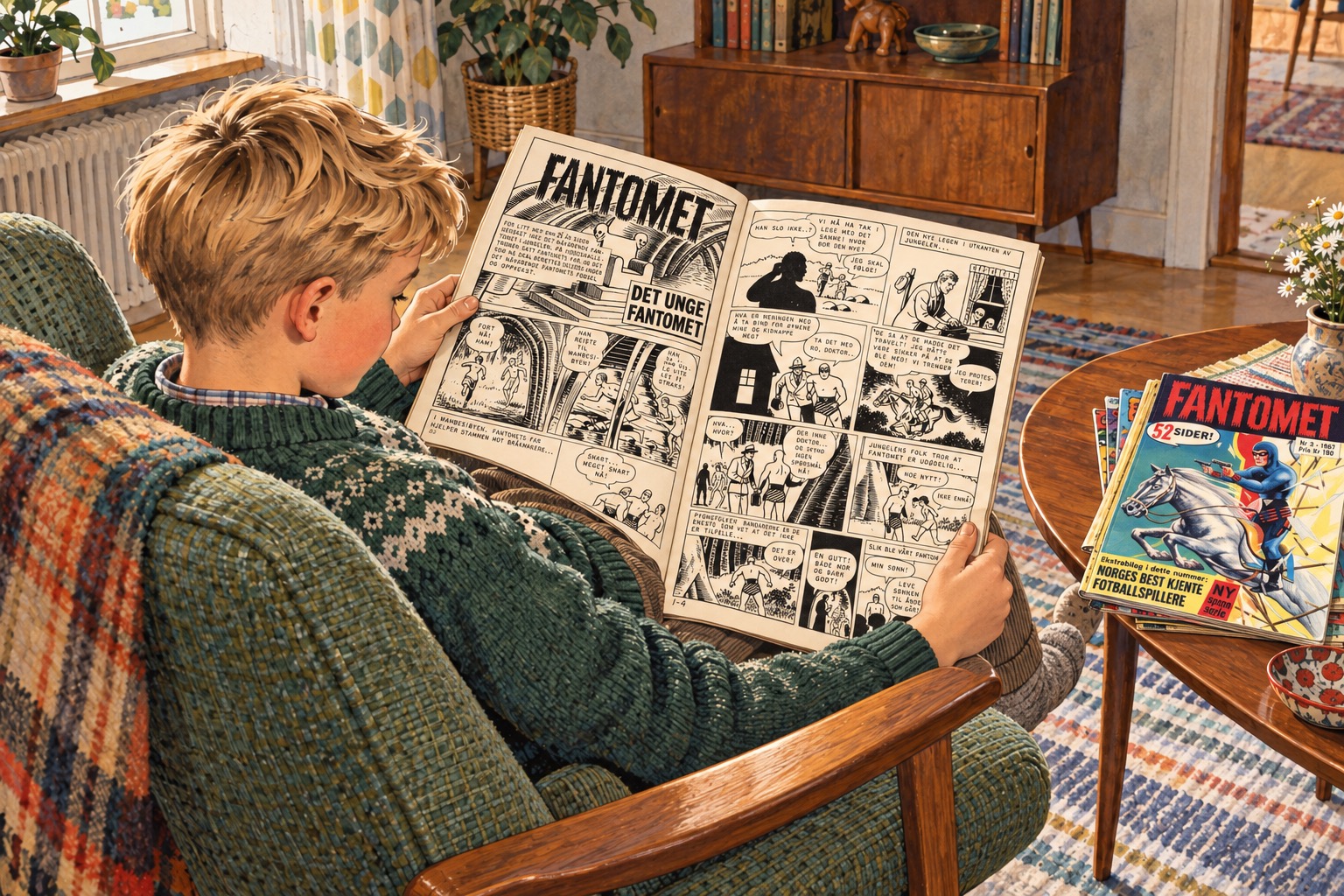
This was one of the earliest Phantom stories I read, and I have returned to it again and again. All those early encounters mentioned here were through the Norwegian Fantomet comic. They were encounters with the stories as reprints, rather than with their original newspaper publication.
What impresses me is how much adventure Falk draws from such an apparently foolish beginning: a spoiled prince and a pet taken away from him. The consequences carry the Phantom much further than that modest premise suggests.
I also like stories with two distinct movements. First comes the search for the white monkey; then comes the exposure of a gang. Solving the initial problem opens the way to another adventure, and the story gains a second life.
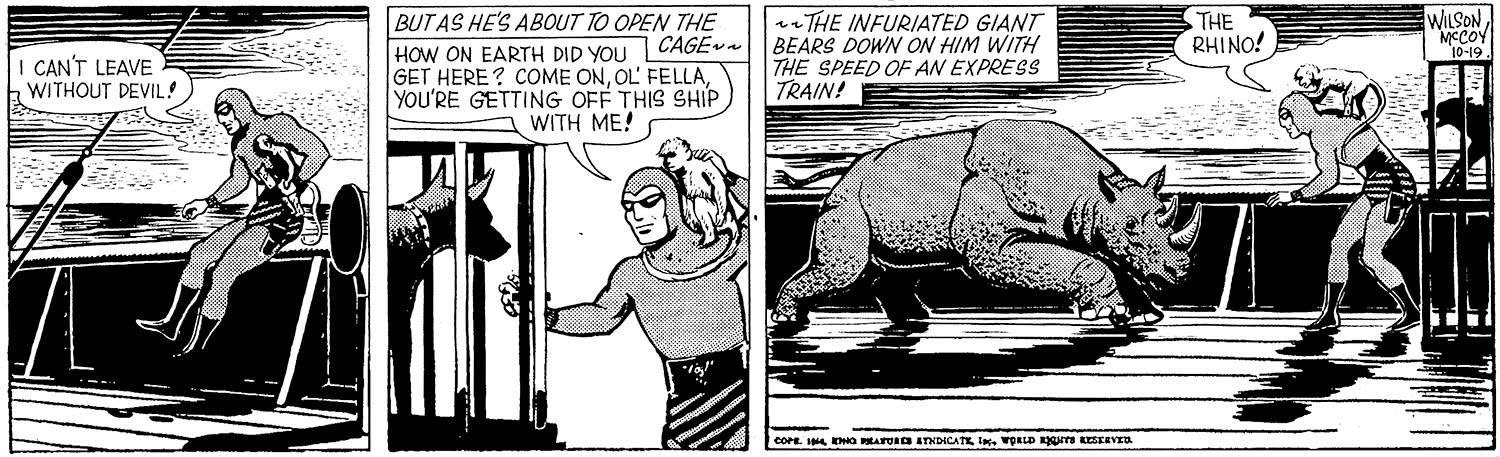
The sequence in which the monkey is retrieved aboard a ship, with a rhinoceros on the loose, made a particular impression on me. It is the kind of incident that stays in a young reader’s mind long after the finer details of the plot have faded. McCoy’s drawings are an inseparable part of that memory.
D048 — The Toad Men
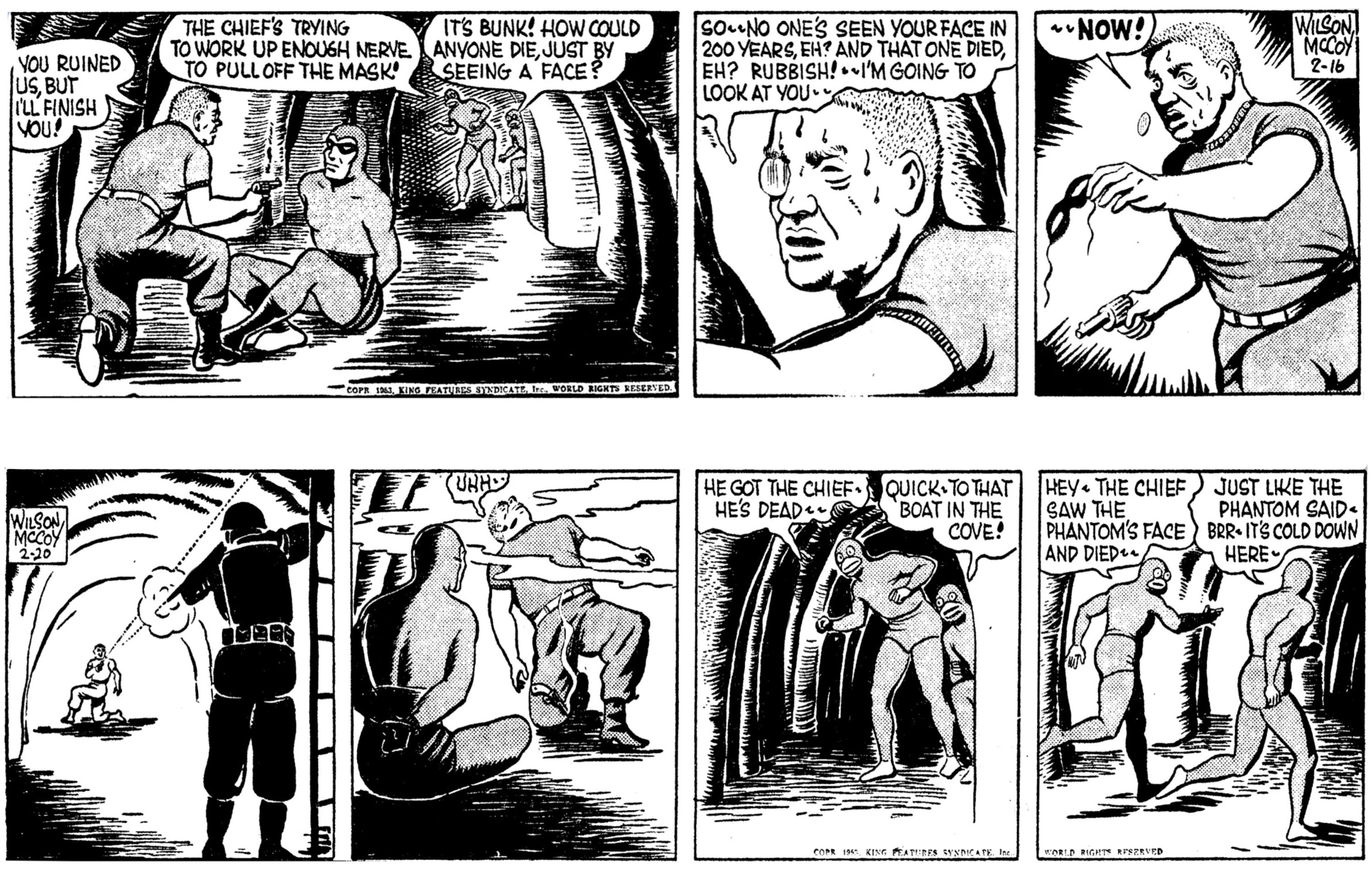
Another early reading experience, and another example of Falk using the Phantom’s reputation as an active part of the plot. I particularly like the way the Phantom plants a false rumour about Vesta. He shapes what other people believe, and those beliefs help move the story forward.
The visual treatment of the legend that seeing the Phantom’s face brings death also stayed with me. A saying becomes more powerful when the reader sees an event that appears to confirm it. This is how the legend is reinforced within the adventure itself.
That relationship between action and reputation is one of the things I value in these stories. The Phantom does more than defeat his opponents: he leaves them with a story to tell about him. McCoy gives that process a memorable visual form.
D049 — The Lady from Nowhere
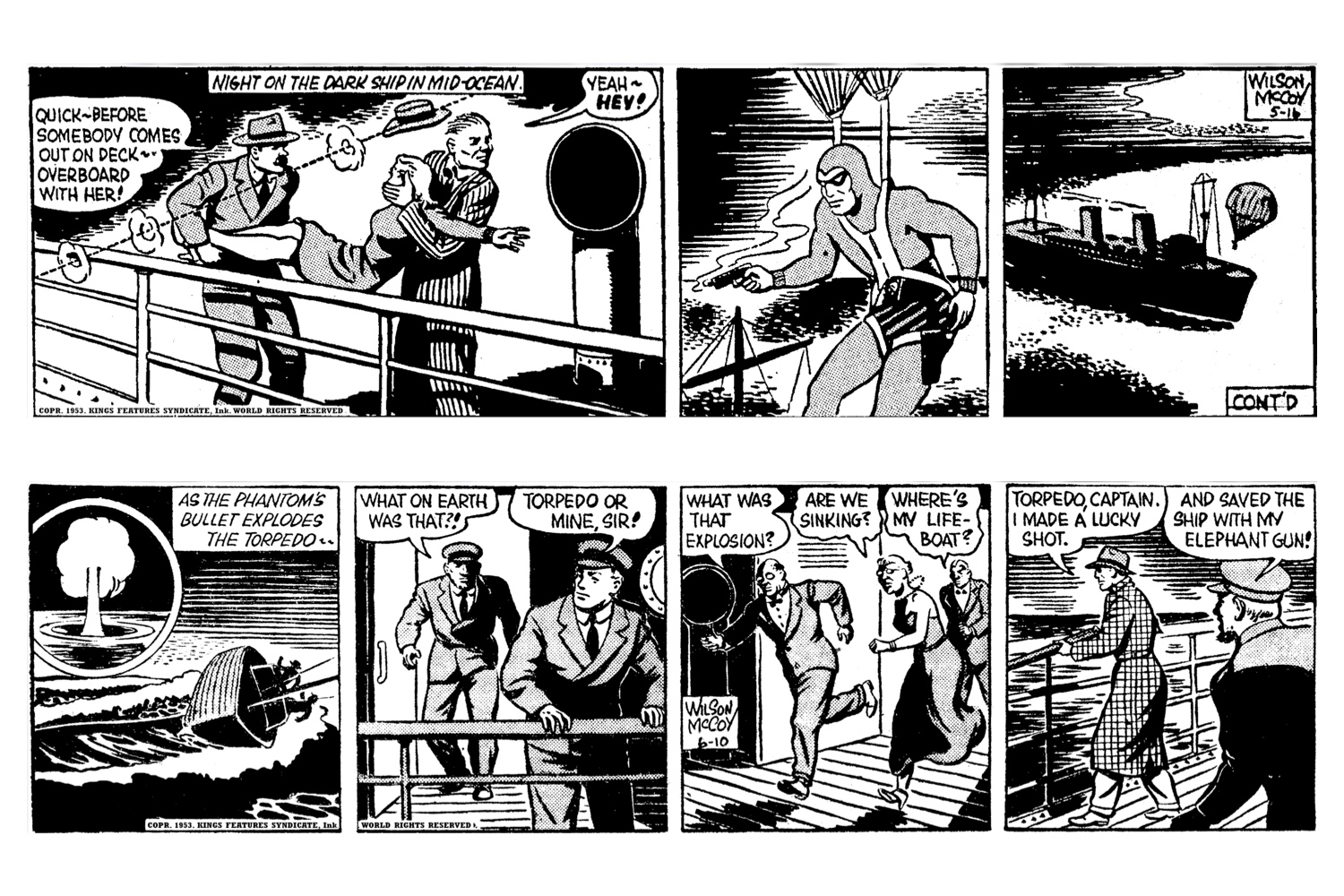
In some respects this is a fairly ordinary adventure, although amnesia is always an entertaining device to read about. It is a couple of particular moments, rather than the entire plot, that earned it a lasting place in my memory.
One is the parachute jump to a ship out on the open sea. The other is the Phantom firing an elephant rifle at a torpedo. Both are wonderfully dramatic ideas for a young reader to encounter.
I do not need every favourite to be an exceptional story from beginning to end. Sometimes a few striking sequences are enough. In this case, those images have outlasted much of the surrounding narrative, and that is part of my reason for including it.
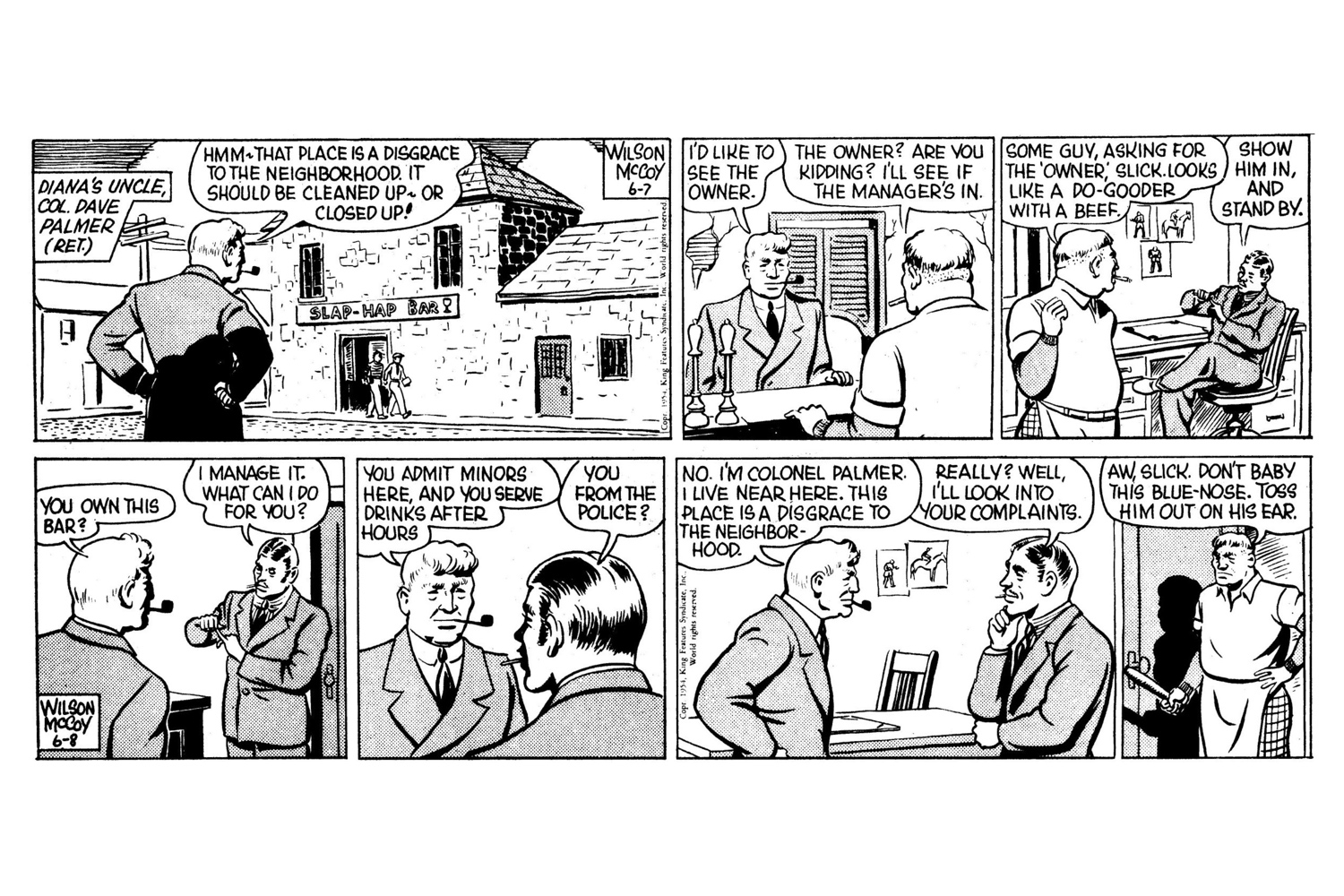
Right: D053 – The Mob Original: 7 Jun 1954 – 11 Sep 1954
D053 — The Mob
I cannot point to one spectacular scene that explains my affection for The Mob. Its place here rests more on the story as a whole, and on an unexpected turn that makes it particularly satisfying.
I would rather leave that surprise for the reader than explain it in a list of favourites. Sometimes the fairest recommendation is also the simplest: this is a good story, and one I enjoy returning to.
It provides a useful reminder that a favourite need not depend on a childhood memory of a single panel, or on the introduction of an important piece of Phantom history. A well-told adventure can be enough.
D056 — The Slimming of Prince Tagon
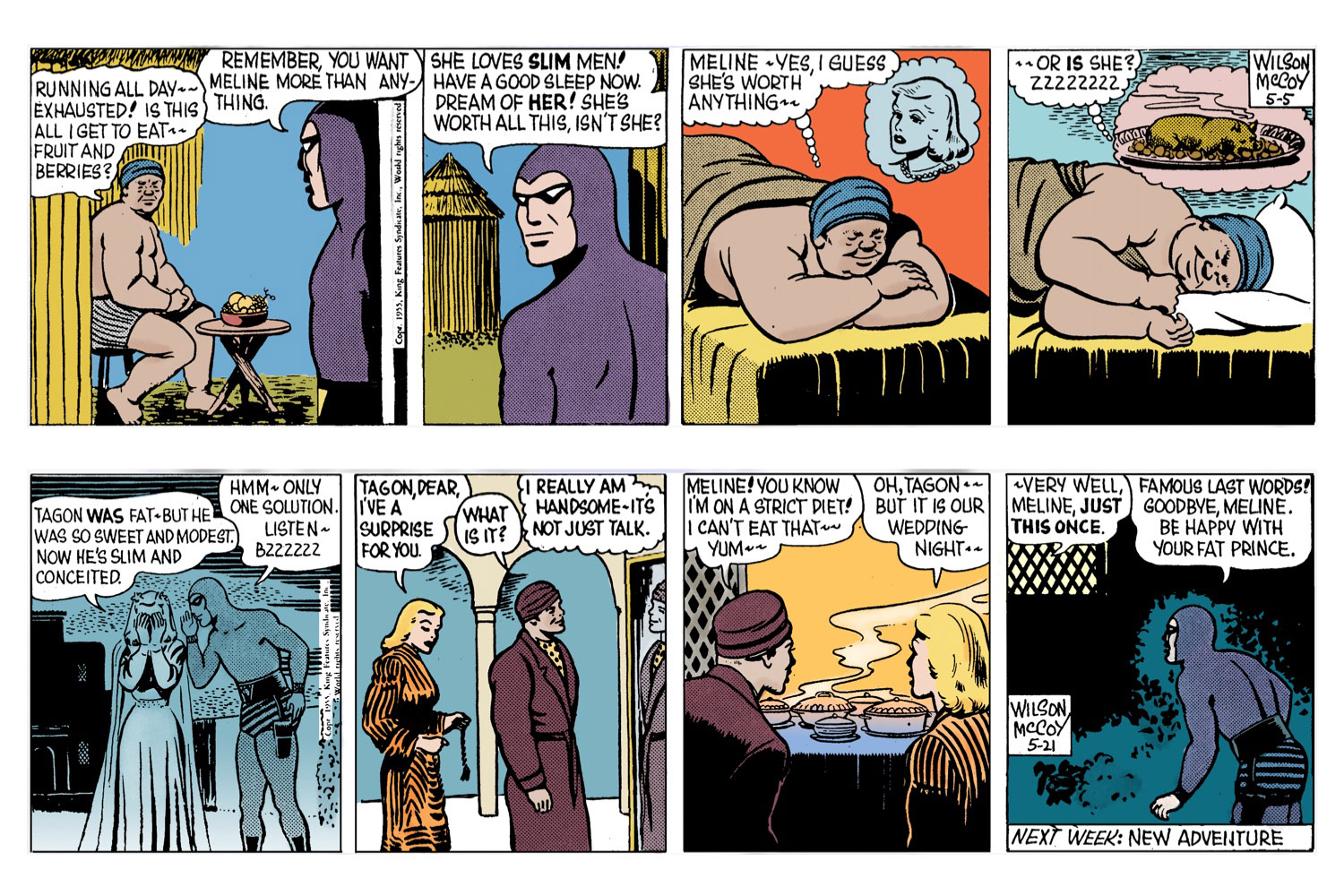
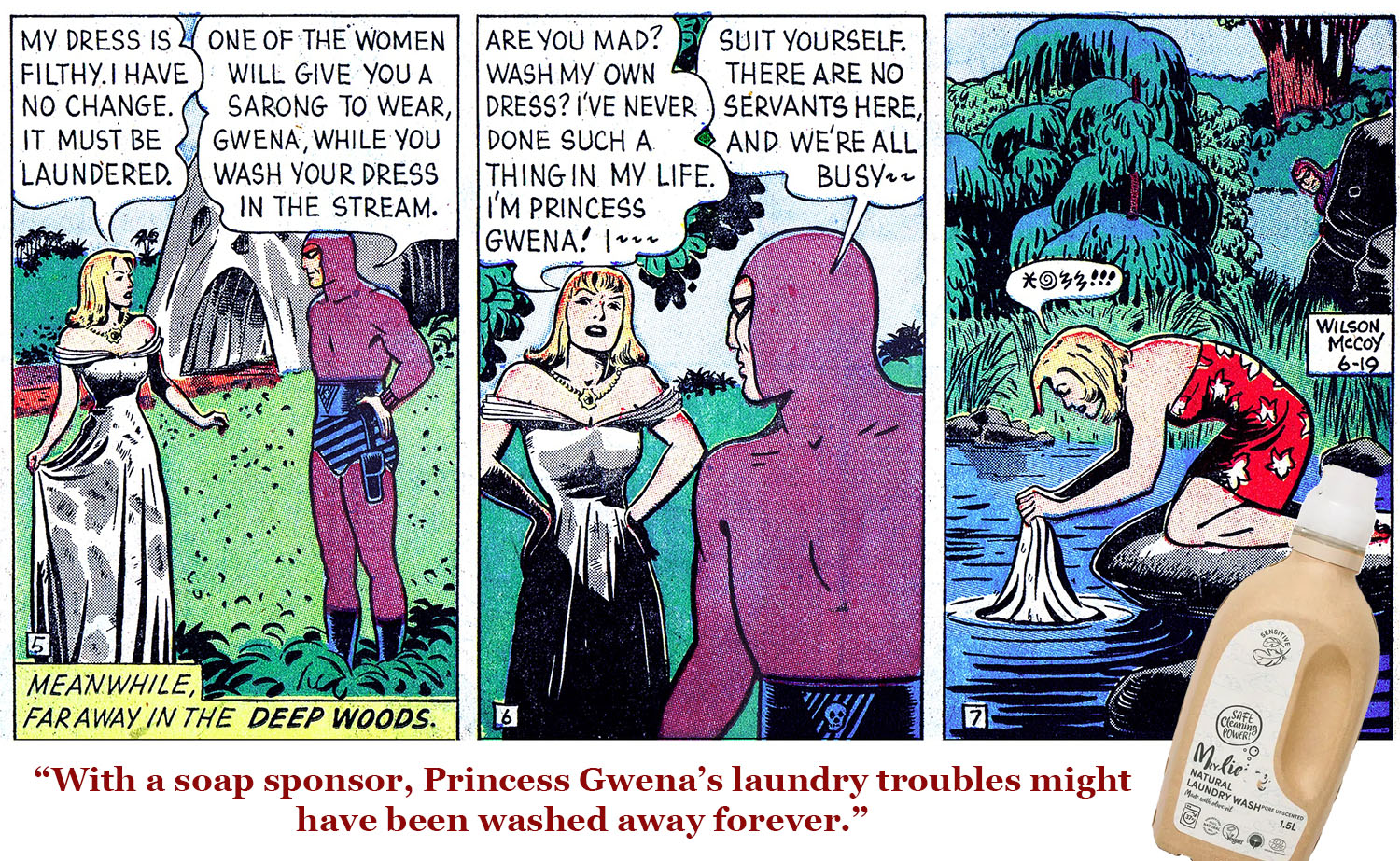
This was another early encounter through the Norwegian comic. The stories in which the Phantom takes someone into the Deep Woods and helps turn that person into a better version of himself have always fascinated me.
Here the attraction lies in change of character. The adventure gives the Phantom an opportunity to influence someone’s habits and outlook, with more lasting consequences than simply winning a fight.
That is a side of the character I like. His authority can be used to teach as well as to punish. The Deep Woods become a place where someone accustomed to a very different life has to look at himself afresh. This kind of story has remained appealing to me long after my first reading.
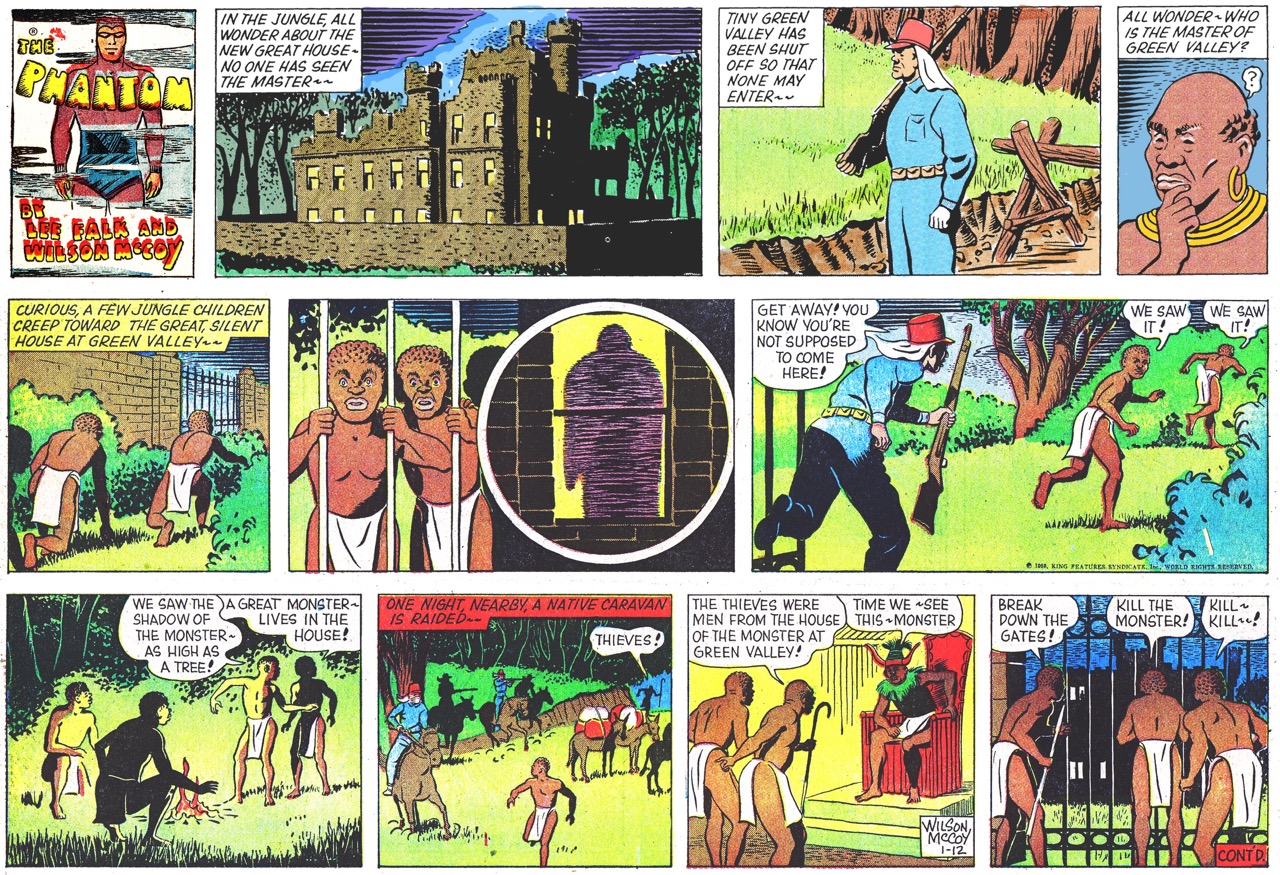
S050 — The Monster of Green Valley
Early reading is part of the explanation, but the shape of the story matters too. Once again, I enjoy the way one adventure leads into another. The Phantom first uncovers the truth about the monster of Green Valley, then has to overcome a giant.
That second stage gives the story more to offer than the solution of its original mystery. It changes the nature of the challenge without losing the pleasure of the adventure already under way.
Drama and romance work together here, and I like that combination. It is a story I remember for its range as much as for any single incident: mystery, physical confrontation and the more personal side of Falk’s storytelling, all carried by McCoy’s Sunday drawings.
D070 — Carlyle's Good Mark
Unlike many of the stories in this selection, this one was not published in the Norwegian Fantomet comic. It therefore has no place among my early memories of reading that magazine. Its importance to me developed later.
The reason is the Good Mark. Its introduction adds something significant to the Phantom’s relationship with other people: the legend has a protective side as well as a threatening one.
That makes this an important story to include, even though my attachment to it has a different origin from my attachment to The White Monkey. I connect it with the Sunday story Conley’s Good Mark (S052), which follows later in this chronological selection. Together, the two deserve attention for the place of the Good Mark in the Phantom’s world.
S052 — Conley's Good Mark
This Sunday story shares the Good Mark theme with Carlyle’s Good Mark (D070). It was published in the Norwegian Fantomet, although I do not remember it from that publication. I include the pair because of what they contribute to the series.
The Good Mark is one of those ideas that gives the Phantom’s legend a life beyond an individual confrontation. Being marked by him can mean protection, trust and a continuing connection. It broadens the meaning of his presence in the jungle.
For that reason, these two stories belong among the adventures that have stayed with me. Their place here is based on an enduring element of the series, rather than on a remembered first reading.
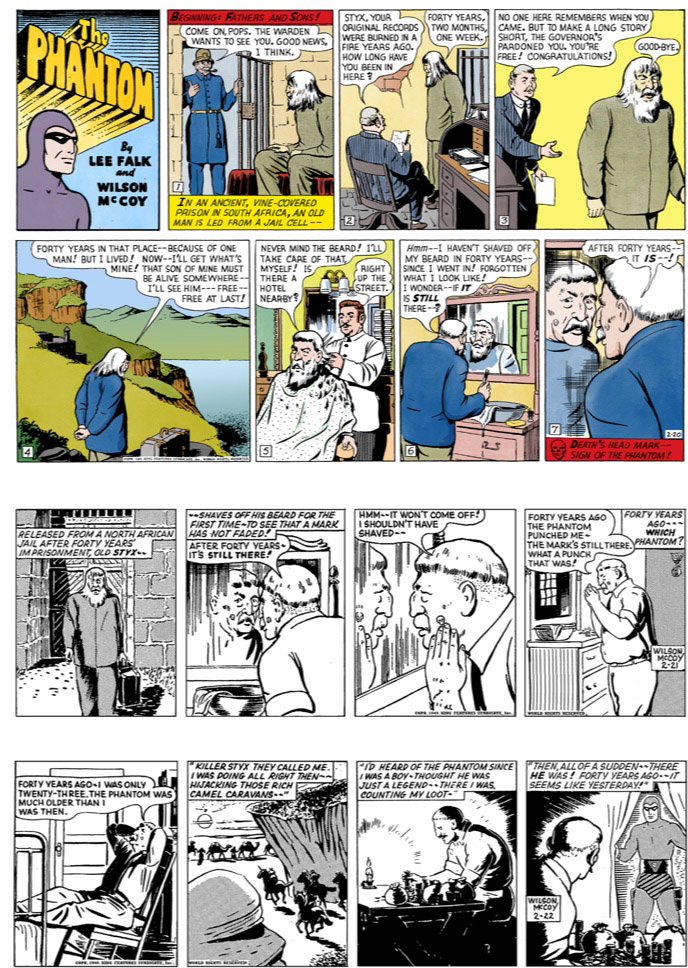
S053 — The Childhood of the Phantom
This version of the Phantom’s childhood was the first McCoy story I read. That alone would make it a personal landmark, but its appeal goes further.
A story about the young Phantom has an obvious attraction for a young reader. It offers a way into the character before he becomes the assured figure of the adult adventures. It also contains important elements that help explain how he developed into the Phantom we know.
The childhood account gives later actions and abilities a background. The finished legend becomes connected to a boy’s experiences and preparation. For me, that combination of youthful appeal and lasting explanation made the story much more than an entertaining departure from the usual adventures.
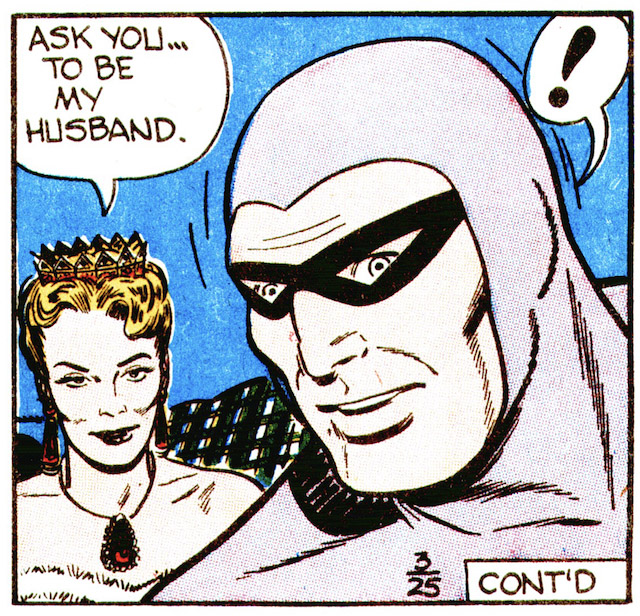
S055 — The Honeymooners
An agreeable story with drama and romance — a combination I have always enjoyed in the Phantom. Its place in this selection is strengthened by something that became much larger than this one adventure: the first appearance of Eden.
An introduction of that kind changes how a story reads in retrospect. What begins here will become a familiar part of the Phantom’s world, and returning to its beginning has a pleasure of its own.
I like the story’s warmth as well as its importance. Not every memorable Phantom adventure needs to depend on menace or a formidable enemy. There is room for affection, romance and an appealing place that readers will want to visit again.
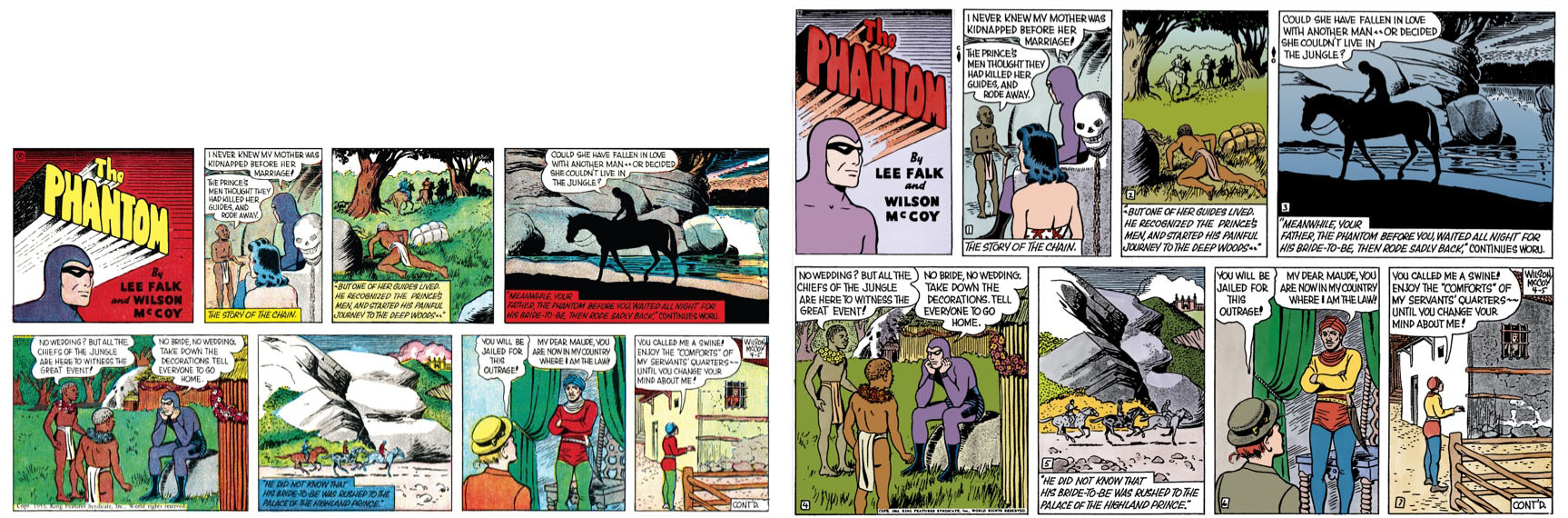
D079 — The 50th Wife
This was a strange story to encounter as a boy. Forty-nine wives! That idea alone was enough to capture my attention. The story was also included in the first Fantomet comic I bought and read myself, which gives it a particularly personal place in this selection.
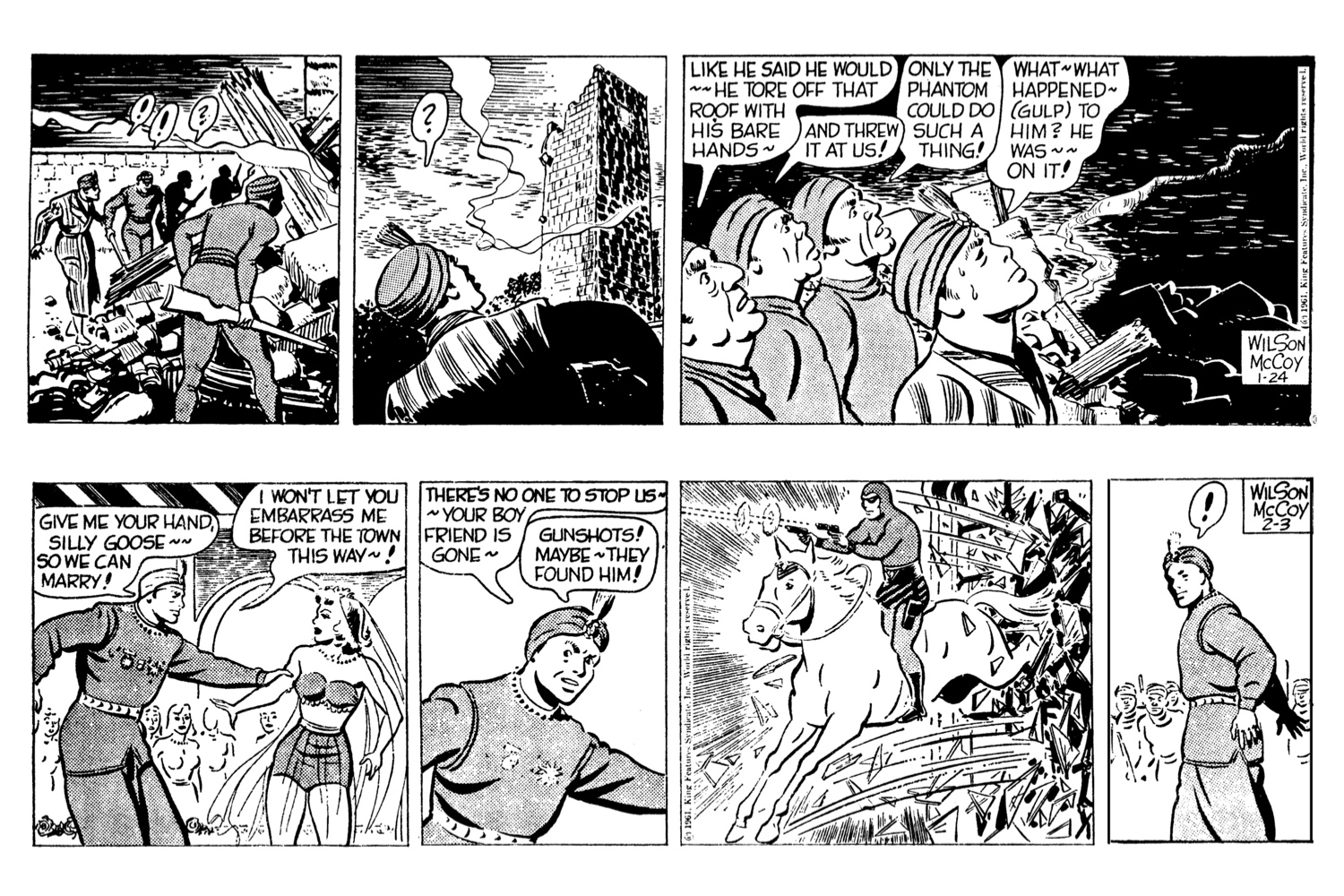
But several action sequences have remained just as vivid. I remember the fighting in the palace, the Phantom bringing down parts of the building, and his ride into the ballroom to interrupt the wedding between the prince and Diana.
Those are large, theatrical moments, and McCoy makes them memorable. The story’s hold on me comes from the mixture of its extraordinary premise, those forceful scenes and the experience of discovering them in a comic I had chosen and bought for myself.
The Sy Barry years
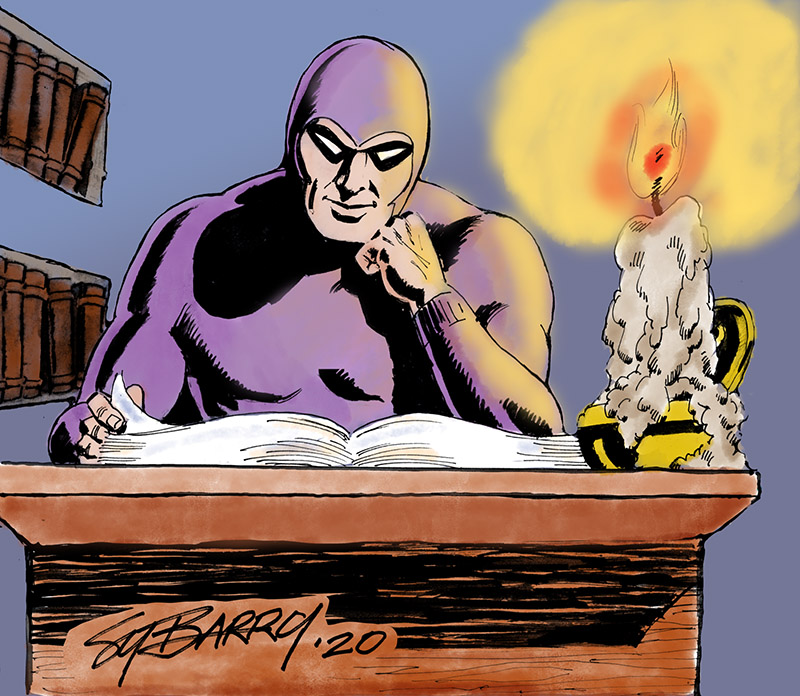
Sy Barry brought a change in style and a renewed visual energy to the strip. For me, the change is especially rewarding when strong drawings meet an absorbing Falk story. The world around the Phantom also develops in these adventures: political change, journeys into the Chronicles and new characters give the series fresh scope. It is a renewal of the universe as well as a change in how it looks.
D083 — The Epidemic
Of this story and The Mysterious Ambassador (D085), I find The Epidemic the more immediately exciting. It also stands as an introduction to the important continuation that follows. I think of the two together, even though they were not published consecutively.
This is also a point at which the quality of Sy Barry’s drawings is central to my enjoyment. The adventures have a visual force that makes them particularly rewarding to reread.
On its own, The Epidemic is exciting reading. In connection with D085, it becomes part of a larger development in the series. That combination of an absorbing adventure and consequences extending beyond it is one of the reasons the pair belongs here.
D085 — The Mysterious Ambassador
This is both a good adventure and an important story in the development of the Phantom’s country. Bengal becomes a republic, with the preceding civil war giving that change its dramatic context.
The Phantom’s role as a special ambassador is particularly striking. It places him in an unusual position, connected to the political transformation while retaining his own distinctive authority. That role has stayed with me as something unique in his adventures.
Read alongside The Epidemic (D083), this is very good storytelling, with drawings that show Sy Barry at his best. The country around the Phantom is changing, and the consequences give the adventure a significance beyond its immediate events.
D089 — The Adventures of Lucy Cary
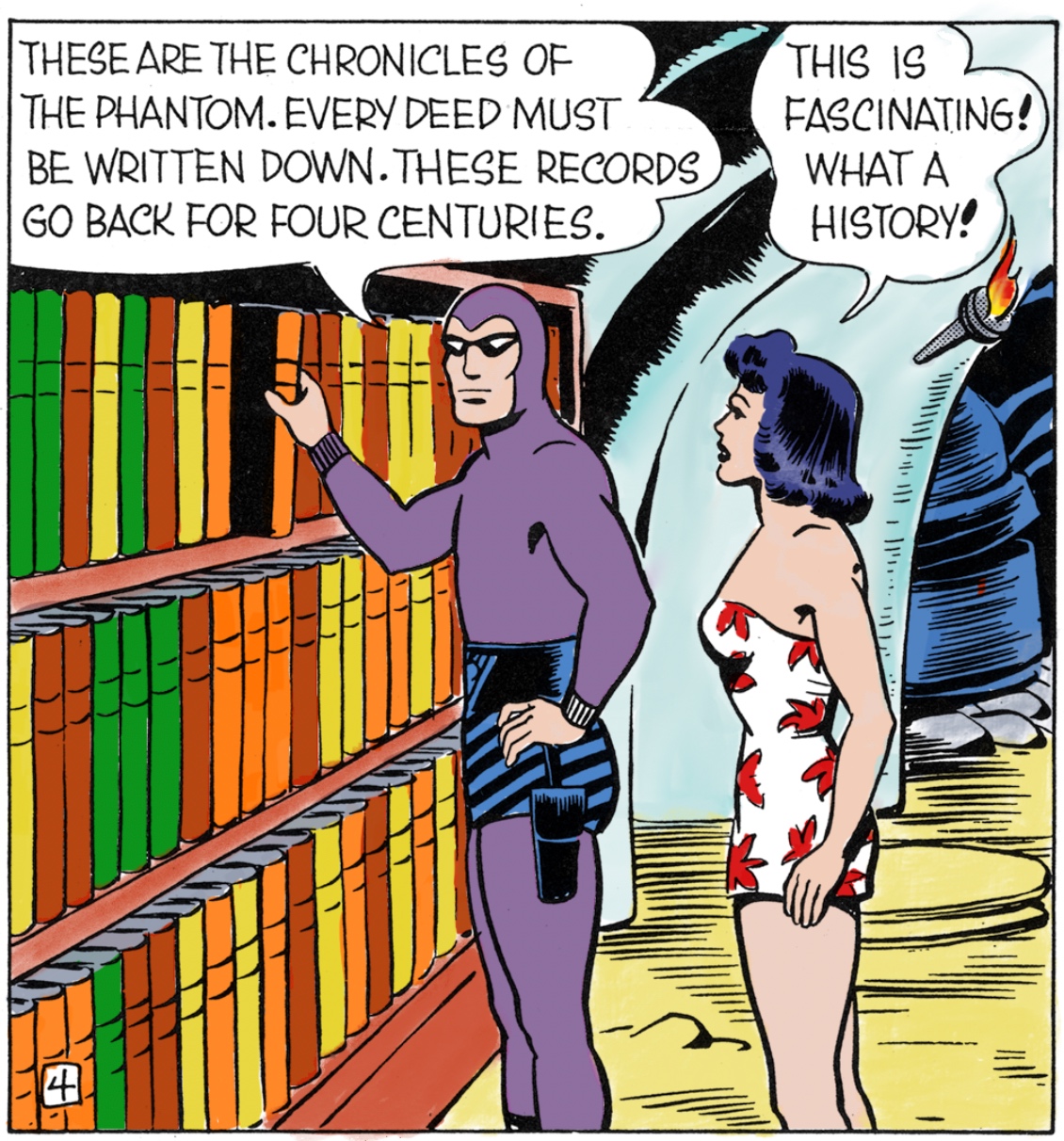
Stories drawn from the Phantom Chronicles have always had a special appeal for me. They allow Falk to open another part of the family’s history and make the legend feel larger than the present Phantom’s life.
The Adventures of Lucy Cary also has the two-part quality I like. There is pleasure in seeing a story develop into a further movement, rather than exhausting itself with the resolution of its first situation.
The historical setting and that structure work well together. With Sy Barry’s drawings, the journey into the Chronicles becomes an adventure worth reading in its own right, rather than simply an explanation attached to the modern strip. I connect its appeal with The Hanta Witch (D091), another Chronicle story included below.
S064 — The Founding of the Jungle Patrol
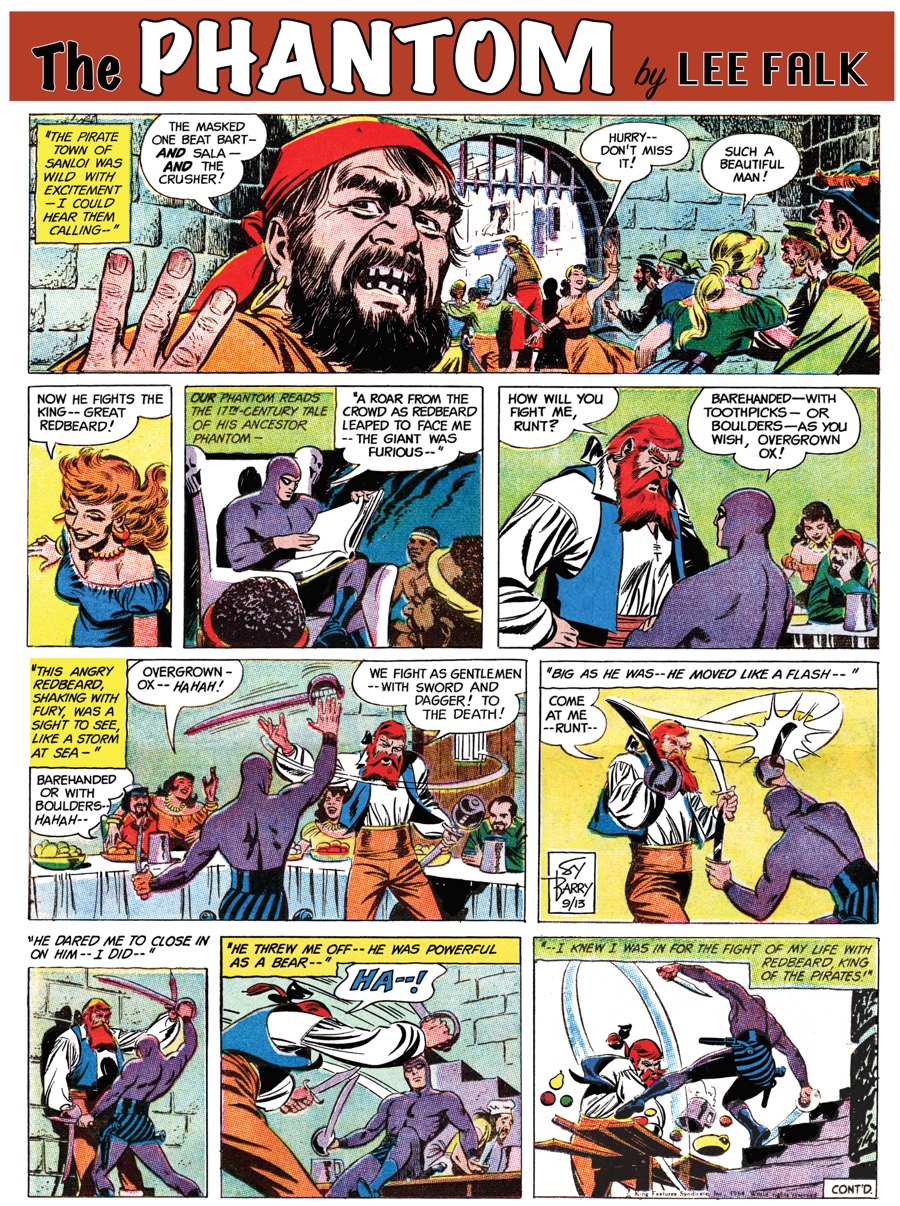
This is a rich and dramatic Sunday adventure, with romance as part of the mixture. Added to the pleasure of reading from the Chronicles, those qualities make it a classic for me.
The founding of the Jungle Patrol is a subject that carries weight in the Phantom’s world, but the story’s attraction is not confined to explaining an institution. It works as an adventure, and its historical perspective gives familiar elements of the series a fresh setting.
I have also heard it described as one of Falk’s own favourites. Whether or not that is so, it is easy for me to understand the affection for it. It brings together several of the things I most enjoy in his storytelling, with Sy Barry’s artwork adding to the drama.
D091 — The Hanta Witch
Another exciting excursion into the Phantom Chronicles. Together with The Adventures of Lucy Cary (D089), it represents a kind of Falk story I particularly enjoy: the present legend opening into an adventure from an earlier generation.
The Chronicles allow the series to move through different times while keeping the connection that makes it the Phantom. For me, that is a source of both variety and continuity. The setting changes, but the reader still recognises the larger family story.
Sy Barry’s drawings contribute strongly to that pleasure. This is one of the stories I would include because the historical adventure itself is compelling, as well as because of what it adds to the sense of a legend stretching back through time.
D092 — Prince Hali and the White Stallion
Falk returns to a prince with several wives, although the number is smaller this time. That recalls an earlier kind of adventure without making my enjoyment depend entirely on the resemblance.
What I like here is a dramatic story with two distinct parts. Once again, the movement from one stage to another gives the adventure more room to develop and keeps the reading lively.
It is interesting to encounter a familiar Falk theme in Sy Barry’s visual world. The subject recalls the McCoy period, while the drawings give it a different character. That meeting of a recurring idea and a changed style is part of the appeal for me.
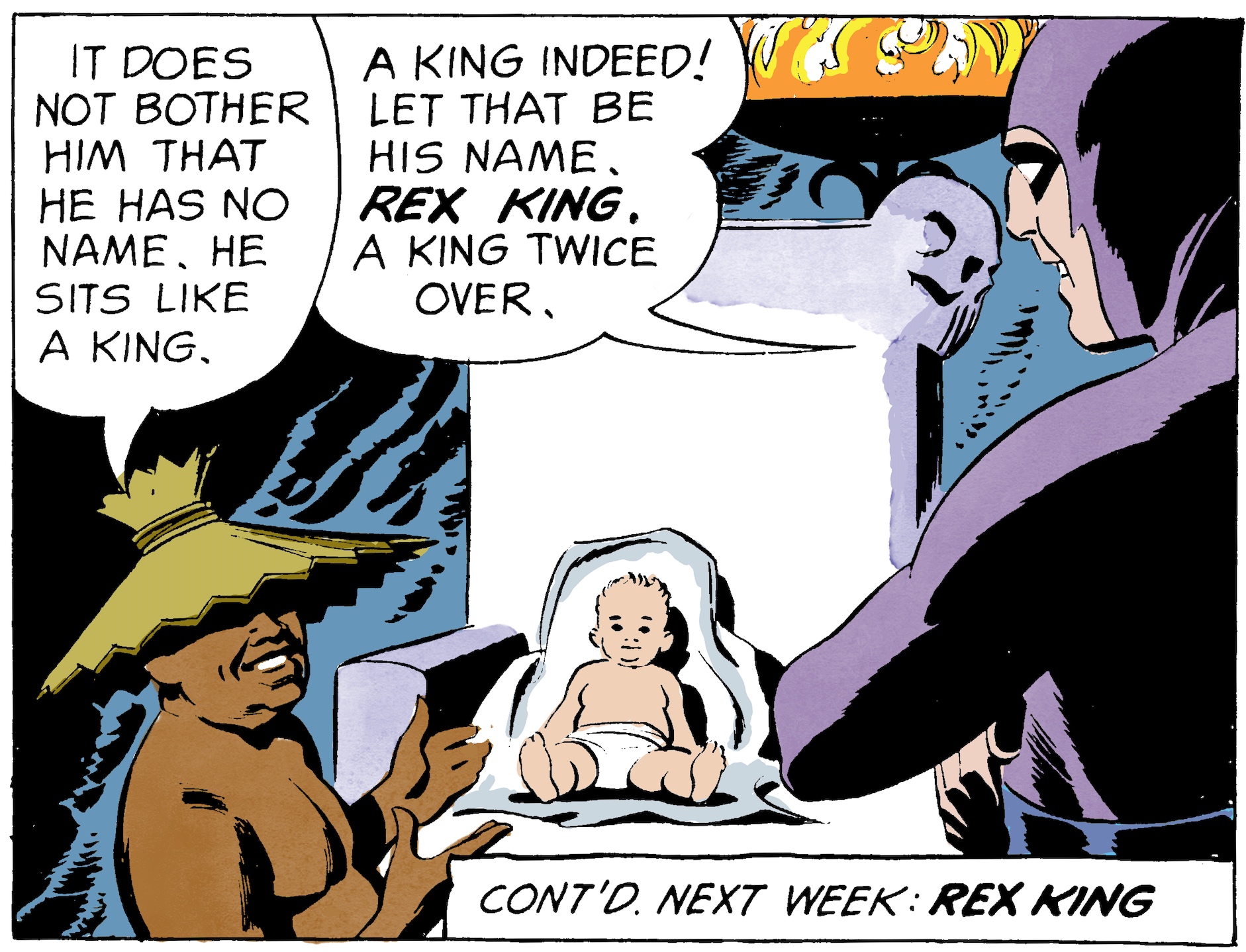
S068 — Rex King
An adventurous Sunday story, very well drawn by Sy Barry. It also introduces Rex, which makes it important in the longer development of the series.
An introduction like this can be appreciated in two ways. There is the immediate pleasure of a good adventure, and there is the later recognition that someone who will matter to the Phantom’s world has arrived.
Here I enjoy both. Rex’s importance gives the story a lasting place in the series, but the adventure and the quality of the drawings are sufficient reasons to return to it. It is a good example of a story whose significance grows as the reader gets to know what follows.
S096 — The First Phantom
I would not necessarily call this an especially good story. Its place here is based on historical interest: we learn something about the first Phantom.
That matters to many readers, myself included. A series built around an inherited identity naturally invites questions about the person who began it. Even a brief addition to that background can give a story more lasting interest than its immediate plot might otherwise deserve.
This is therefore a useful final example of what I mean by a personal selection. Some stories stay with me because of unforgettable scenes, some because of their drawings, and some because they introduce an important part of the Phantom’s world. They do not all have to earn their place in the same way.