The Phantom · A personal reflection
Is the Phantom a Soap Opera?
A forty-two-year courtship, a wedding and a growing family: there is certainly material for the argument. But before calling The Phantom a soap opera, I think we should be clear about what we mean.
What does “soap opera” mean?
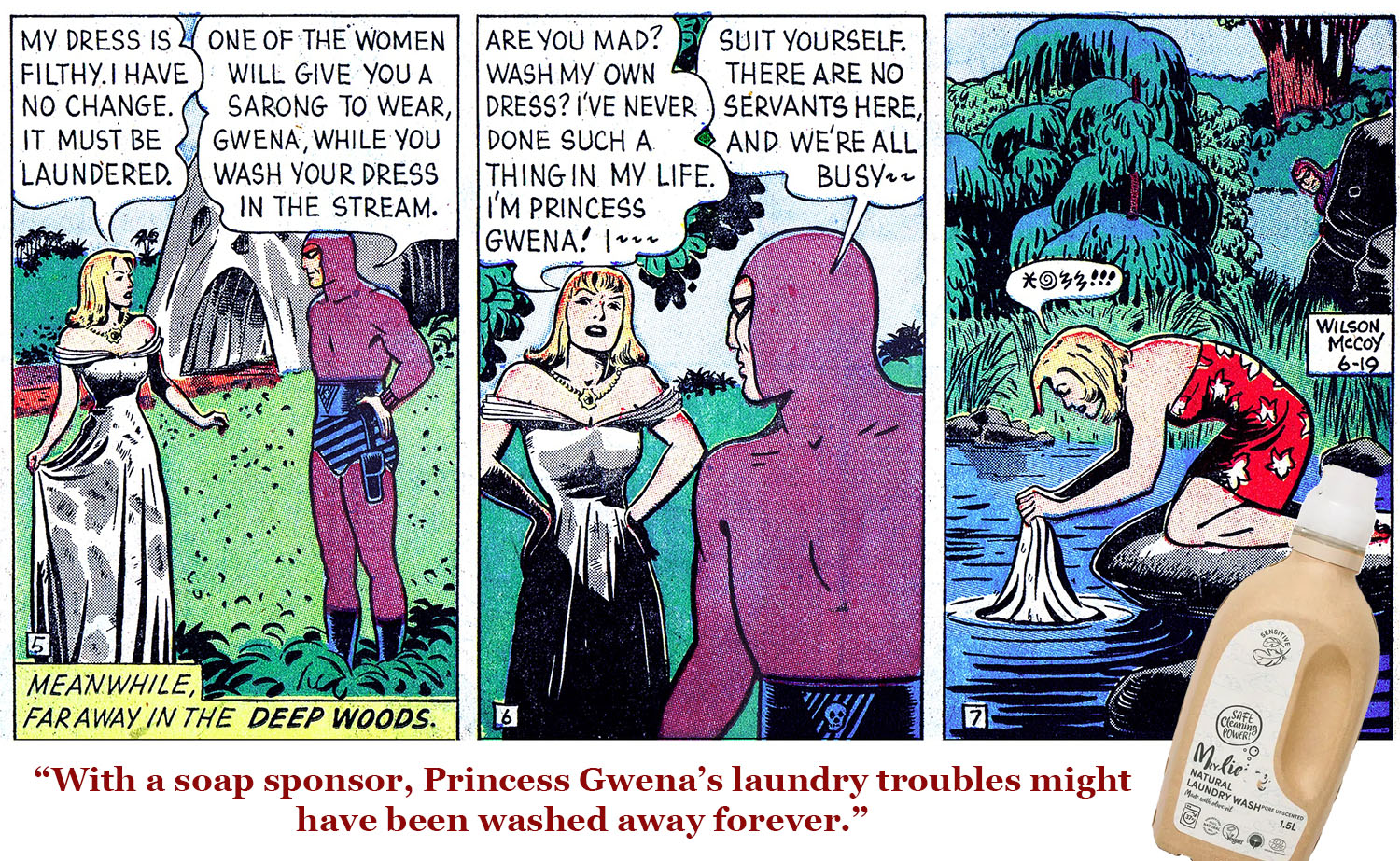
The name came from American radio in the 1930s, when soap and other household-product manufacturers sponsored serial dramas aimed largely at women at home. “Opera” was an ironic reference to their heightened drama, not to singing. The commercial connection explains the name; it does not, by itself, define the storytelling. The Encyclopedia of Television and Radio describes this background.
For the genre itself, I find the distinction in Store norske leksikon useful: continuing drama built around personal relationships, usually within a recurring family or community. Several storylines overlap, and emotional complications keep generating further complications.
The classic open-ended soap has no necessary final destination. A crisis may end, but the relationships continue to produce the next one. There are also closed forms, notably telenovelas with planned endings, as the television encyclopedia explains. Nor must a soap be broadcast every weekday: the weekly prime-time series Dallas and Dynasty are familiar examples.
These are characteristics of a form, not a verdict on its quality. A soap opera can be well written. Conversely, a badly written adventure does not become a soap merely because we dislike it.
The audience has a say — but how much?
Our discussion brought up another aspect: what happens when the audience helps determine the direction of a story?
There is a real commercial mechanism behind that thought. The television encyclopedia describes scripts being adjusted in response to ratings, audience research and fan correspondence, within the constraints imposed by sponsors, owners and broadcasters. Falling soap sales need not be the direct signal; declining audience figures can be enough.
The audience does not literally write the script. Its reactions are interpreted by people deciding what will keep the programme successful. My concern is the balance: how much follows the writer’s chosen direction, and how much follows what others believe the public wants?
That is a useful question about authorship. It is not, however, a sufficient genre definition. An adventure strip, detective series or comedy can also respond to commercial pressure without becoming a soap opera.
Three different uses of the same expression
I think some disagreements arise because we use “soap opera” in different ways.
It can identify a genre: continuing, interwoven relationship drama. It can also be a looser description of a particular sequence — repeated romantic complications, for example — without classifying the entire work. Finally, it can be a dismissive label for something considered sentimental, drawn out or overdramatic.
Those meanings should not quietly replace one another. If someone calls The Phantom a soap opera, I would like to know whether they mean its narrative structure, a particular part of it, or simply something they do not enjoy.
Forty-two years with Diana
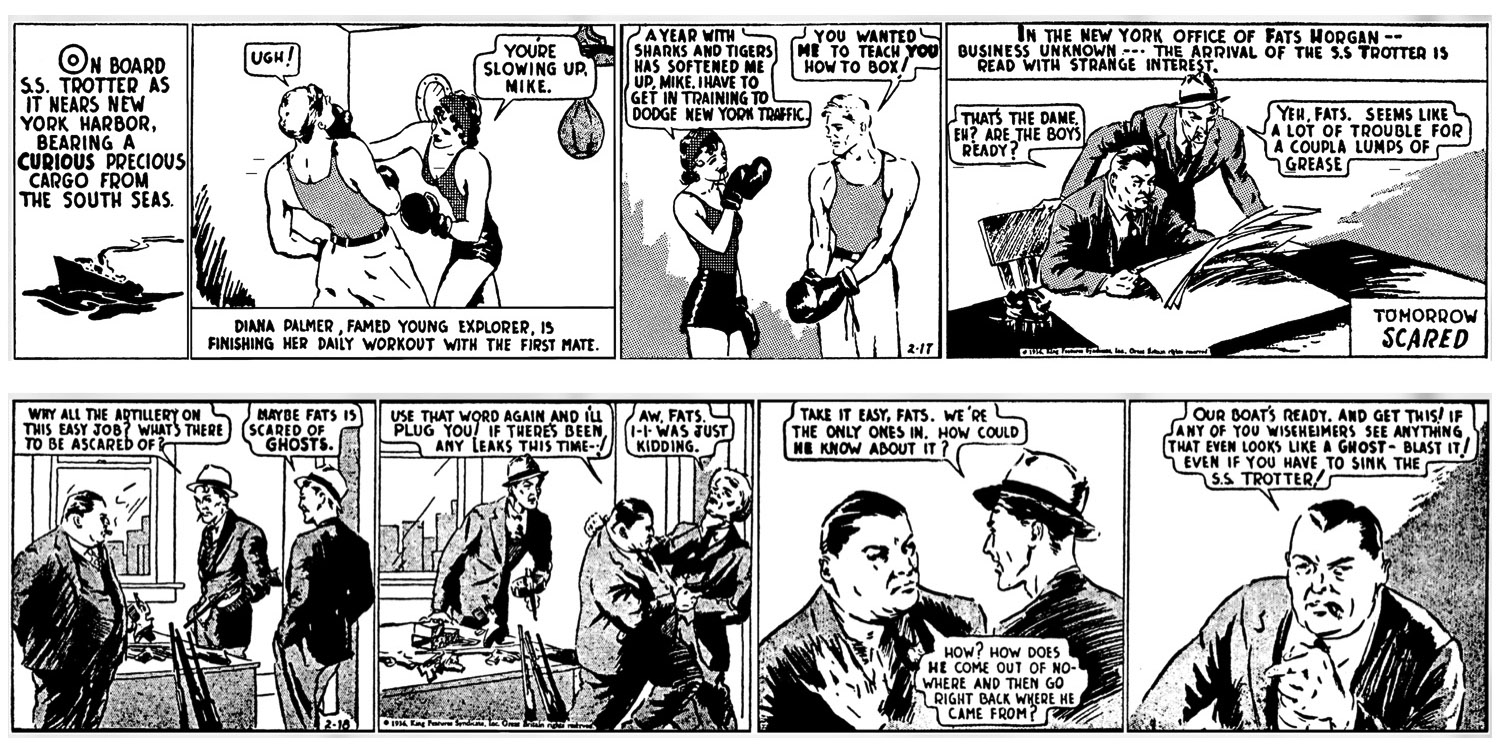
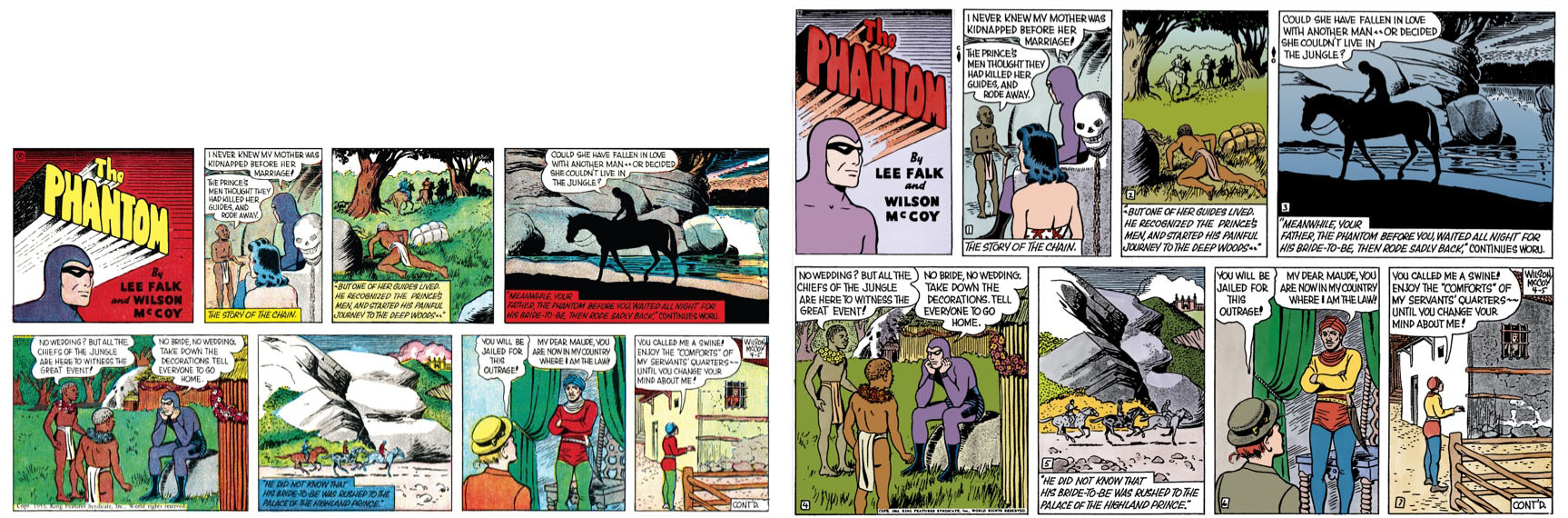
The twenty-first Phantom and Diana were sweethearts from the strip’s beginning in 1936 until their marriage in 1978. That is a remarkably long courtship. But I am not immediately persuaded that its length makes the strip a soap opera.
For me, there is a difference between a relationship that continues through adventures and a continuing series of adventures about the relationship.
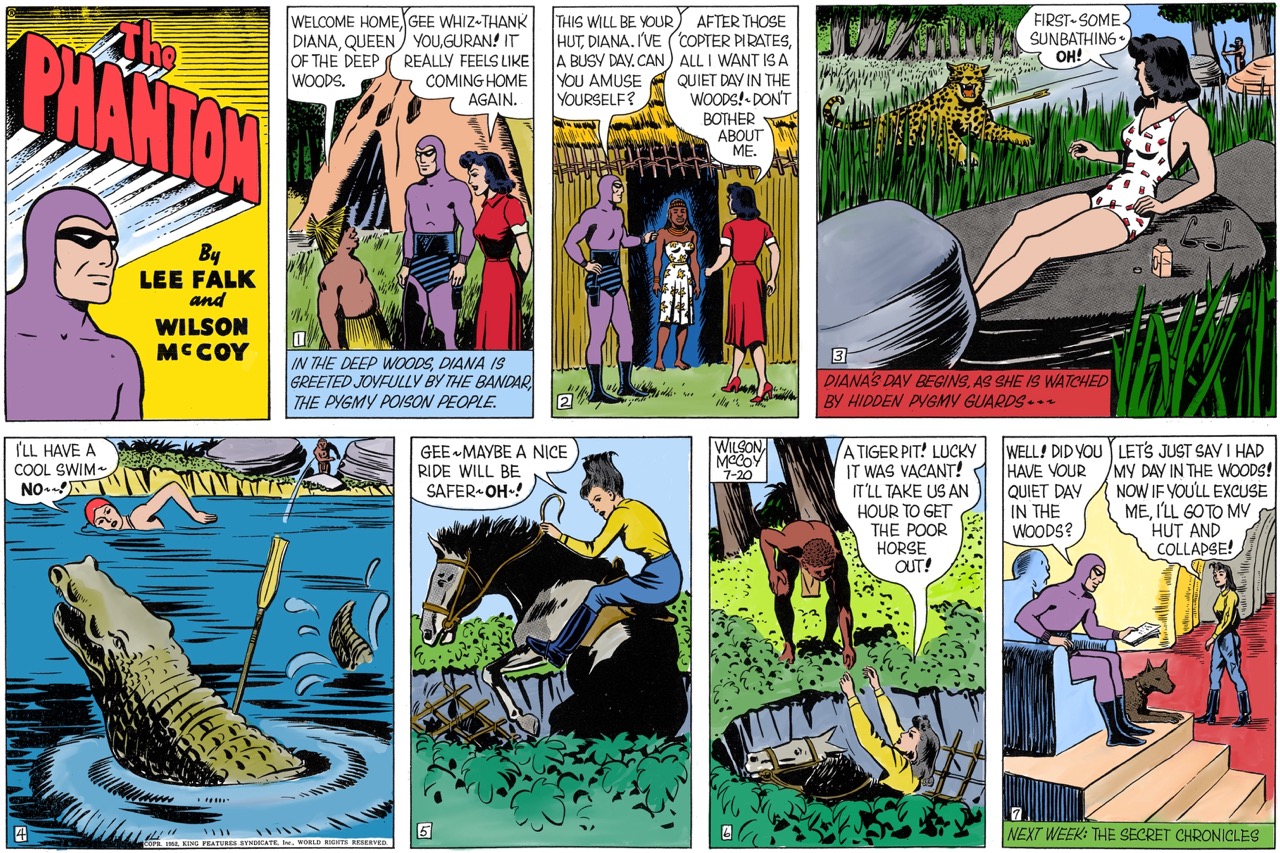
Diana could be in danger, separated from the Phantom or involved in an adventure of her own. Their attachment remained a familiar part of the world. That is not necessarily the same as making their emotional relationship the principal engine of the strip.
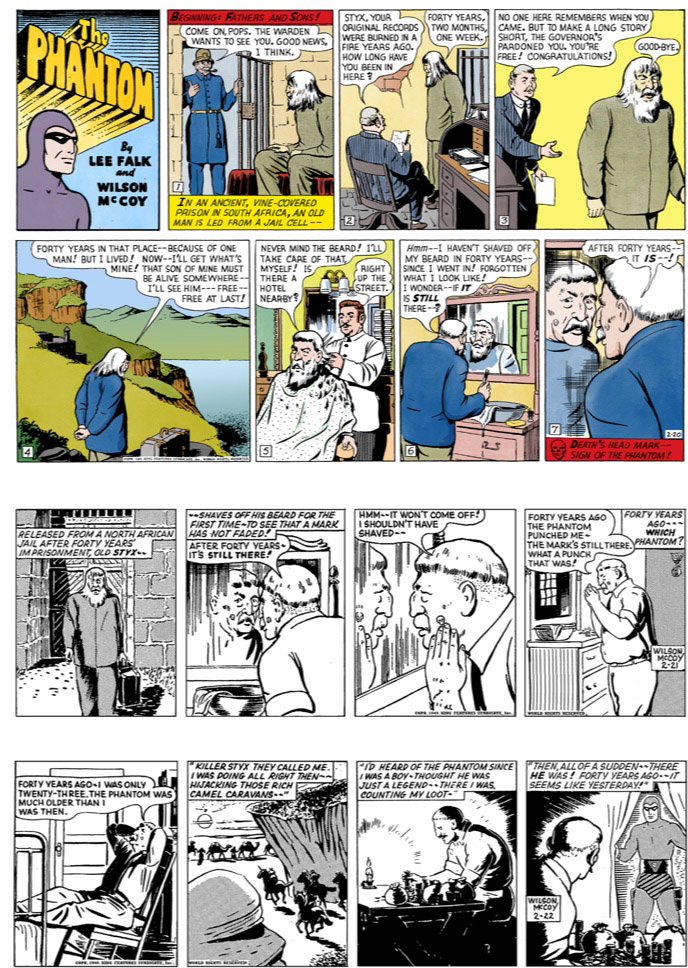
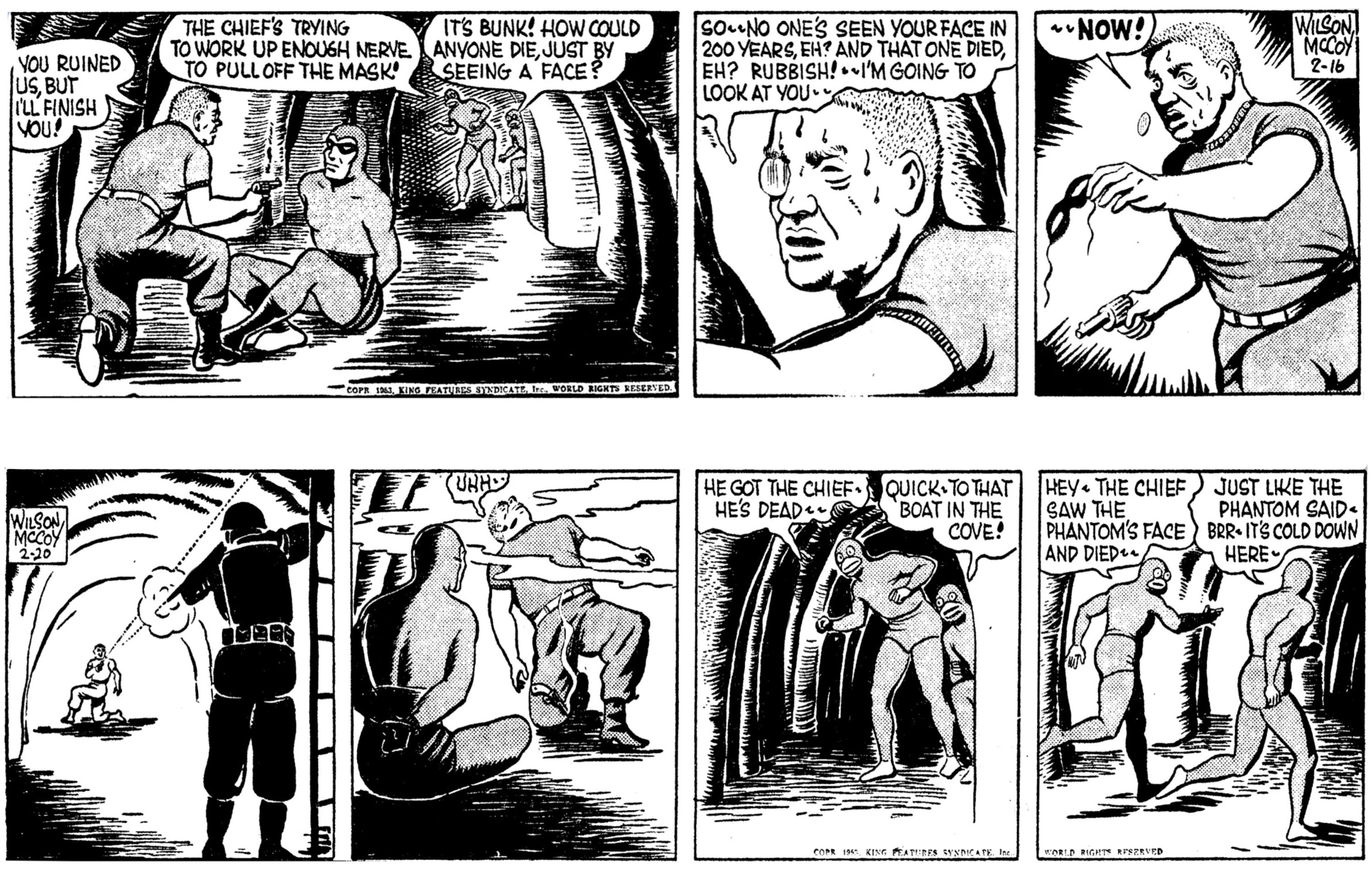
The newspaper format can also confuse the issue. Daily instalments, suspense and cliffhangers belong to adventure serials too. A story can unfold over months and still reach a definite conclusion. Serialization is not synonymous with soap opera.
A fresh frame around 1962
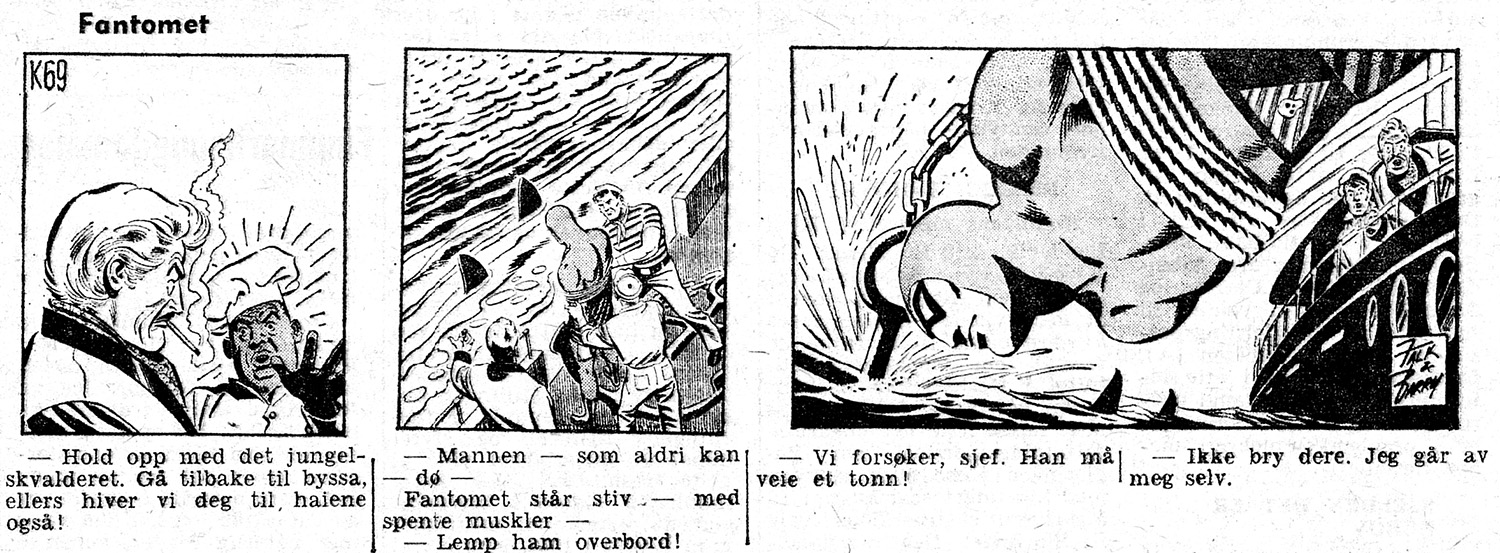
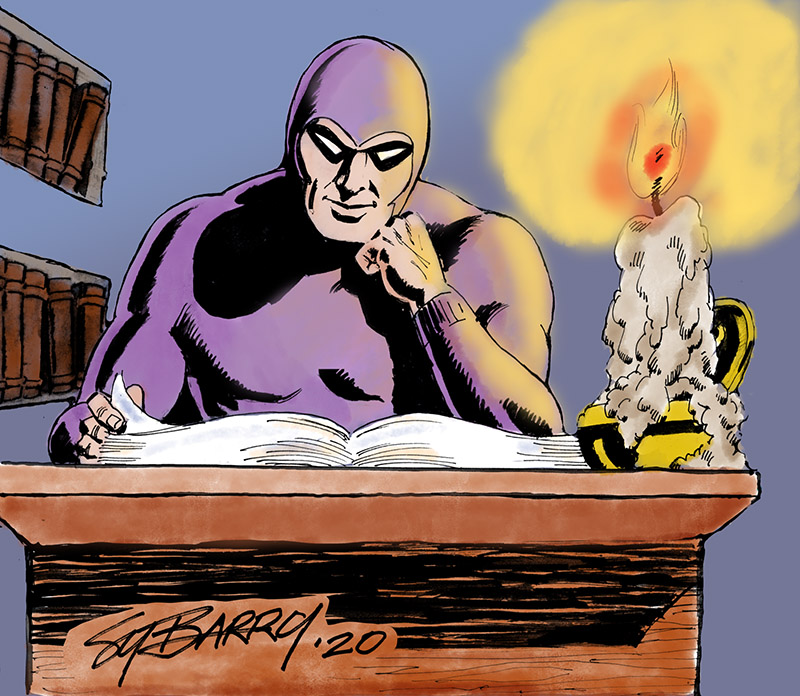
Looking back, I find the older pattern particularly noticeable up to around 1962. With Sy Barry’s arrival, the relationship seemed to acquire a fresher frame. Diana’s nursing work, associated with the United Nations, opened possibilities beyond the familiar circumstances of their earlier adventures.
I do not mean that Diana had previously lacked courage or independence. My point is the renewed presentation: modern artwork, a professional role and different settings made the familiar couple feel less fixed in an older world.
For a while, I see the possibility of a developing relationship rather than simply an indefinitely postponed marriage. Yet, in my reading, much of that renewal soon settled back into the established pattern.
That remains my interpretation of the stories, not evidence of a declared plan by Falk.
The wedding is a more interesting grey area
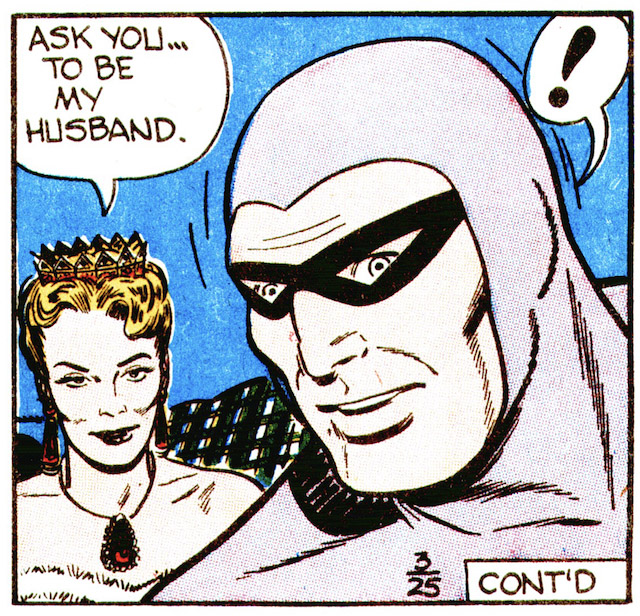
If I wanted to explore soap-like elements in The Phantom, I would look more closely at the wedding and what followed than at the long engagement alone.
Marriage and children changed the continuing framework of the strip. The family could become a source of stories in its own right, rather than merely the familiar background to another adventure.
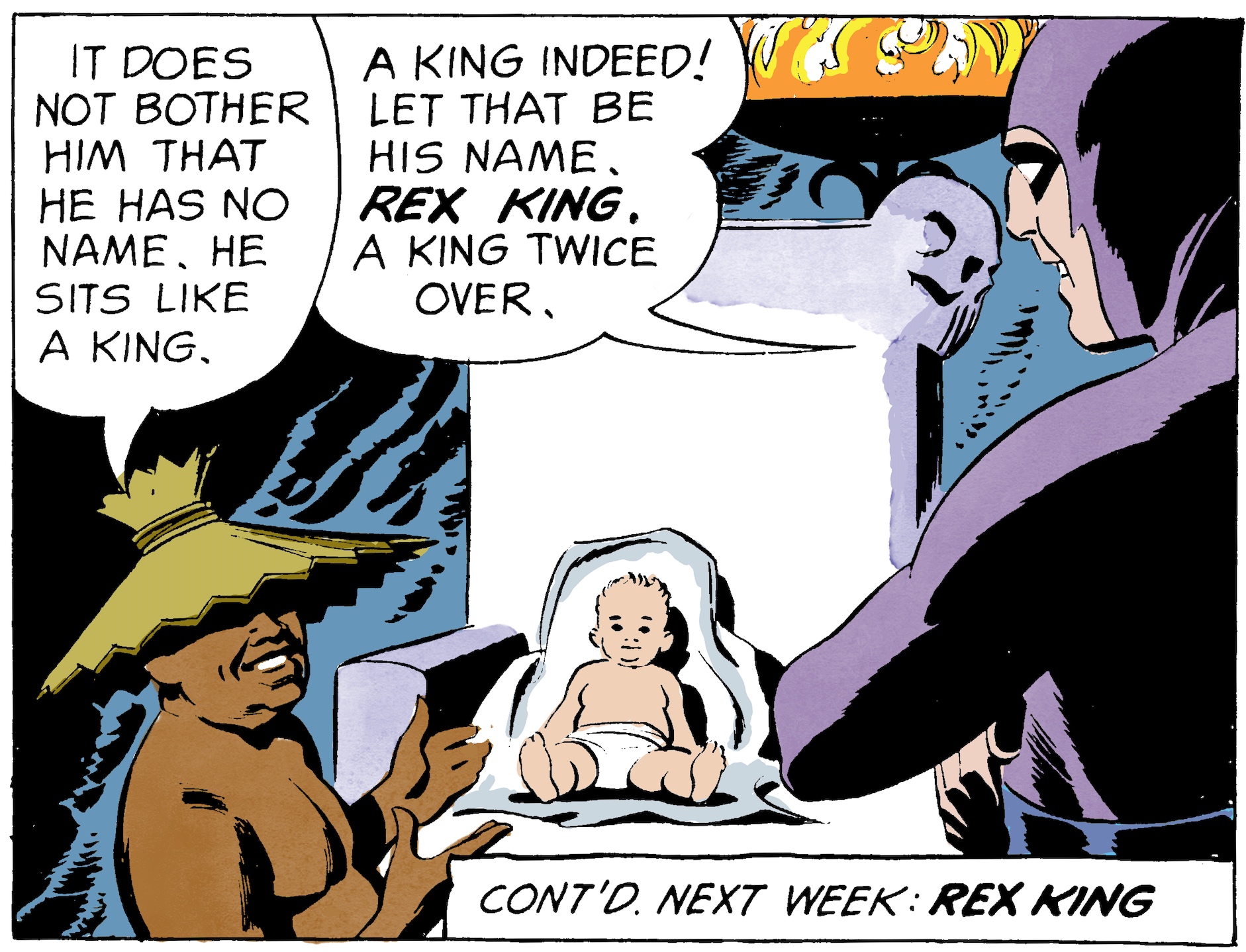
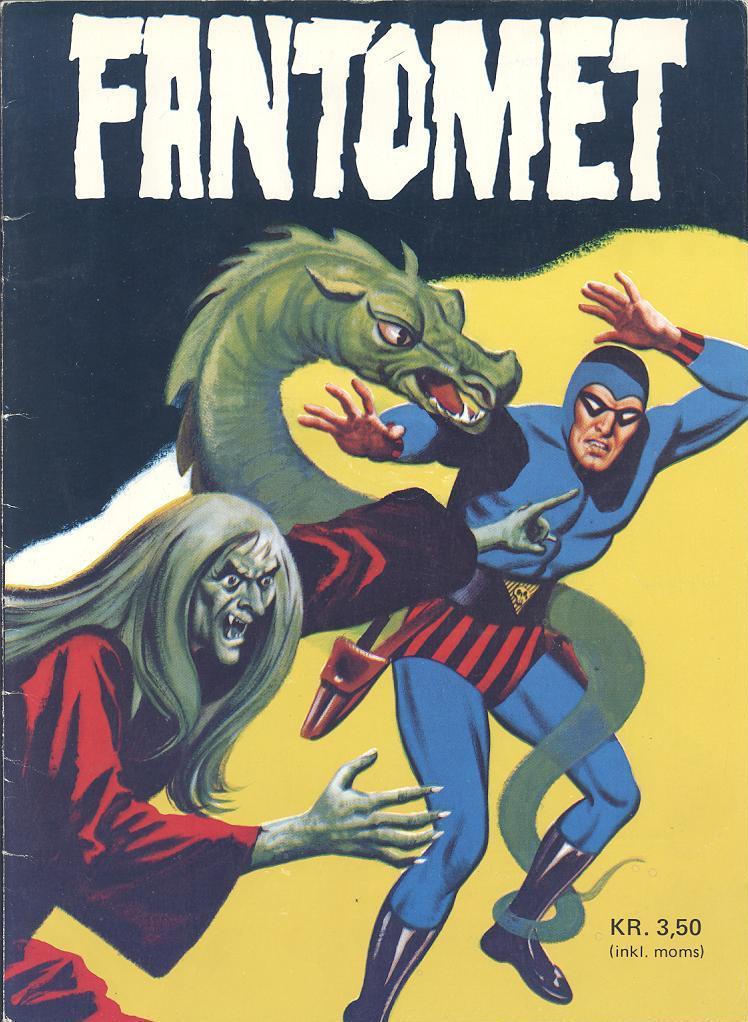
Personally, the wedding felt a little premature. I would have been comfortable with several more years of the earlier arrangement. Rex still offered useful possibilities, as the Scandinavian writers demonstrated: questions, discoveries and adventures involving the youngsters could carry stories without moving immediately towards a new family structure.
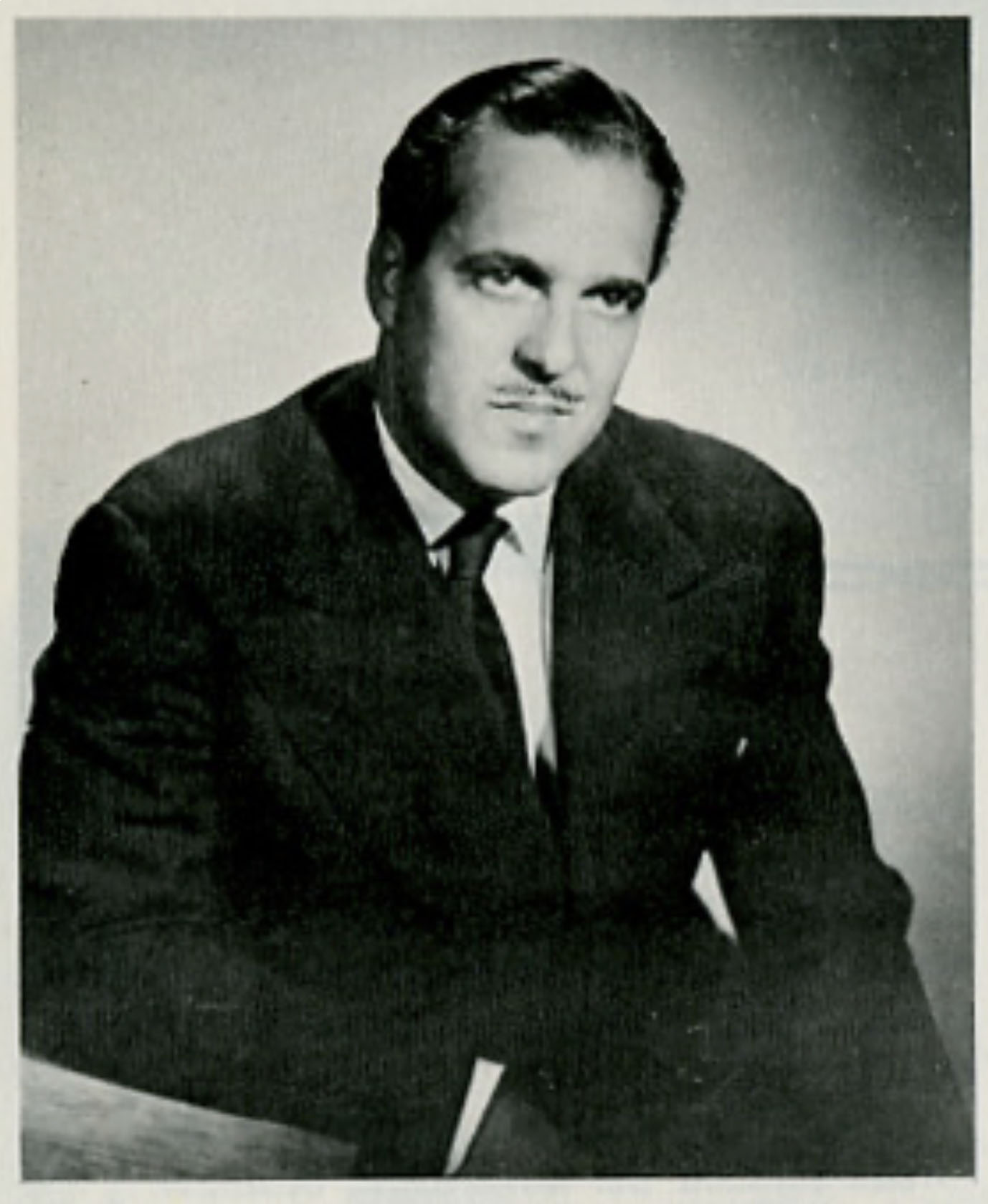
I have also wondered whether Falk was responding to expectations surrounding the strip. But the available testimony does not justify presenting audience pressure as the established explanation.
Comic Book Historians reproduces interview extracts in which Falk linked the decision to his own readiness for change and, in one account, his own marriage. He also reported objections from readers who feared the wedding would damage the strip. These are reproduced interviews rather than original recordings or pages I have examined, but they complicate the idea of a uniformly demanding audience.
Nor does a wedding itself prove a change of genre. The more useful question is what the subsequent stories do: are ongoing personal complications becoming their main purpose, or are family members taking part in adventures that still have their own beginnings and endings?
My conclusion: an adventure strip, with a grey area
This discussion began partly as an attempt to find somewhere the term “soap opera” might fit. I think that was worth exploring — provided we do not force the label onto the strip merely to find a place for it.
My conclusion is that The Phantom is principally an adventure strip, with romance, family continuity and occasional elements that can reasonably be called soap-like.
The long courtship is not enough to classify it as a soap opera. The wedding and later family stories offer a more interesting grey area, but each sequence deserves to be judged by how it works, not simply by the presence of a wife and children.
Audience influence is a separate question, and an important one. It can affect the direction of a series without deciding its genre.
I may prefer one period or one family arrangement over another. That is my judgement as a reader. It should not become a definition disguised as a personal preference.
Sources and scope
The definitions and production background above draw on:
- The Encyclopedia of Television and Radio: “Soap Opera” — the term’s origins, open and closed serial forms, and audience and commercial influence.
- Store norske leksikon: “Såpeopera” — relationship-centred drama and daytime and prime-time forms.
- Oxford Advanced Learner’s Dictionary: “Soap opera” — a concise general definition.
- Rosco M, Comic Book Historians: “The Phantom — The Lee Falk Version Part Two (1970–1999)” — reproduced Falk and Barry interview material concerning the marriage.
The assessments of Diana’s changing presentation, Rex’s possibilities and the strip’s soap-like qualities are my own reading, not claims that these sources establish Falk’s intentions.