The Phantom · The Chronicles
Twenty Men Before the Present Phantom
A personal look at how the first twenty Phantoms have been portrayed in the King Features newspaper strip and in stories produced by its licensees.
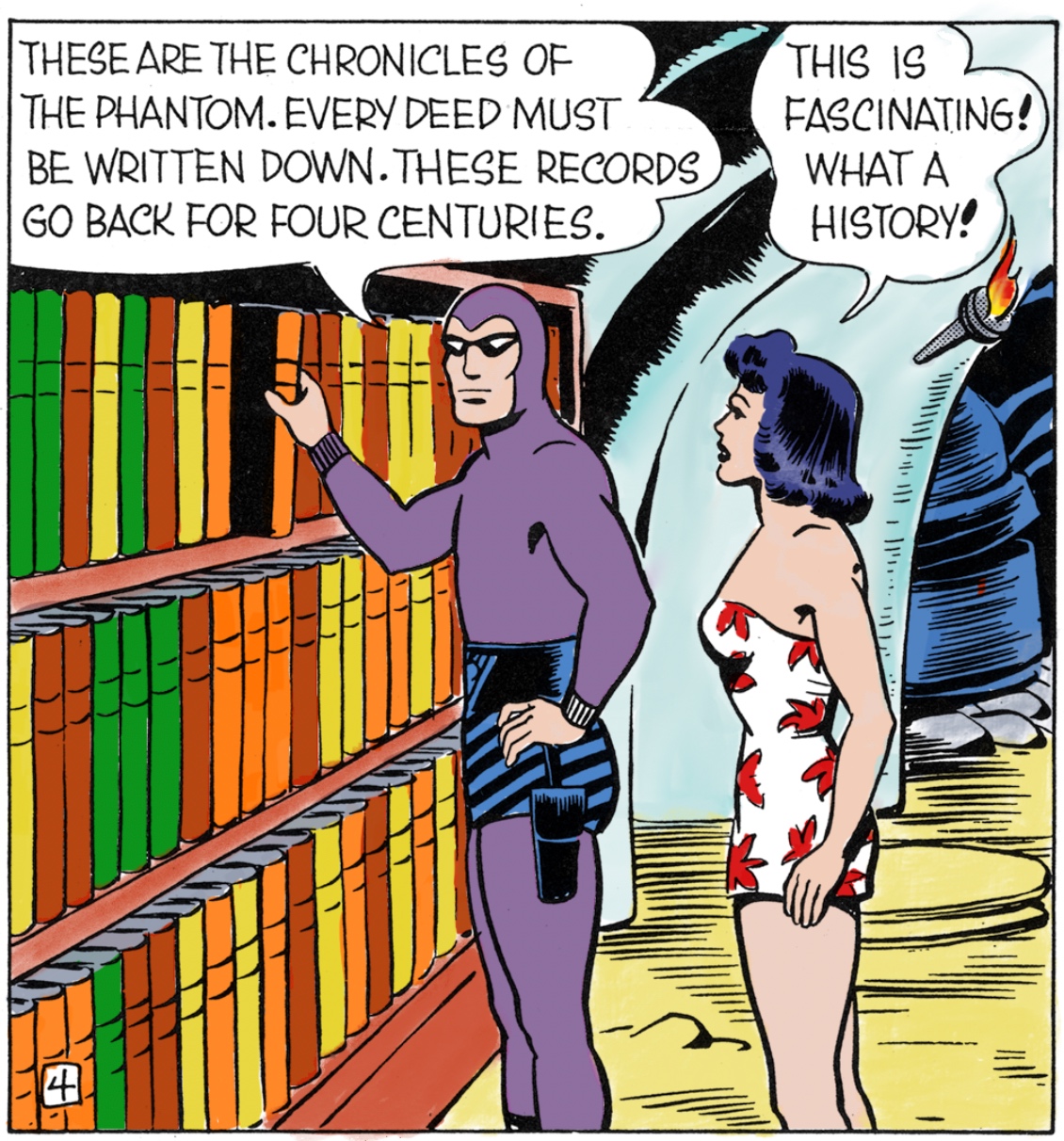
The present Phantom is number 21 in the line established by Lee Falk. A late Falk-era example explicitly says so in the Sunday page of 4 October 1998. Behind him stand twenty men whose lives are recalled in the Chronicles. That sounds like a straightforward family tree. Reading the stories, however, reveals something much more interesting: a history assembled over decades, by different writers, sometimes with incompatible dates and relationships.
This is not an attempt to establish a definitive calendar for the first twenty Phantoms. It is an observation of how these ancestors have been portrayed and used in the newspaper strip and in stories produced by its licensees.
My own position has always been that the King Features newspaper strip is the authority for the Phantom's history. That does not prevent me from enjoying — or including — the lives and adventures developed by other publishers. I simply distinguish those additions from what the newspaper strip itself establishes.
The Scandinavian dates provide a convenient framework for this overview, rather than a chronology I regard as binding. Where the accounts differ, the differences are part of what I want to show.
For me, the value of these adventures lies partly in the differences between the men. Each inherits the same obligation, but they do not all lead the same life. Marriage, children, personal loss and unfinished work give the legend its human side.
How to read this overview
KFS means the King Features newspaper strip. Falk's stories are identified separately from later newspaper stories by Tony DePaul. The newspaper feature does not supply a complete, consistent table of twenty lifetimes.
Egmont / Team Fantomen means the Scandinavian comic-book tradition, including stories originally produced by Semic before Egmont took over. Its chronology provides a practical framework for arranging the entries below, not a definitive calendar or a replacement for the newspaper history. Calling the whole tradition “Egmont” is convenient, but does not make a 1970s Semic story an original Egmont production.
Frew means the Australian publisher. A story printed by Frew may be a KFS newspaper reprint, a Scandinavian story, or an original commissioned by Frew. These are identified separately: an Australian issue number alone does not establish a third, independent version of the family history.
The dates below belong to the Team Fantomen framework unless explicitly labelled otherwise. Some are reconstructed from succession dates, ages or later accounts. “Not established here” means that this research has not securely identified the information; it does not mean that no such detail exists in any story. Story titles use the English indexing titles and may differ from the title printed in a particular edition.
This personal overview uses story references to distinguish the published traditions. It does not claim that every detail has been checked against an original panel. Character and story indexes were used to locate the accounts; selected Frew issue contents were also checked with the publisher. The references at the end make that research basis visible.
1. The First Phantom — the oath begins
Team Fantomen chronology: Born: 1516. Died: 1566. As the Phantom: 1536–1566.
Family — Team Fantomen: Marabella of Maravilloso, married in 1545; their son becomes the second Phantom. Another son, René de Montmorency, results from his earlier relationship with Gabrielle de Montmorency, initially unknown to him.
Important stories — Team Fantomen: The Avenger develops the founding adventure; The Ring connects the skull ring with Paracelsus. The Battle on Malta follows his fatal injuries in 1565 and death in Skull Cave in 1566. The Mask of Death and The Missing Pages develop the other family line.
KFS: Falk's origin accounts use different starting dates. The Singh Brotherhood gives 1525, while later accounts include 1536 and 1550. The First Phantom (S096, 1975) is a major Falk/Barry retelling. The wives described in The Heirs, The Name and Captain Amazon are not a single consistent identification: a descendant of Columbus, Christina, and a Spanish princess appear in these accounts. The Wig describes a different death, involving bandits. I keep these newspaper accounts distinct from the Scandinavian biography; for me, the newspaper strip remains the authority, even where its own accounts differ.
2. The Second Phantom — a reluctant succession
Team Fantomen chronology: Born: approximately 1548, from his age at succession. Died: 1604. As the Phantom: 1566–1604.
Family — Team Fantomen: Four marriages are reported. Elena is his first wife, in A Plague in Venice; Ann or Anne, an Englishwoman, is the fourth. Their son becomes the third Phantom. Felicia, an important earlier love, should not automatically be listed as another wife.
Important stories — Team Fantomen: Night of the Jesters, The Demon in the Tower and A Plague in Venice give him a substantial European background. His inheritance follows his father's return from Malta.
KFS: The Wig, by Falk and Barry, places him in Shakespeare's world. His son initially prefers the theatre, but accepts the oath after his father's death at the hands of Barbary pirates. The Name assigns Marabella, Columbus's granddaughter, to the second Phantom — a clear difference from the Scandinavian placement of Marabella with the first. DePaul's The Ossuary adds a newspaper adventure set in 1599.
3. The Third Phantom — Shakespeare and another wife
Team Fantomen chronology: Born: 1586. Died: 1625. As the Phantom: 1604–1625.
Family — Team Fantomen: Rosamunda is the mother of the future fourth Phantom, born in 1604. The theatrical background introduced in The Wig is retained in this tradition.
KFS: Falk's The Wig connects Rosamunda with Shakespeare. In The Third Phantom, however, his wife is Pura, a maharajah's daughter. Captain Amazon places Pura with the fourth Phantom instead. The names therefore need the accompanying story reference.
Important stories — Team Fantomen: The Hunchback, Death's Hour and The Pirates' Prisoner are useful starting points. The Hidden People, written by Tony DePaul and drawn by Felmang and Ferri, supplies the 1625 death account.
Frew original: Evil Lurks in the Night, by Pidde Andersson and Joan Boix, is set in 1605. It first appeared in Frew issue 1854 (2019), before its later Scandinavian publication in Fantomen 8/2021.
4. The Fourth Phantom — bereavement and the lost ring
Team Fantomen chronology: Born: 1604. Died: 1646. As the Phantom: 1625–1646.
Family — Team Fantomen: An unnamed English wife, married in 1625, dies giving birth to the fifth Phantom in 1626. A later relationship with Giovanna, a woman living as a cardinal, ends with her poisoning while pregnant. She and the unborn daughter are buried in Skull Cave. A conflicting later account in The Black King still has the fifth Phantom's mother alive in 1656.
Important stories — Team Fantomen: The Plague Infected and The Ring of Death; the latter concerns the skull ring's loss and a replacement made in Leipzig in 1631.
KFS: Captain Amazon identifies Pura as this Phantom's wife, unlike The Third Phantom.
Frew original: The Saga of the Vultures, by Pidde Andersson and Anthony Spay, is set in 1634. Frew's issue 1886 presents its three chapters together. Its Australian production should be distinguished from reprints of Scandinavian adventures.
5. The Fifth Phantom — two versions of Captain Amazon
Team Fantomen chronology: Born: 1626. Died: 1662. As the Phantom: 1646–1662.
Family — Team Fantomen: An unnamed Italian opera singer, married in 1646; their son becomes the sixth Phantom. Juliana della Bartolo, in The Black King, is a later romantic involvement, not the named wife in this framework.
Important stories — Team Fantomen: The Black Glove, especially its first part, gives the fatal encounter in 1662. The Strength of Ten Tigers concerns the Jungle Olympics. The Black King is also important for the contradictory account of his mother.
KFS: Falk's Captain Amazon — Pirate Queen (S134, 1989–1990) makes Juliet Adams the fifth Phantom's wife and places the adventure in the eighteenth century. The Scandinavian edited version moves that marriage to the fifteenth Phantom. Later newspaper stories, including DePaul's Death Stalks the Fifth Phantom, place the fifth in the seventeenth century. This is an example of chronology changing within the newspaper tradition itself.
6. The Sixth Phantom — the Jungle Patrol
Team Fantomen chronology: Born: 1646. Died: 1682. As the Phantom: 1662–1682.
Family — Team Fantomen: Natala of Navarre, a former queen. Accounts give 1664 or 1665 for the marriage; their son, the seventh Phantom, is born in 1665 in The Message.
Important stories — Team Fantomen: The second part of The Black Glove develops the succession. The Message establishes the family. The Jungle Patrol is founded in 1664, with Redbeard as its first colonel.
KFS: Falk and Barry's The Founding of the Jungle Patrol is the essential newspaper account. The Golden Sands of Keela-Wee, The Joonkar Slavers and The Vultures are further relevant stories. The Patrol's founder and Natala's husband are not consistently numbered: newspaper references distribute these details between the sixth and seventh Phantoms. Natala's royal background also varies. The Scandinavian dates organise these elements into one account, rather than proving that every newspaper reference originally agreed.
7. The Seventh Phantom — Heloise and the wedding gifts
Team Fantomen chronology: Born: 1665. Died: 1700. As the Phantom: 1682–1700.
Family — Team Fantomen: Heloise of Koqania, also associated with the name Hanta, is his wife. The Wedding Gifts places the marriage in 1682. Their son becomes the eighth Phantom.
Important stories — Team Fantomen: The Wedding Gifts, The Dangerous Portrait and The Royal Palace Fire. The last connects the family with Stockholm's palace fire in 1697 and the son's education abroad.
KFS: The royal wife and Jungle Patrol foundation sometimes associated with the sixth are also attached to the seventh. Joomkar's Crown gives a death involving a soldier around 1680, which does not fit the Scandinavian 1700 succession. Hanta Witch is another example requiring care: its heroine and date have been accommodated differently in Scandinavian editions. An apparently familiar marriage can therefore belong to a different number in the original newspaper telling.
8. The Eighth Phantom — a very different fourth son
Team Fantomen chronology: Born: 1682. Died: 1717. As the Phantom: 1700–1717.
Family — Team Fantomen: Lady Ingrid of Holstein. The Wreck in Bengali Bay brings together a royal rescue and the woman who becomes his wife. Their son becomes the ninth Phantom.
KFS: Falk and Barry's The Fourth Son gives this Phantom an unnamed British wife and four boys: triplets Kit-One, Kit-Two and Kit-Three, born in 1703, and Kit-Four, born in 1704. His death in 1726 follows an arrow wound inflicted during his confrontation with Jhatun Khan. The Snake Goddess supplies another death account involving a snakebite.
Edition difference: The Fourth Son is numbered S137 in the newspaper sequence. Scandinavian adaptations assign the family to a later generation. Its children must not be added unqualified to Lady Ingrid's family.
Frew reprint: Issues 1019 and 1597 reprint The Fourth Son. Here Frew is publishing the KFS adventure, not originating its genealogy.
9. The Ninth Phantom — Flame or Vhatta
Team Fantomen chronology: Born: not securely established here. Died: 1735. As the Phantom: 1717–1735.
Family — Team Fantomen: Flame Stanbury, married in 1717. Their son, variously called Kit or Chris, becomes the tenth Phantom; they also have a daughter, Heloise. Flame and The Pirates' Prisoner provide the family story.
Important stories — Team Fantomen: The Avenger from the Sea, Flame, The Pirates' Prisoner and The Treasure of the Barracuda. The latter describes his death. The treaty with the Little People is placed on 12 May 1718.
KFS: This is Kit-Four, born in 1704, succeeding in 1726 and marrying Vhatta Khan in The Fourth Son. Guardian of the Eastern Dark and The Golden People develop his legendary strength and another, impossible romance.
Frew originals: Shane Foley's The Strange Day of the Witch Men belongs to the ninth Phantom's Australian adventures. The contrast between Flame and Vhatta is a reason to state the production tradition beside the wife's name.
10. The Tenth Phantom — a succession before death
Team Fantomen chronology: Born: 1717. Died: 1758. As the Phantom: 1735–1757 in the disability-and-succession account; some summaries extend the period to 1758.
Family — Team Fantomen: Marianne, also called Mary, with Scottish and French parentage. Their eldest son becomes the eleventh Phantom. A younger son is also reported, but his birth date needs checking against the story.
Important stories — Team Fantomen: The Plunderers of Kinloch Island introduces the marriage. The Ghost Who Died Twice, by Norman Worker and Hans Lindahl, distinguishes the end of his active service from his death: catastrophic injuries in 1757 lead to his son taking the oath; the older man dies in a final confrontation with Ashar Singh in 1758.
KFS: The Heirs and Captain Amazon describe a Scandinavian captain's daughter as his wife.
Frew original: The Golden Queen, written and drawn by Shane Foley, is set in 1735 and features the tenth Phantom. The three parts appear in issues 1927, 1929 and 1930 (2022). Its relationship to The Golden People needs to retain the different numbering of the newspaper account.
11. The Eleventh Phantom — Renata and the son in captivity
Team Fantomen chronology: Born: 1738 or 1739; summaries differ. Died: 1775. As the Phantom: 1757–1775.
Family — Team Fantomen: Renata di Mascarelli of Venice. Their son, the future twelfth Phantom, is born in 1757 or 1758 in accounts of captivity in Yemen.
Important stories — Team Fantomen: The Prisoner in Venice introduces Renata. The Ghost Who Died Twice explains why the son takes over while his father is still alive. The Son of the Desert follows the next generation's birth. The Cruel Revenge concerns Renata's murder by Korshir Singh; The Blood-Red Sea supplies the eleventh Phantom's death account.
KFS: The wife described in The Heirs is a maharajah's daughter, while Captain Amazon calls her a Native American woman. Neither description should be presented as a biographical detail about Renata without qualification. This generation is a particularly strong example of the Scandinavian stories building a connected family drama around a comparatively brief newspaper ancestry.
12. The Twelfth Phantom — Cornwall and the guillotine
Team Fantomen chronology: Born: 1757 or 1758. Died: 1793. As the Phantom: 1775–1793.
Family — Team Fantomen: Marion Trelawney of Cornwall. Accounts place their marriage in 1774 or 1775; their son, the thirteenth Phantom, is born in 1775.
Important stories — Team Fantomen: The Son of the Desert, The Moor of Death and The Ambassador. The Ghost Pirates, by Norman Worker and Jaime Vallvé, follows the future thirteenth during childhood visits to his maternal grandfather. In the Shadow of the Guillotine, by Claes Reimerthi and Heiner Bade, published in Fantomen 5/2011 and reprinted by Frew in issue 1594, places the succession in revolutionary Paris: the wounded father passes the oath and rings to his son before being killed.
KFS: Phantom World gives the twelfth Phantom an adventure in 1725 and a sleep lasting three years. That date cannot be fitted into the Scandinavian lifespan without changing the story. The contradiction belongs in the overview, rather than disappearing behind a single exact-looking date.
13. The Thirteenth Phantom — Jeanette Lafitte
Team Fantomen chronology: Born: 1775. Died: 1811. As the Phantom: 1793–1811.
Family: The Scandinavian Jeanette Lafitte stories identify her as his wife, though their dating needs care. Their son becomes the fourteenth Phantom. A securely checked birth year for that child is not supplied here.
KFS: Falk and Barry's The Vault of Missing Men (S111, 1979–1980) is the principal Jeanette story: her brother Jean Lafitte eventually permits the marriage. Other Falk accounts put Jeanette with the fourteenth or fifteenth Phantom; Buried Treasure gives the thirteenth a Native American chief's daughter as wife. Later DePaul stories, including The Rat Must Die, return to Jeanette as the thirteenth's wife.
Important stories — Team Fantomen: In the Shadow of the Guillotine gives his succession. The Crown Prince Mystery, Mombutu: The Power of Evil and Revenge of the Pirate Queen develop his own adventures.
Editorial change: The Slavers originally featured the fourteenth Phantom in 1803; a Scandinavian reprint changed him to the thirteenth. Numbering can change even without a new story being written.
14. The Fourteenth Phantom — the unknown commander
Team Fantomen chronology: Born: 1793. Died: 1831. As the Phantom: 1811–1831.
Family — Team Fantomen: Marie Claire, married in 1811; their son becomes the fifteenth Phantom. The child's birth year is given as 1811 in the family account used here, although other compilations use 1812.
Important stories — Team Fantomen: The Unknown Commander describes his murder by the impostor Colonel Chandra Sykharn in 1831. The sequel concerns his son's efforts to restore the Jungle Patrol. The commander's secrecy is therefore tied to a specific failure and rebuilding of an institution.
KFS: The fourteenth is credited with ending slavery in the Eastern Dark. The Phantom Cowboy identifies Jeanette Lafitte as his wife, conflicting with The Vault of Missing Men. The later newspaper story The Commander Will See You Now also refers to the 1831 death. A later writer can use part of the Scandinavian historical framework without making all earlier Falk marriages agree with it.
15. The Fifteenth Phantom — Captain Amazon relocated
Team Fantomen chronology: Born: 1811. Died: 1848. As the Phantom: 1831–1848.
Family — Team Fantomen: Juliet Adams, married in 1831, in the edited Scandinavian version of Captain Amazon. Their son becomes the sixteenth Phantom.
Important stories — Team Fantomen: The Unknown Commander and its continuation explain the succession and the reorganisation of the Jungle Patrol. The Iron Mask, set in 1843, and The Child Farm, set in 1845, are further historical adventures.
KFS: Juliet originally belongs to the fifth Phantom in Falk's Captain Amazon. The fifteenth's newspaper wife is described as an Italian opera singer in The Heirs and Buried Treasure; Queen Amaza's Mate associates him with Jeanette Lafitte. Those descriptions are alternatives in the sources, not evidence that Juliet was simultaneously an opera singer and Jeanette.
The Scandinavian 1848 death year is supplied by the chronological framework. A securely identified story depicting that death has not been established in this research.
16. The Sixteenth Phantom — the twins' father
Team Fantomen chronology: Born: 1831. Died: 1869. As the Phantom: 1848–1869.
Family — Team Fantomen: Asta Jensen. Their twins, Kit or Kip and Julie, are born in August 1852. The boy becomes the seventeenth Phantom; Julie will also wear the costume.
Important stories — Team Fantomen: Gold Fever, Public Enemy No. 1, with the honeymoon placed in 1851, and The Spirit of Nat Turner, set in 1860. These place the family in a recognisable nineteenth-century world.
KFS: The Phantom Cowboy gives this Phantom the wife Annie Morgan and an adventure in 1843. That is before the Scandinavian succession date. Falk's The Female Phantom is the central newspaper story behind the twins and Julie's temporary assumption of the role.
The 1869 end date is part of the Scandinavian sequence; the research does not securely identify a corresponding death scene. It is better to distinguish that chronological entry from a death whose circumstances have actually been located.
17. The Seventeenth Phantom — Julie and the other son
Born — KFS: 3 August 1852 in Falk's The Female Phantom.
Team Fantomen chronology: Died: 1889. As the Phantom: 1869–1889.
Family — Team Fantomen: Mary Stillwell, a Quaker; their son becomes the eighteenth Phantom. An earlier relationship with Lady Kate Sommerset produces Christopher Sommerset. His twin sister Julie takes his place on more than one occasion.
Important stories — Team Fantomen: Death in the East End, Julie and the stories about Christopher and his mother build an unusually complicated family history. His death is described as occurring while saving that other son and the boy's mother.
KFS: Falk and McCoy's The Female Phantom makes Julie central to the family legend. The Tree House credits the seventeenth with encountering the Rope People, while another newspaper telling assigns that discovery to the nineteenth.
Julie deserves a place in the history, but her temporary service does not add another numbered generation between the seventeenth and eighteenth Phantoms.
18. The Eighteenth Phantom — the late Victorian world
Team Fantomen chronology: Born: not securely established here. Died: 1908. As the Phantom: 1889–1908.
Family — Team Fantomen: Lara Collins, daughter of an Oxford professor; their son becomes the nineteenth Phantom. Lara's identification derives from the Scandinavian edited version of Ken, of the Dynasty. The original Italian story concerned another generation, so this is an adapted source within the Scandinavian continuity.
Important stories — Team Fantomen: The London Underground Murders and Sins of the Past, by David Bishop and César Spadari, are set in 1891–1892. The two Underground Murders parts appeared in Fantomen 8/2006 and 9/2006, and Frew issues 1443 and 1444. The King of Norway places him in 1905. U-118 identifies Albig Singh as his killer in 1908.
KFS: Falk's Mystery of Kula-Ku mentions him. DePaul's The Immortal Man refers to an encounter with the Fortunato family in 1899. The newspaper evidence located here is much less extensive than the Scandinavian catalogue; a complete newspaper marriage and lifetime should not be inferred from the larger Team Fantomen biography.
19. The Nineteenth Phantom — Lucy Cary and Jane
Team Fantomen chronology: Born: 1890. Died: 1935. As the Phantom: 1908–1935.
Family — Team Fantomen: Jane or Janie Cary; their son, the twentieth Phantom, is born in 1912.
Important stories — Team Fantomen: The Return of the Ghost supplies the 1935 death at Rachamond. The Cary family and adventures around the First World War add a more recent historical setting.
KFS: The Adventures of Lucy Cary (D089), by Falk and Barry, is the key newspaper family adventure. Its relationship to the present Phantom has to be read with the changing twentieth/twenty-first numbering in mind. The Heirs gives an unnamed South American explorer's daughter as a wife; The Beasts of Phantom Head Peak provides a death associated with a fall, unlike the Scandinavian Rachamond account. DePaul and Paul Ryan add The Aeronaut to the wartime history.
Frew original: Jane Saves the President, by Pidde Andersson and Percy Ochoa, appears in issue 1950 (2023), set in 1912. Its later Scandinavian publication does not change its Frew origin.
20. The Twentieth Phantom — the present Phantom's father
Team Fantomen chronology: Born: 1912. Died: 1959. As the Phantom: 1935–1959.
Family: Maude Thorne McPatrick in the developed family tradition; their son becomes the present, twenty-first Phantom. The Scandinavian chronology places the son's birth in 1939.
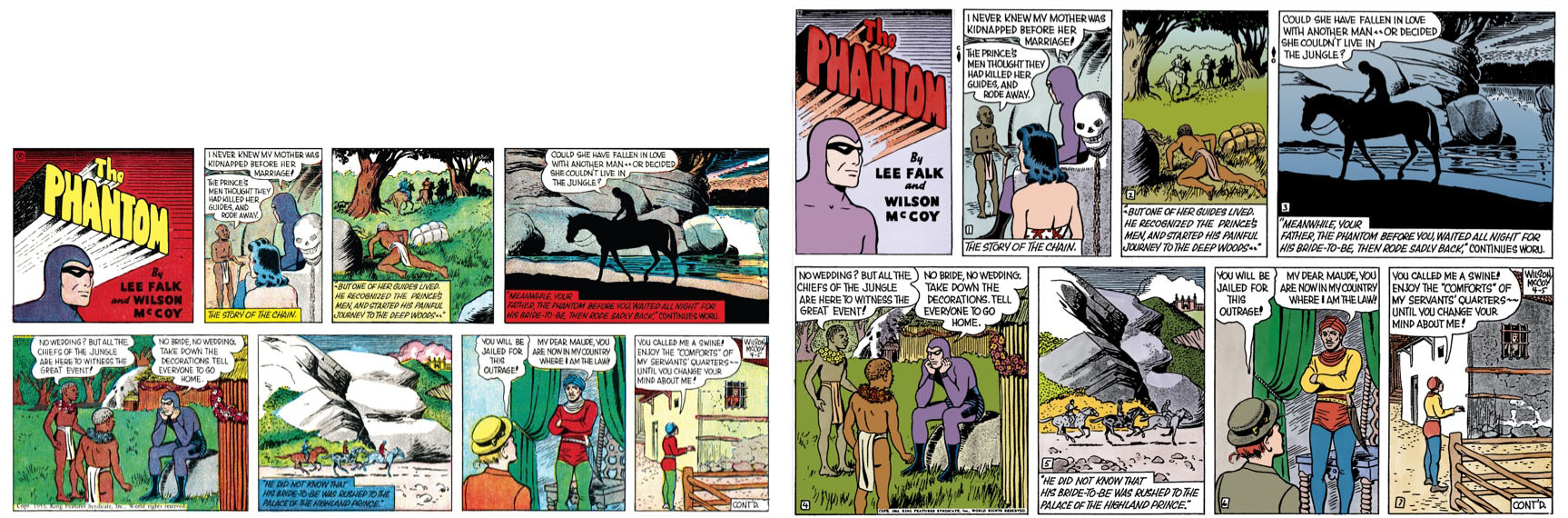
KFS: The Chain (S034, 1953) supplies Maude's name. The Tree House describes a daughter of Dr Thorne, without necessarily establishing every later detail of the full name. Falk's two childhood accounts, S011 (1944) and S053 (1959), describe the father's last conflict differently. The Belt adds the version in which Rama Singh stabs him. Dr. Axel and the Witchmen connects the son's birth with Dr Axel.
Team Fantomen: The 1959 death follows the defeat of a Singh fleet and Rama Singh's attack from behind. The exact date belongs to this chronology.
There is an unavoidable distinction between publication time and fictional time: the present Phantom was already appearing in newspapers in 1936. A later framework making him succeed in 1959 cannot simultaneously describe the literal calendar of those original strips.
What the family tree can — and cannot — tell us
This overview records how the ancestors have been used in different stories; it does not turn their dates into a final calendar. My point of reference remains the KFS newspaper strip, while the licensees' additions remain interesting in their own right.
The succession is the firm centre: a son accepts an obligation that his father can no longer fulfil. The surrounding history is less fixed. Sometimes the father dies immediately; sometimes he lives long enough to watch his successor. Some wives have detailed lives; others appear only as a description in a short list. Children outside the direct succession make the family more complicated than twenty fathers and twenty eldest sons.
For me, the differences are worth keeping. An exact-looking chart that quietly combines Flame with Vhatta, or puts Juliet Adams beside the wrong generation, would make the history less useful. The story and its production tradition are part of the information.
The most valuable next step is to compare the relevant original panels and particular reprint editions. Especially useful checks are the first Phantom's changing origin dates, the family lists in The Heirs and Captain Amazon, the Scandinavian editing of The Fourth Son, Jeanette Lafitte's changing husband number, and the different accounts of the twentieth Phantom's death.
Story references and research basis
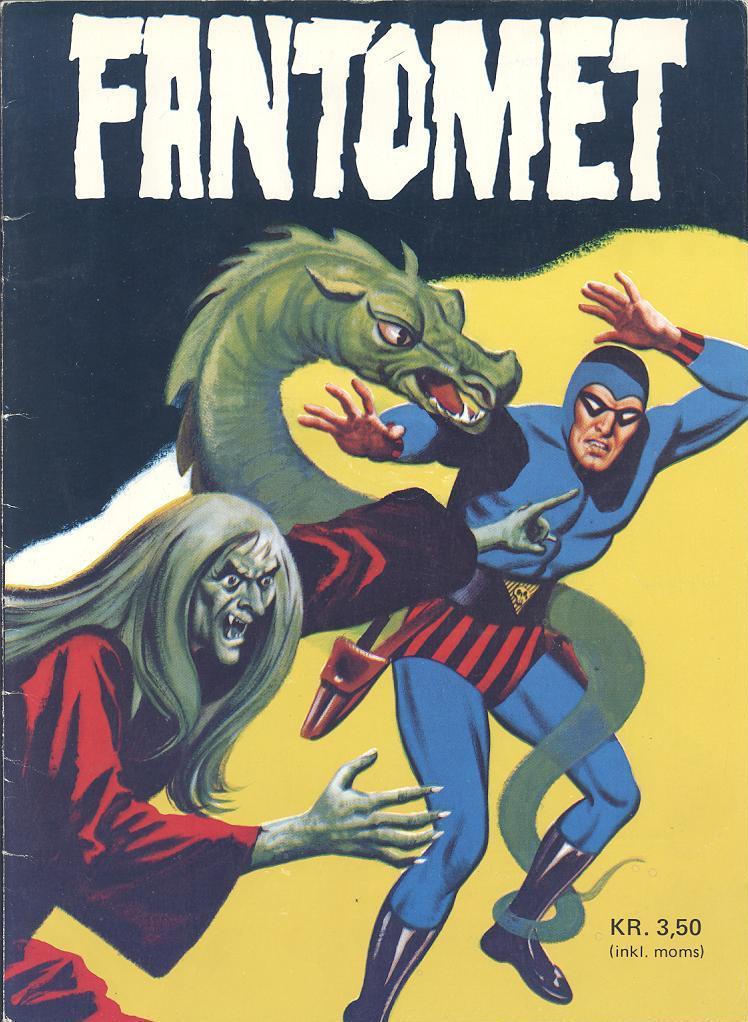
The references above identify the story production, rather than treating every Frew publication as an independent source. For the newspaper stories, see KFS's official The Phantom archive at Comics Kingdom and the corresponding daily and Sunday entries in Phantom Index. For Scandinavian material, the relevant publications are Fantomen, Fantomet and their historical collections, produced by Semic and later Egmont. Individual issue and translation titles should be checked before locating a specific edition.
Frew's publisher catalogue is useful for confirming Australian contents: The Phantom — Frew Publications. The Australian examples singled out here are Evil Lurks in the Night (1854), The Saga of the Vultures (1886), The Golden Queen (1927, 1929 and 1930), Jane Saves the President (1950), and KFS reprints of The Fourth Son (1019 and 1597).
The detailed identification of characters, story titles, production credits and edition changes was researched through PhantomWiki. Its numbered character pages separate the traditions and provide story links. These are secondary finding aids, not substitutes for the original panels. Births inferred from ages, disputed dates and incomplete family entries remain marked in the text.
Starting points in Phantom Index
These newspaper entries make several recurring references easier to locate. The two adventures called The Heirs are separate daily and Sunday entries.