A personal reflection · Atmosphere · The art of suggestion
When the Ghost felt more mysterious
Wilson McCoy, strength that did not need to announce itself, and the elusive distance between a remarkable man and a living legend.
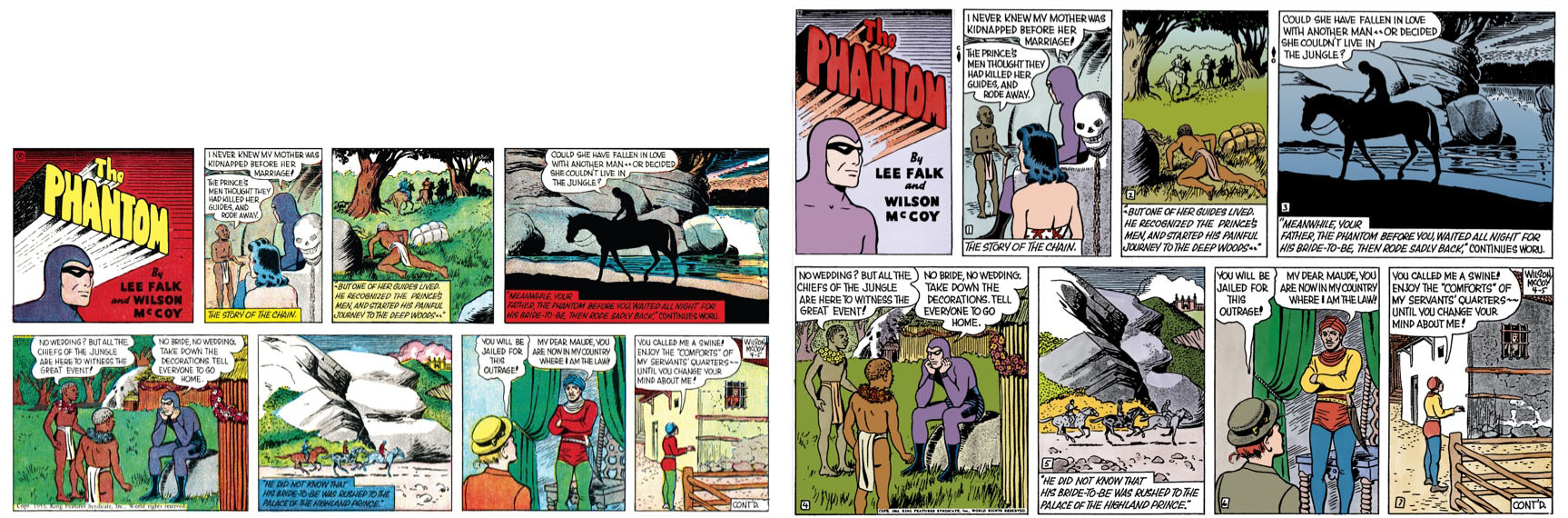
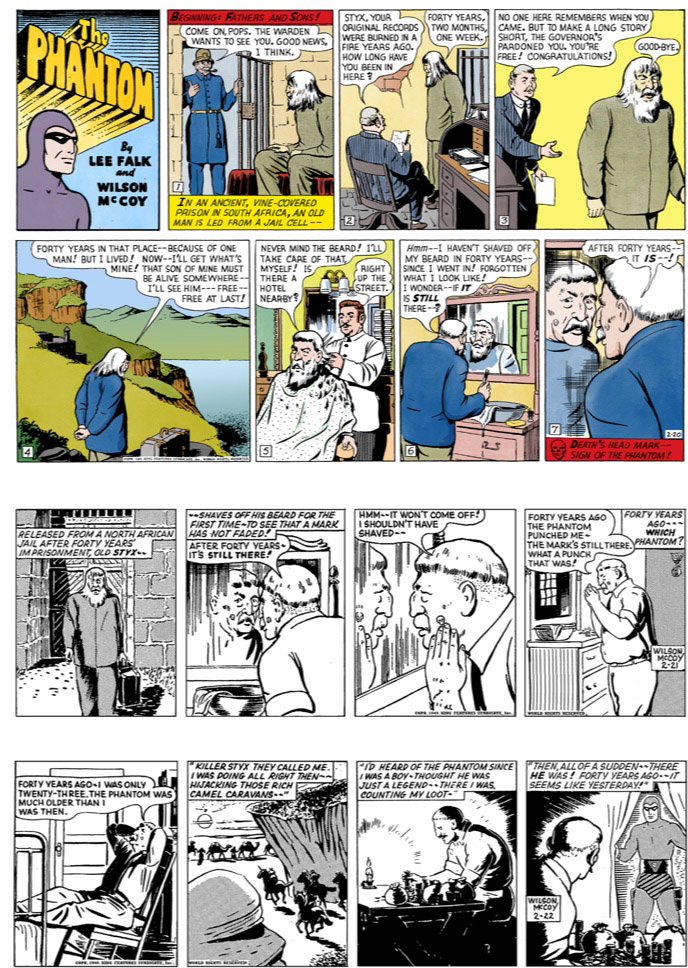
I sometimes feel that the Phantom used to carry more mystery with him. Other readers have expressed a similar impression. That does not mean we all remember the same stories, or that we would agree on when the feeling changed. It is an impression worth exploring, especially when we return to the strips drawn by Wilson McCoy.
What interests me is the presence of a figure whose appearance does not quite explain what he can do. He may face a man who is visibly bigger and seemingly stronger, yet remain composed. When he wins, something about him still seems beyond ordinary measurement.
That gap between what we see and what we believe is an important part of the Phantom's appeal to me.
1. Knowing the man, feeling the legend
The reader knows that the Phantom is a human being. The apparently immortal figure is a succession of men, each taking up the role of his father. We know more than many of the people who encounter him within the story.
Yet knowing the explanation need not remove the atmosphere. A reader can understand how the legend works and still feel its power. The name, the mask, the continuity across generations and the reactions of other characters all contribute to that feeling.
Much depends on the distance the story allows us to keep. When the Phantom is seen approaching, or when others hesitate before him, we briefly experience him from their side. He becomes the figure they have heard about, rather than only the man whose adventures we follow.
For me, mystery thrives in those moments. It does not require the suggestion that he actually possesses supernatural powers. It requires the drawing and the storytelling to let his reputation occupy the scene.
2. McCoy's quiet authority
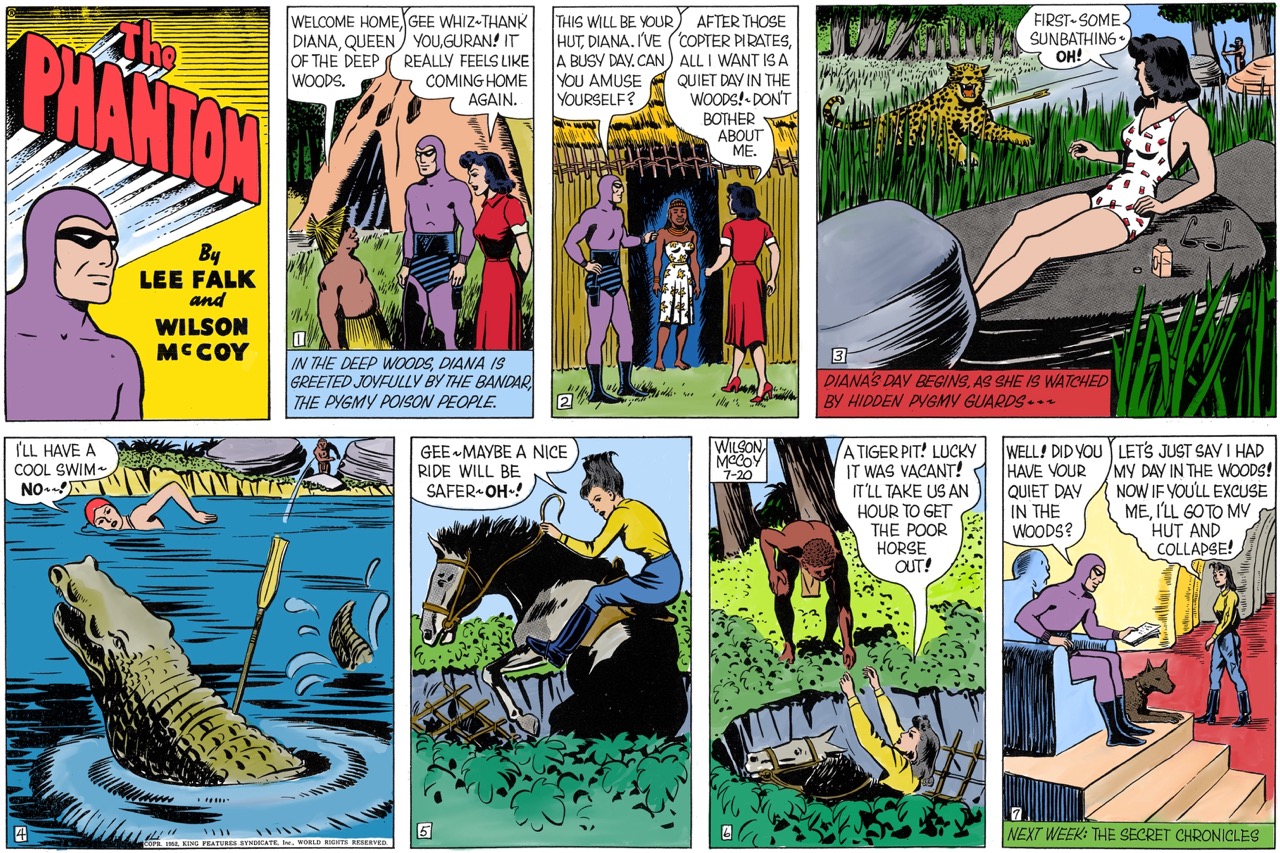
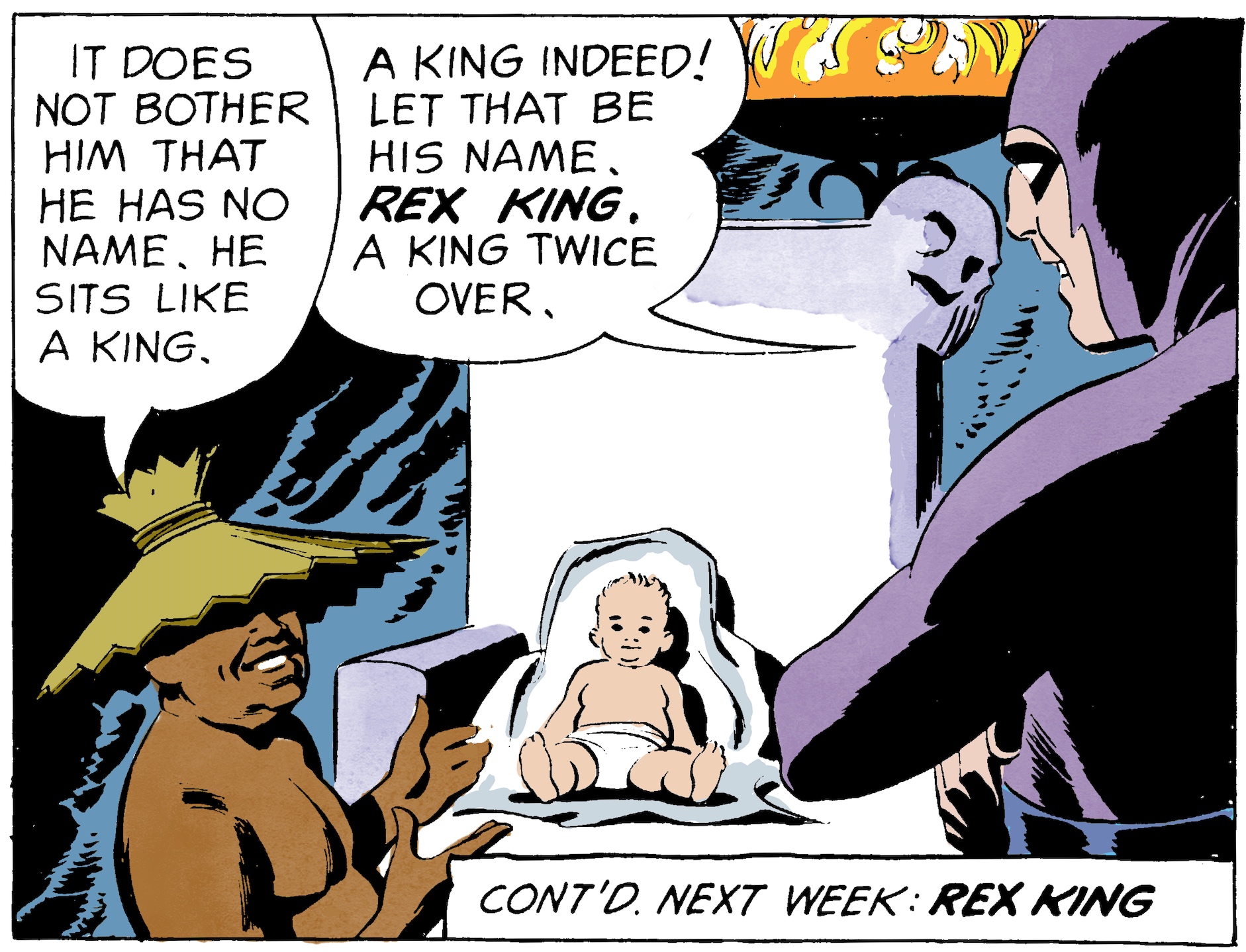
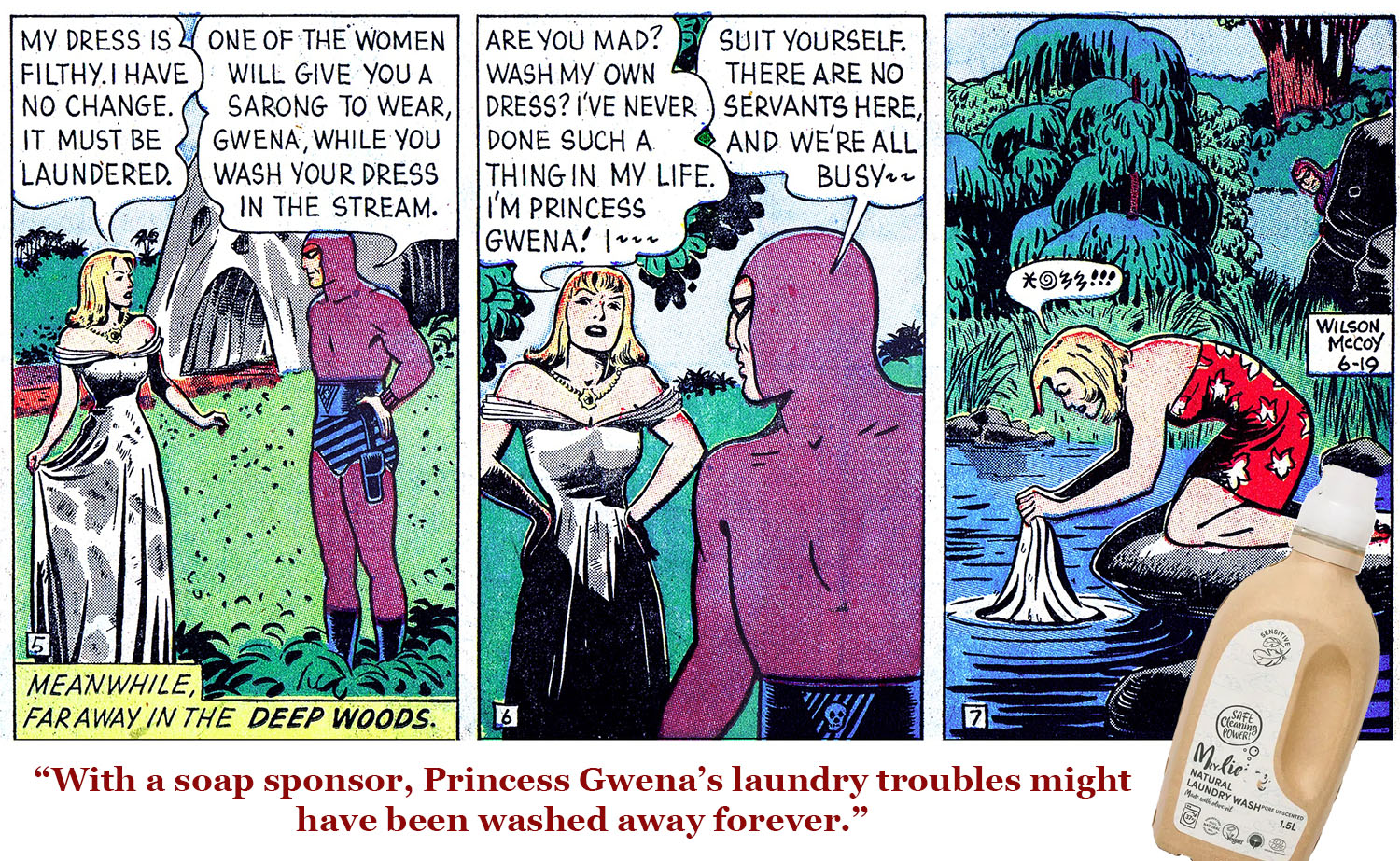
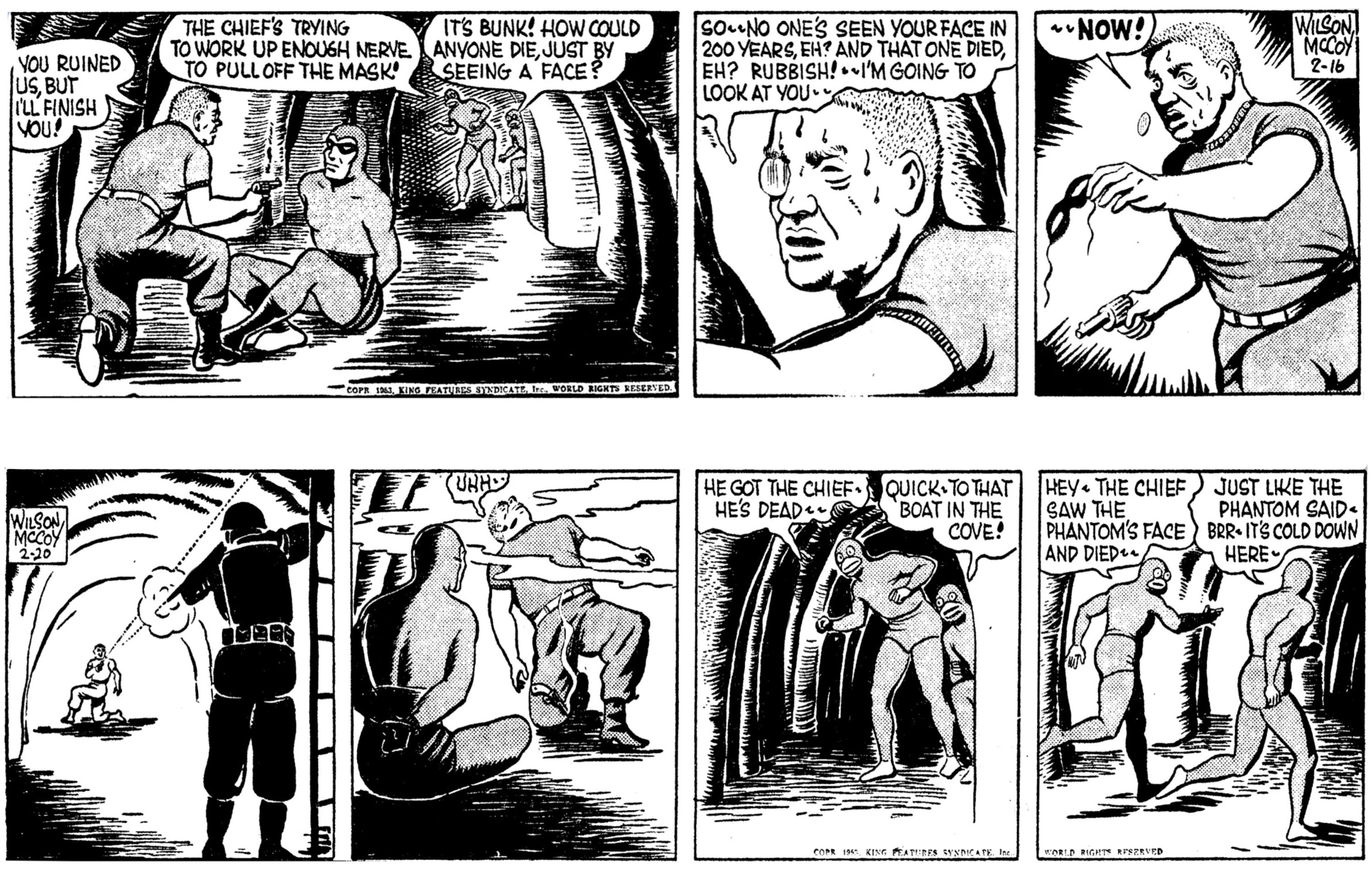
In McCoy's work, I often find an economy of expression that strengthens this effect. The Phantom's face and bearing can seem unusually composed beside the agitation around him. His opponents may threaten, boast or struggle; he does not always need to answer with an equally emphatic display.
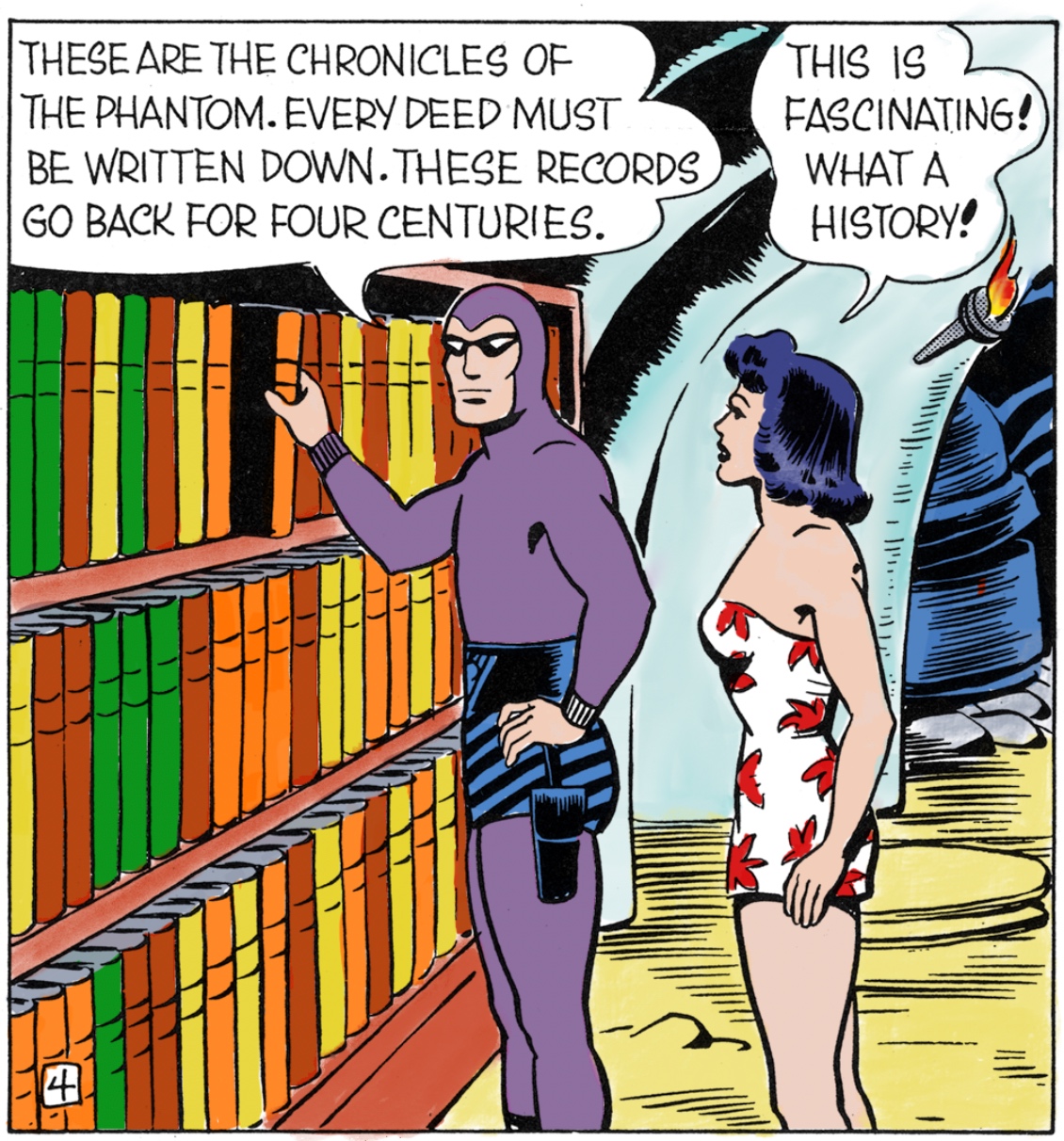
To my eye, the relatively plain treatment of his body matters as well. He is clearly a capable, athletic man. But his strength is not continually explained through prominently modelled muscles. His costume gives us a recognisable figure without making every part of that figure an advertisement for physical power.
That leaves more of the work to posture, timing and the response of others. A still figure can become the centre of a panel because everyone else seems uncertain about him.
McCoy's directness also gives some scenes a quality I associate with an illustrated tale. The world is easy to read, but it does not always feel fully accounted for. The Phantom belongs to that world as someone whose place in it is already established, whether or not the people confronting him understand why.
This is a response to the effect of the drawings, not a claim about a deliberate programme McCoy followed in every story. His strips contain humour, warmth and ordinary physical action too. Their variety is part of what makes the quieter moments convincing.
3. The man who does not look strong enough
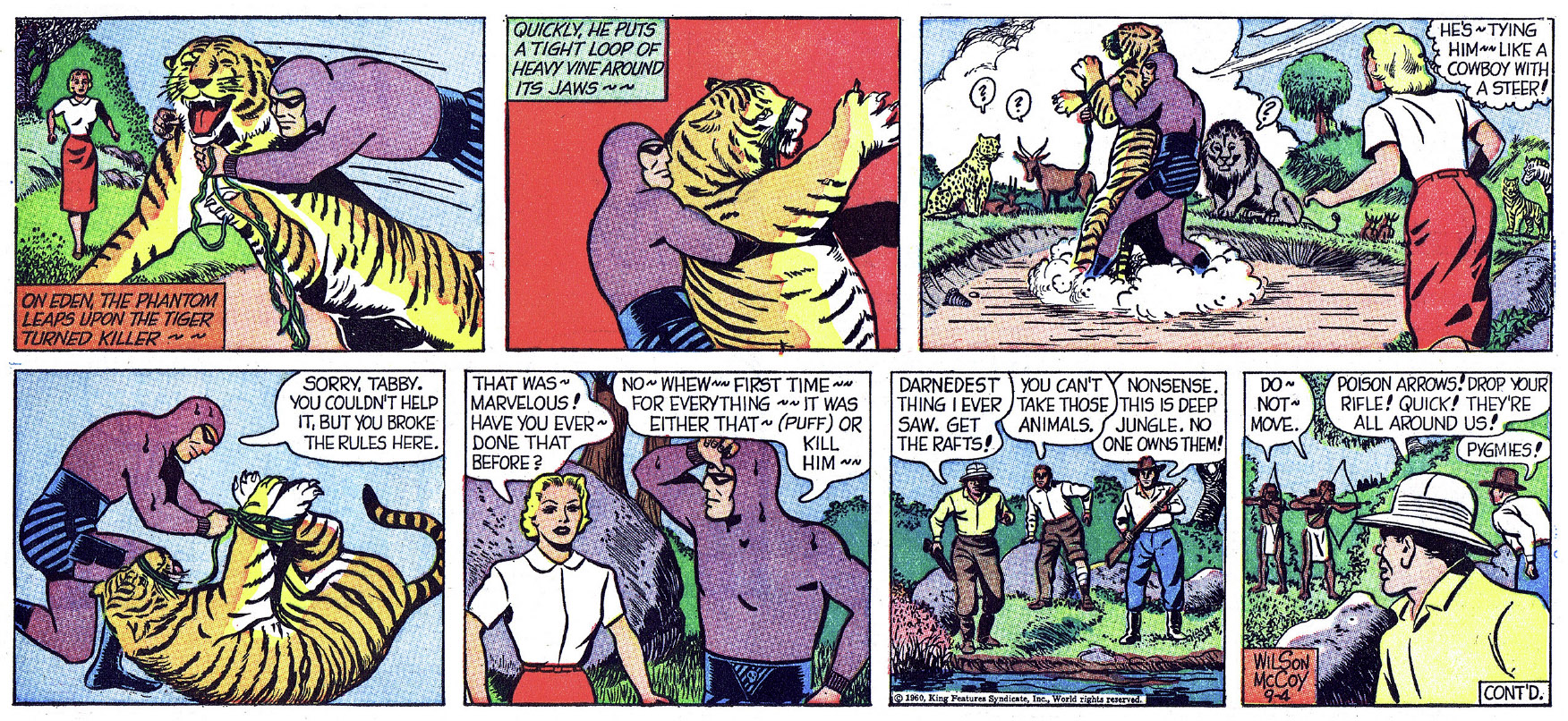
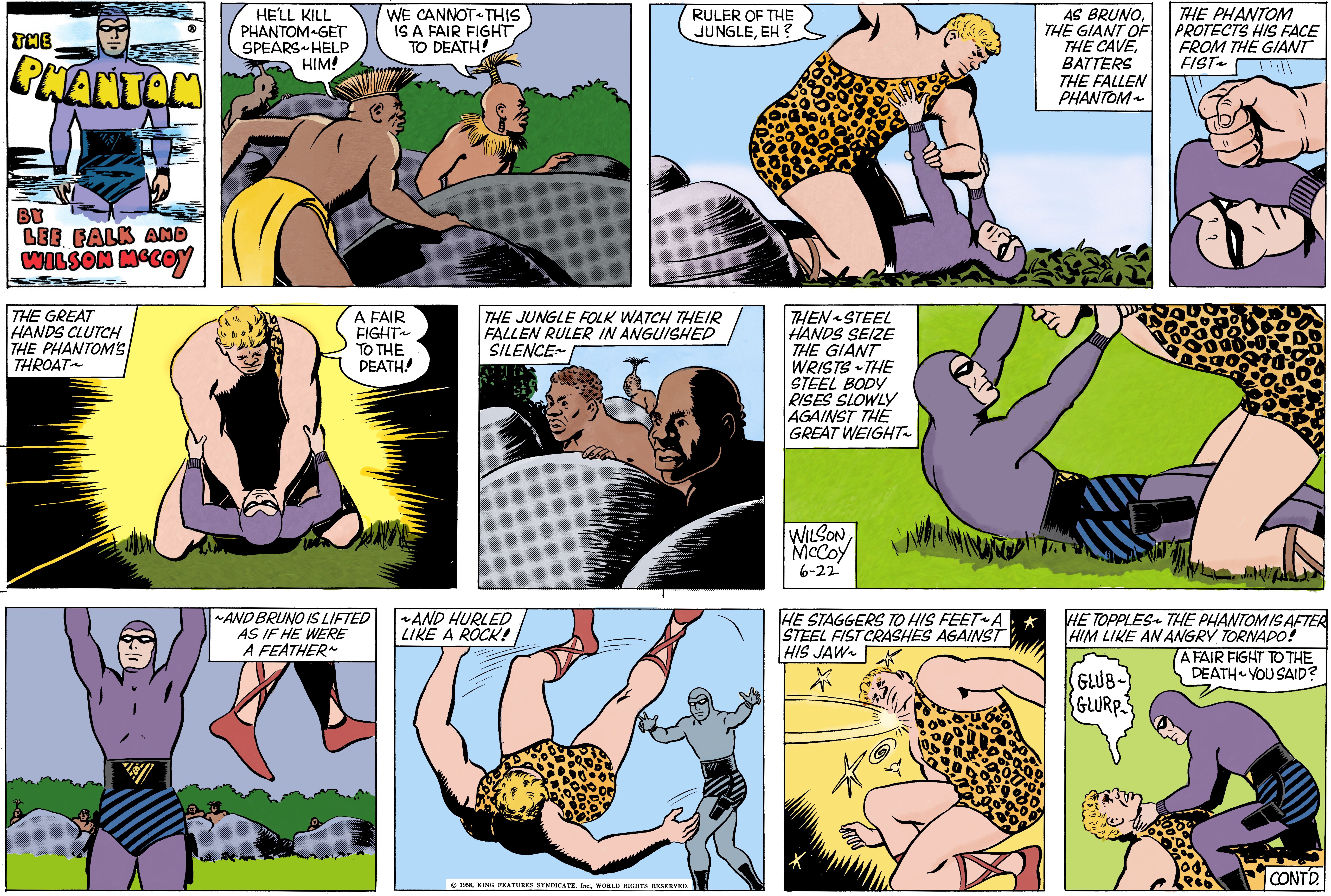
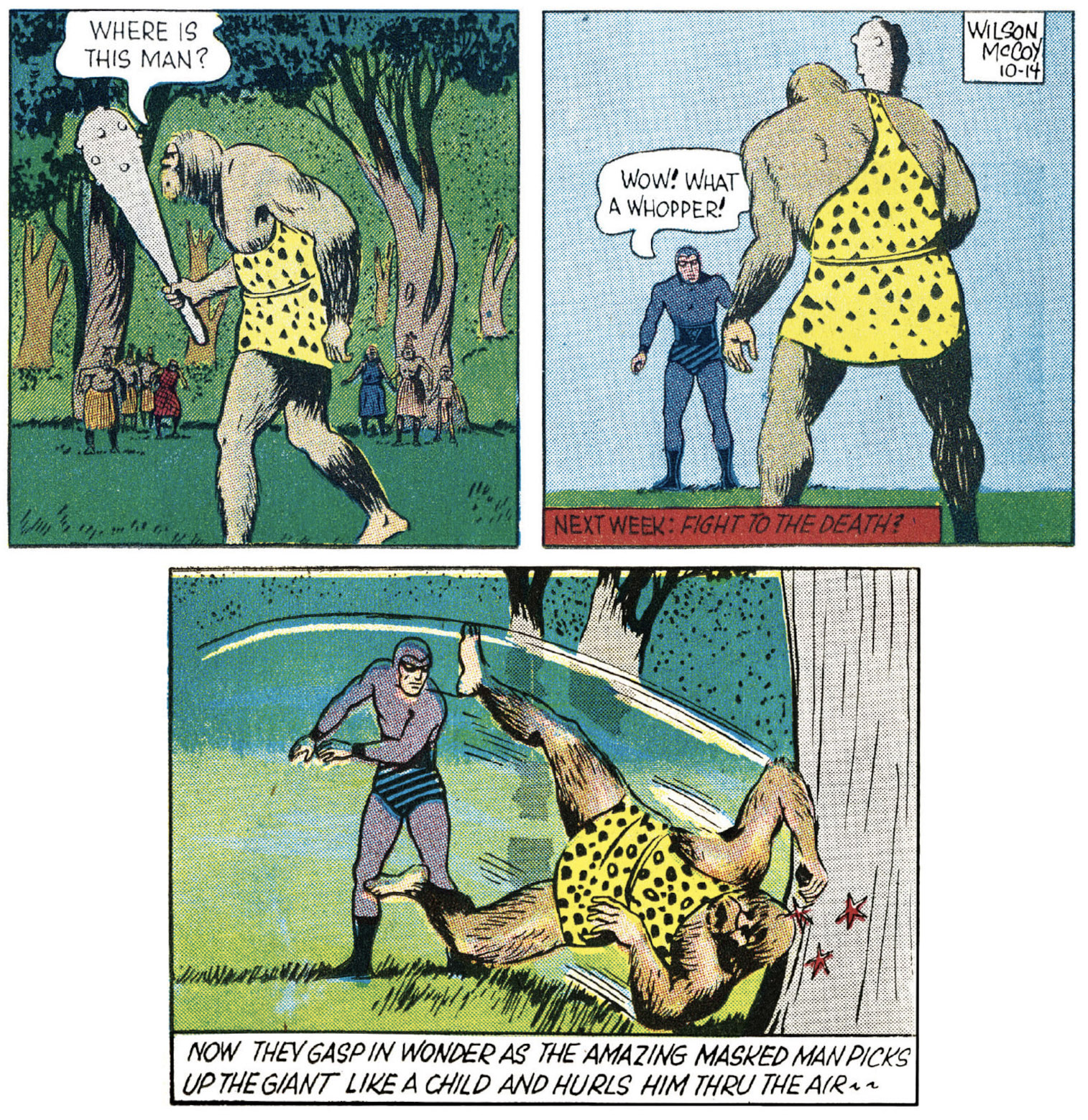
The contrast becomes especially interesting when the Phantom confronts someone considerably larger than himself.
A large opponent gives the reader an immediate measure of danger. Broad shoulders, heavy arms and sheer bulk are easy to understand. If the Phantom's figure is comparatively understated, the picture appears to favour the other man before the action begins.
The story can overturn that first judgement. Training, speed, balance, experience and nerve offer perfectly human explanations for victory. Depending on the scene, surprise or the opponent's fear may matter as much as a punch. Size alone is no guarantee of skill.
But a drawing need not explain the whole result as a demonstration of fighting technique. The reader sees a man who should, at first glance, have been at a disadvantage, and discovers that the apparent measure was inadequate.
To me, this can add to the legend. His opponent has assessed the body and underestimated the person. The Phantom's calm becomes meaningful after the event: he appeared to know something about the encounter that the larger man did not.
There is a particular satisfaction in that reversal. The strength is revealed through the action rather than fully announced beforehand.
4. When the body gives the answer first
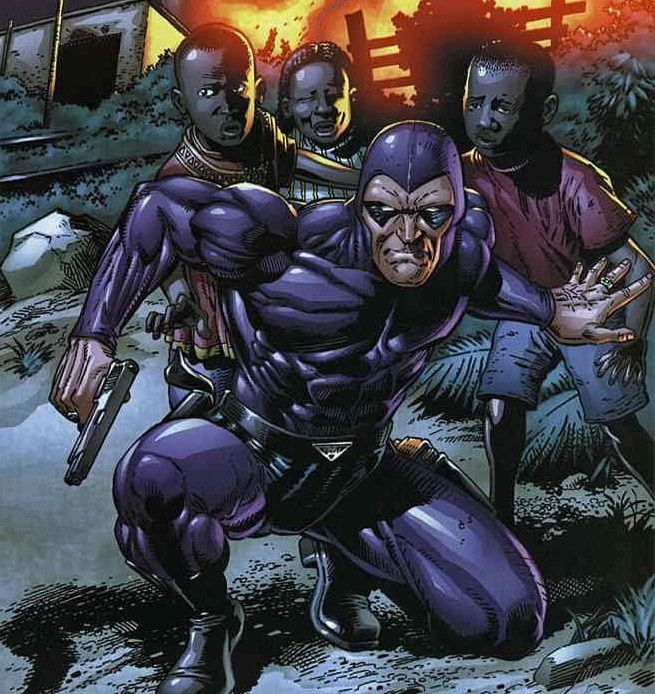
An exceptionally muscular body tells us a great deal before the character acts. We expect formidable strength. When such a figure overcomes an opponent, the outcome may confirm what the drawing has already led us to anticipate.
That can produce powerful, exciting images. It can also alter the kind of surprise available to the story. A victory that once invited us to wonder how this man had managed it may now seem physically self-explanatory.
The distinction is about emphasis. A conspicuous display of strength can make the Phantom immediately impressive; a less demonstrative figure can leave us looking for something beyond the visible evidence.
Neither approach guarantees a particular result. A muscular Phantom can remain mysterious, and an understated drawing can be quite matter-of-fact. Staging, expression and the pace of a sequence still matter. Nevertheless, I think the choice of physique influences how readily the reader feels that something about him remains unaccounted for.
5. Sy Barry and a different kind of presence
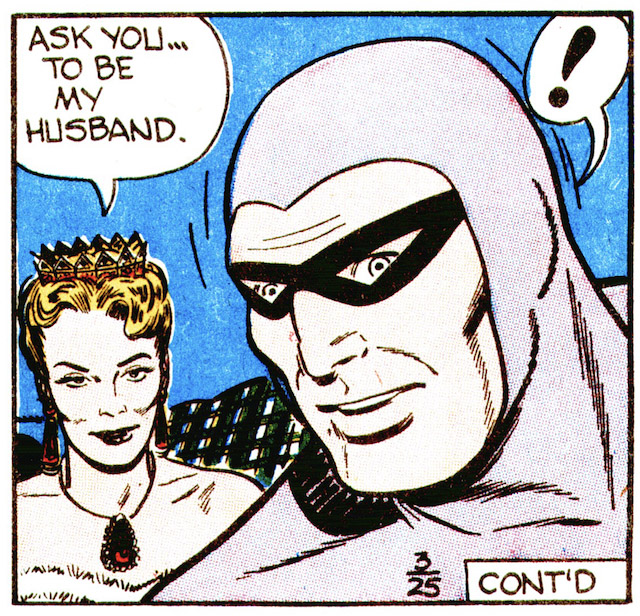
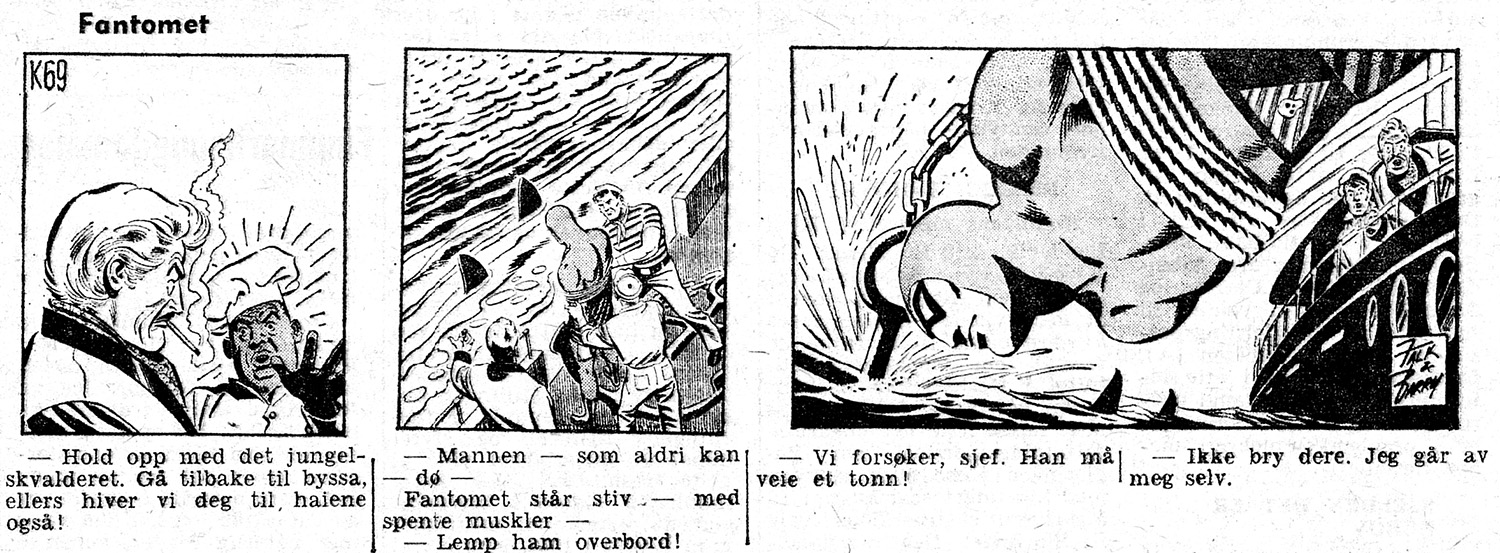
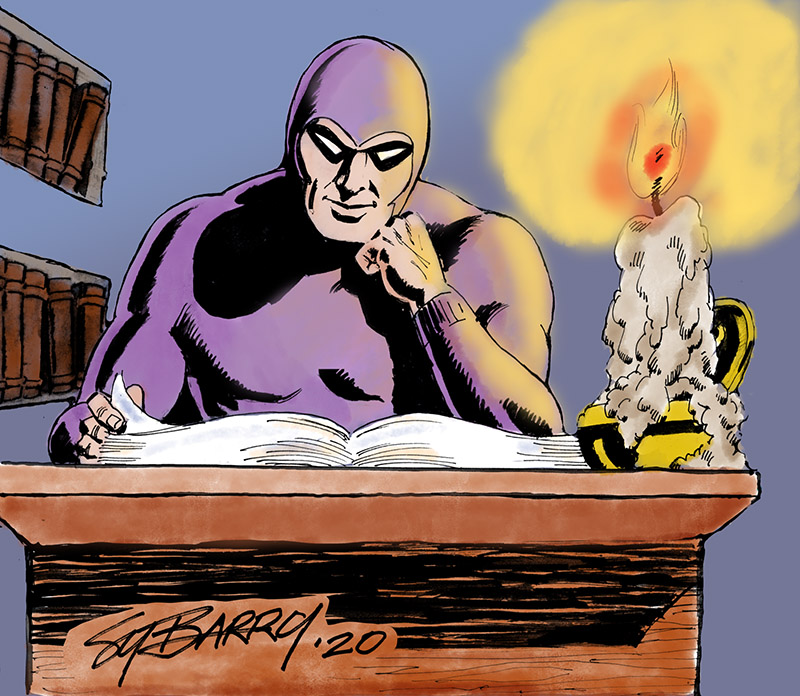
Sy Barry's contribution deserves to be considered on its own terms. His expressive faces, convincing movement and assured treatment of the human figure brought a vivid physical presence to the strip. There is much to admire in the way he could make an encounter feel immediate.
For me, that greater physical definition could also bring the Phantom closer. I could see more clearly how he occupied space, moved and responded. The hero became more tangible, and perhaps some of the older distance diminished.
I would describe that as a shift in the experience of reading the strip, rather than a criticism of Barry's achievement. Nor would I equate his drawing with the most exaggerated muscular portrayals found elsewhere. These are different questions.
Barry's own account adds an illuminating complication. In an interview published by Hermes Press, he recalled wanting to make the strip more mystical, using strong areas of black and more expressive drawing. Mystery was therefore part of his ambition too. Sy Barry interviewed by Daniel Herman, Hermes Press.
That helps explain why readers can respond differently. Dramatic lighting and forceful staging may intensify mystery for one reader. Another may find it in McCoy's restraint, in the feeling that the Phantom does not need to show very much of himself.
I can admire Barry's drama and still miss something of that earlier reserve. The two responses can coexist.
6. How much belongs to the reader?
There is another possibility that deserves a place in this discussion: perhaps some of the lost mystery belongs to us.
A character encountered early in our reading life arrives with fewer explanations attached. We have not yet absorbed the family history, recognised recurring situations or learnt how an adventure is likely to develop. Familiarity can make even a remarkable fictional world feel easier to navigate.
Nostalgia may also select the scenes that stay with us. We remember the entrance, the threatening opponent, the moment of astonishment. Less memorable passages recede. A fair comparison needs whole sequences, not only favourite panels from one period set against ordinary panels from another.
Even so, familiarity need not explain everything. Returning to the actual drawings may reveal differences in posture, expression, anatomy and pacing that still affect us. The feeling can have roots both in the work and in the reader.
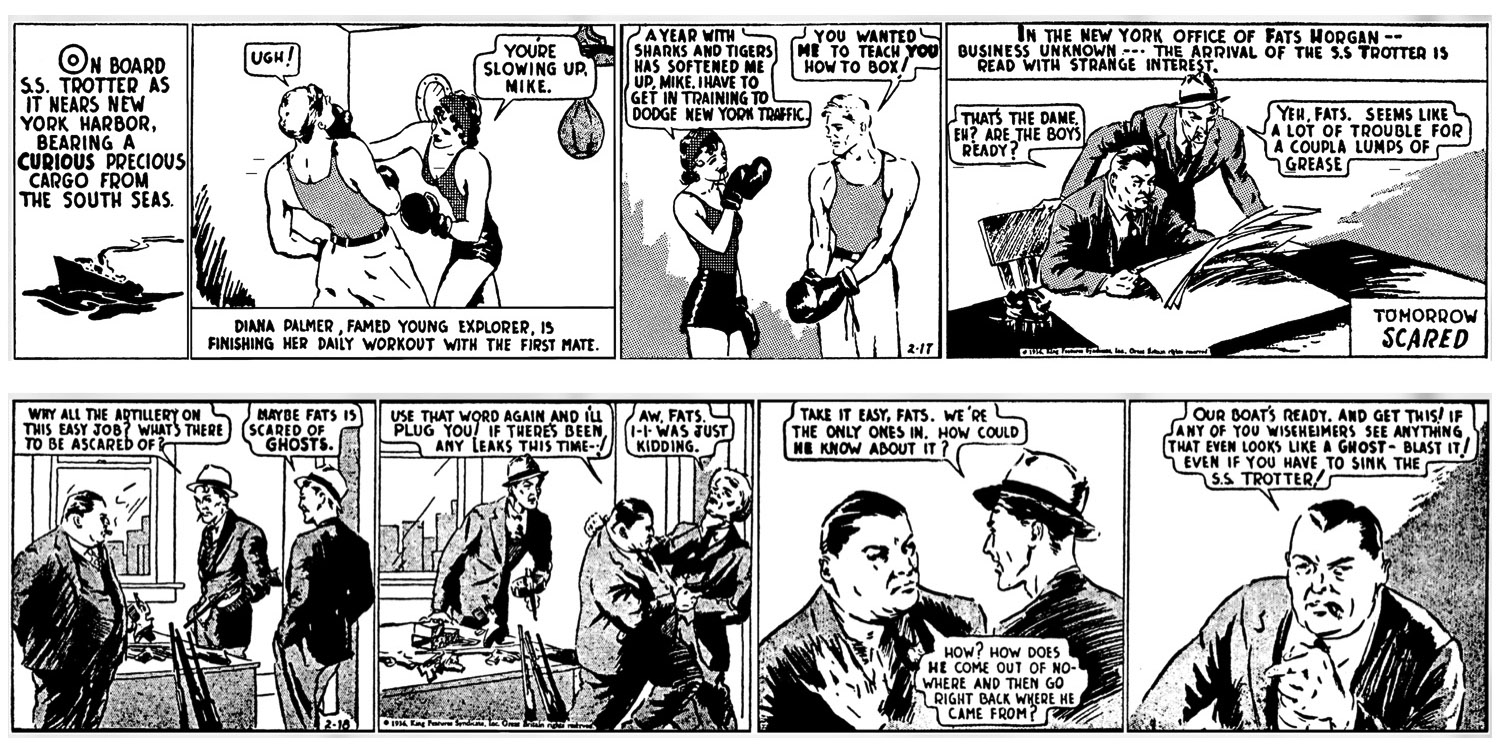
The examples placed through this article should help test that impression. They can show where it holds, where it needs qualification, and where another reader may see something quite different.
7. What I would like to remain
I would not ask today's artists to imitate McCoy, or to give up the expressive possibilities of their own drawing. What I value is the room his approach can leave for the reader's imagination.
The Phantom can be brave, resourceful and physically formidable without having every advantage written across his body. He can allow a larger opponent to dominate the space while quietly retaining control of the encounter. He can be familiar to us and still difficult for the people around him to read.
That is the quality I return to when I think about his earlier mystery: the sense that appearances do not quite explain him.
We know there is a man behind the mask. I still like the drawing to leave us wondering whether we have taken his full measure.