The Phantom · A personal recollection
The Phantom, Sy Barry and Me
From a newspaper strip in 1963 to a memorable lunch in New York — a lifetime of reading, collecting and working with the Phantom.
Part 1 — Finding the Phantom
A strip I never forgot
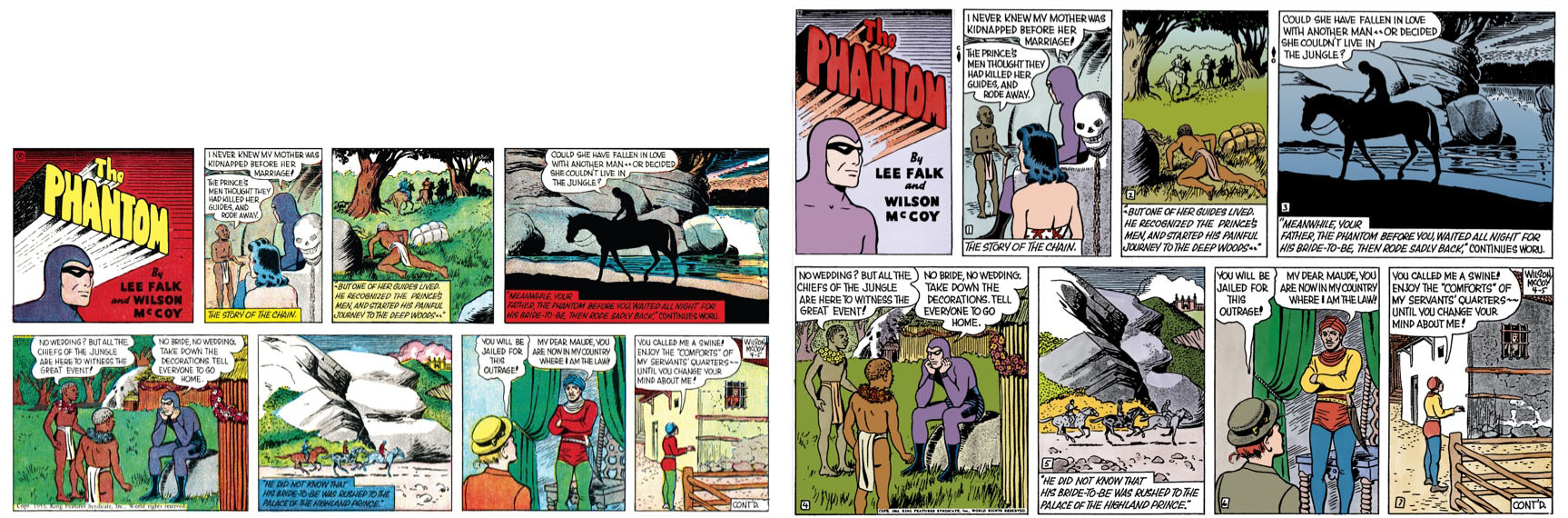
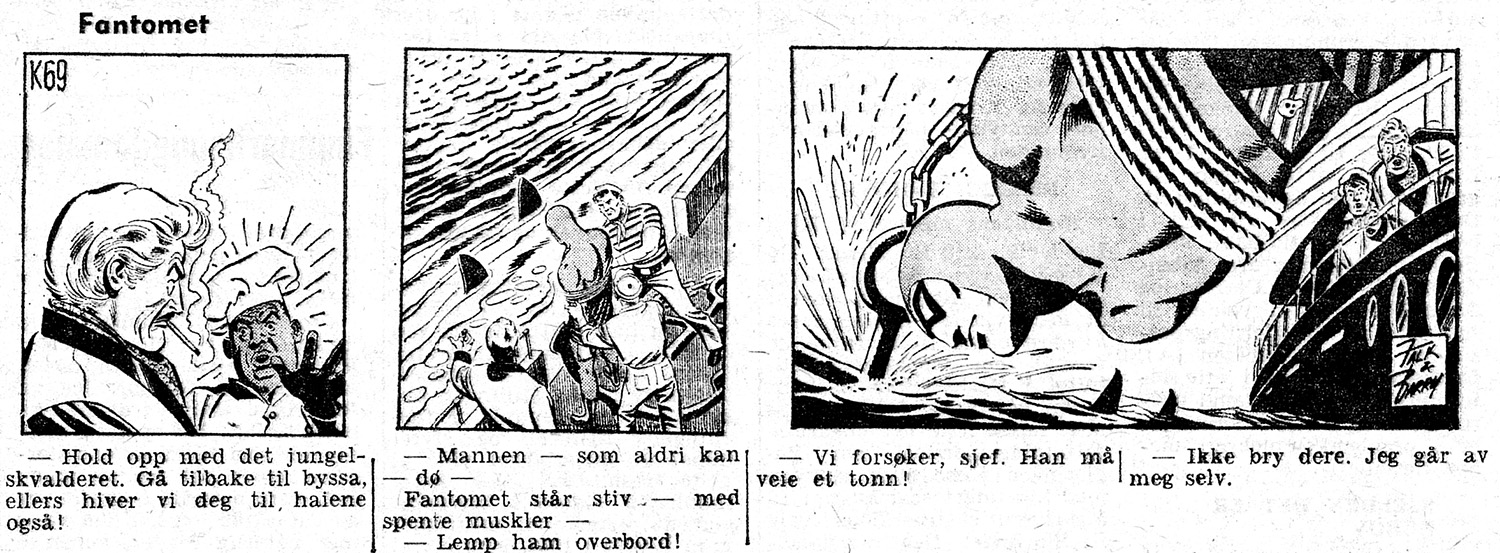
My first encounter with the Phantom was in a Norwegian newspaper in 1963. I was five years old and could not yet read, but someone read the strip to me, and we talked about what was happening in the pictures.
That little strip has stayed with me ever since. Its original newspaper date was 5 September 1962, and it belonged to The Wharf Rats, written by Lee Falk and drawn by Sy Barry. My very first Phantom was, in fact, Barry's Phantom.
A few years later, when I could read the strips myself, I followed The Hanta Witch and Prince Hali and the White Stallion. I also remember talking with friends about each day's action. We were impressed that the Phantom could recognise the sound of his own guns in the Hanta adventure, and the horse race in the other story gave us plenty to discuss.
We did not need to know anything about the creators to become involved. The next day's strip was what mattered.
Why the Phantom stayed with me
The newspaper was a good starting point for an interest in comics. There were other fine strips too: Davy Jones, Rip Kirby and Flash Gordon. So why did the Phantom become the one that interested me most?
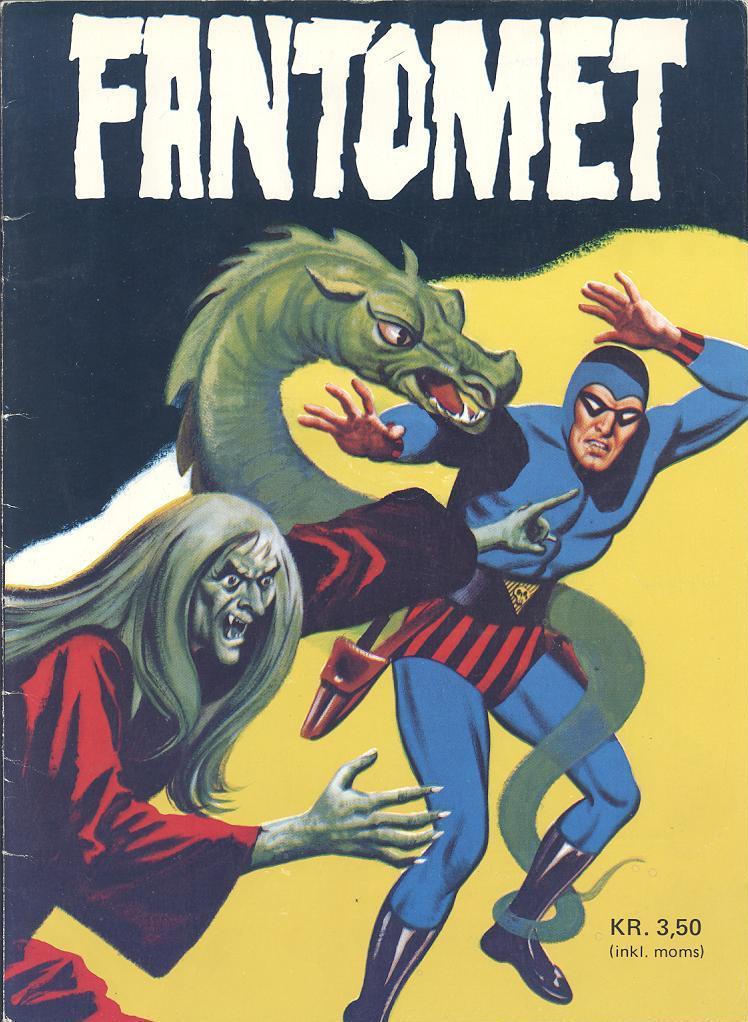
Much of the answer must be the Norwegian Fantomet magazine.
Without it, I think the Phantom would have remained one favourite among several. I read the DC superheroes and whatever other comics I could find, but I lived far from a city, and the local shop offered a limited choice. Fantomet was one of the comics available to me. My father liked the Phantom too, and that always matters to a young reader.
A friend introduced me to the magazine and told me all about the character. We discussed whether this was the same Phantom we were reading in the newspaper. It was, of course, although the magazine's early stories were drawn by Wilson McCoy, while the newspaper stories I knew were by Barry.
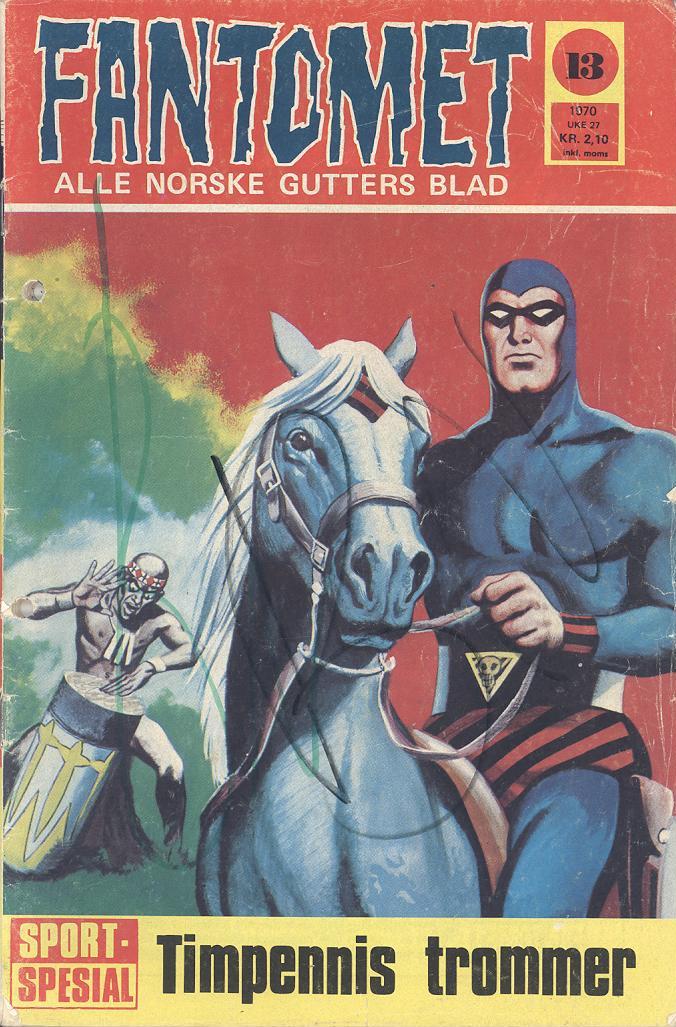
The curious thing is that I did not prefer Barry to McCoy at that stage. I am not even sure how clearly I noticed the difference. I certainly knew nothing about the different artists. To me, it was all the Phantom.
Learning to recognise the artists
Then Barry's stories began appearing in the magazine. The first was The Great Web of Spidera, rearranged to fit the comic-book format and printed in black and white.
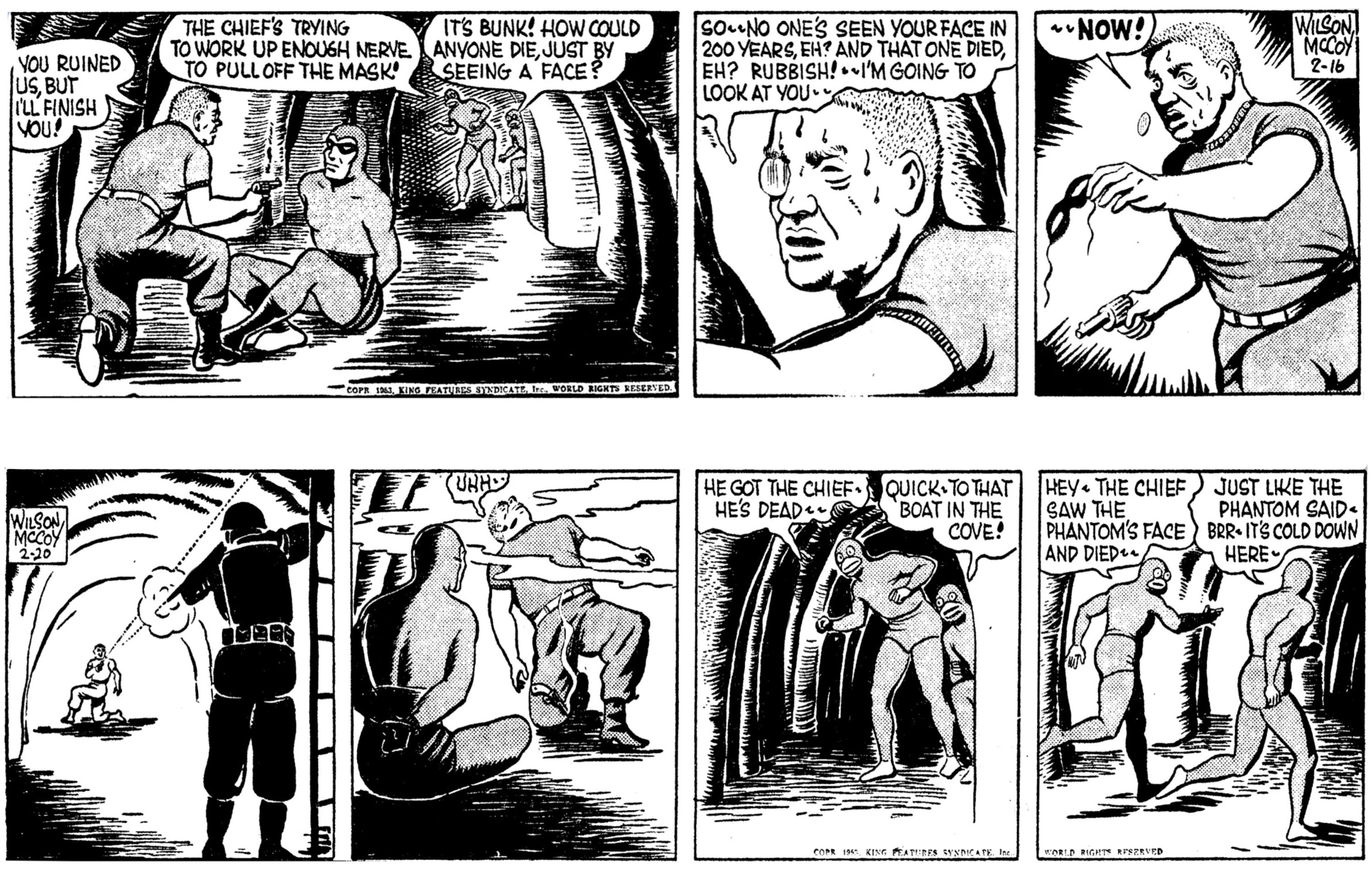
I doubt that this immediately taught me much about the artists. But comparing it with an older McCoy story from 1953, I noticed how old-fashioned the cars looked in the earlier adventure. There must be quite a few years between these stories.
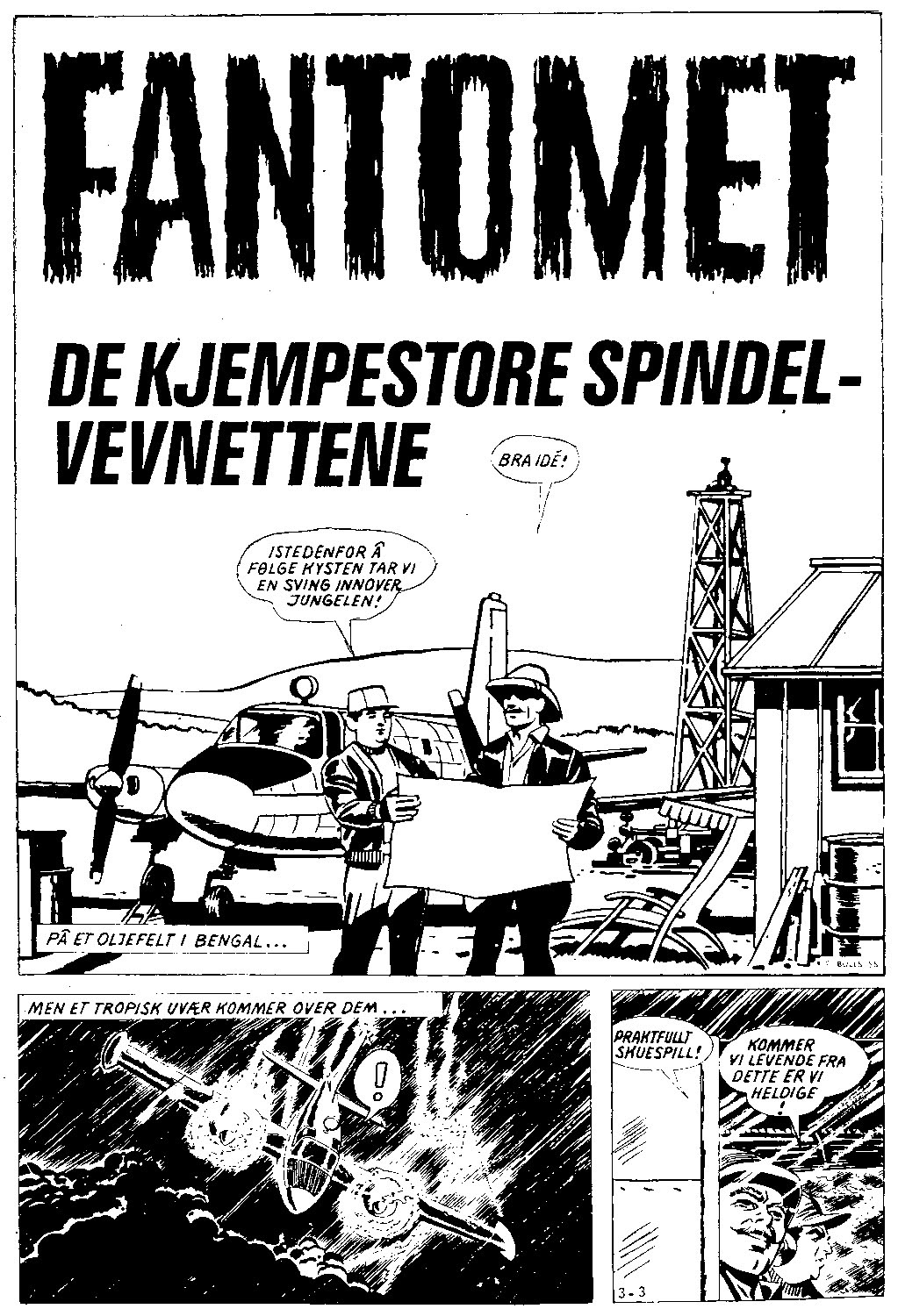
I began looking more closely at the relationship between the newspaper and the magazine. Still, I was reading the Phantom, and choosing between the artists was not yet important to me.
Early in 1972, Fantomet finally presented the artists behind the newspaper strip and some of the comic-book stories. We could now put names to the drawings and understand, at least broadly, when Moore, McCoy and Barry had worked on the feature. Many details remained unknown, but the main differences had become clearer.
Meanwhile, between 1969 and 1972, several Barry adventures had appeared in the magazine. Reading The Hanta Witch again, a few years after following it in the newspaper, was a particular pleasure. What a story — and what a joy to return to it!
Barry soon became a favourite. Finding one of his stories in a new issue felt like Christmas.
At last, the Phantom in colour
The magazine was still in black and white, and would remain so for many years. But in 1972 something different appeared in Norwegian shops: a Phantom album with card covers and a full-colour interior.
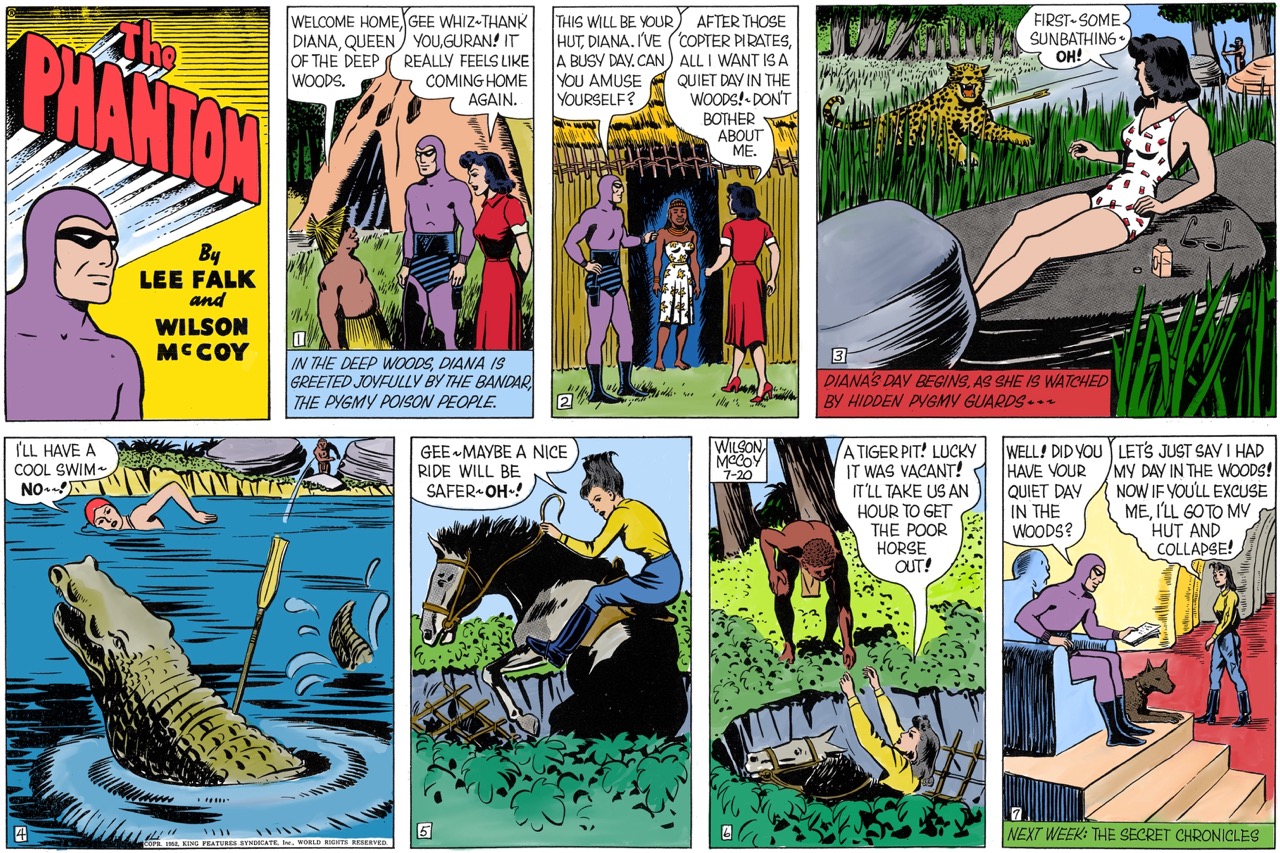
Even better, it contained two Barry Sunday adventures: Alexander's Diamond Cup (S081, 1970) and The Gooley-Gooley Witch (S082, 1971).
The Phantom, Sy Barry and colour. What more could I wish for? Perhaps another album the following year.
In 1973, the new book was clearly identified as an Årsalbum — an annual album. Its story, Old Baldy (S062, 1963), was perhaps even better than the two in the first volume.
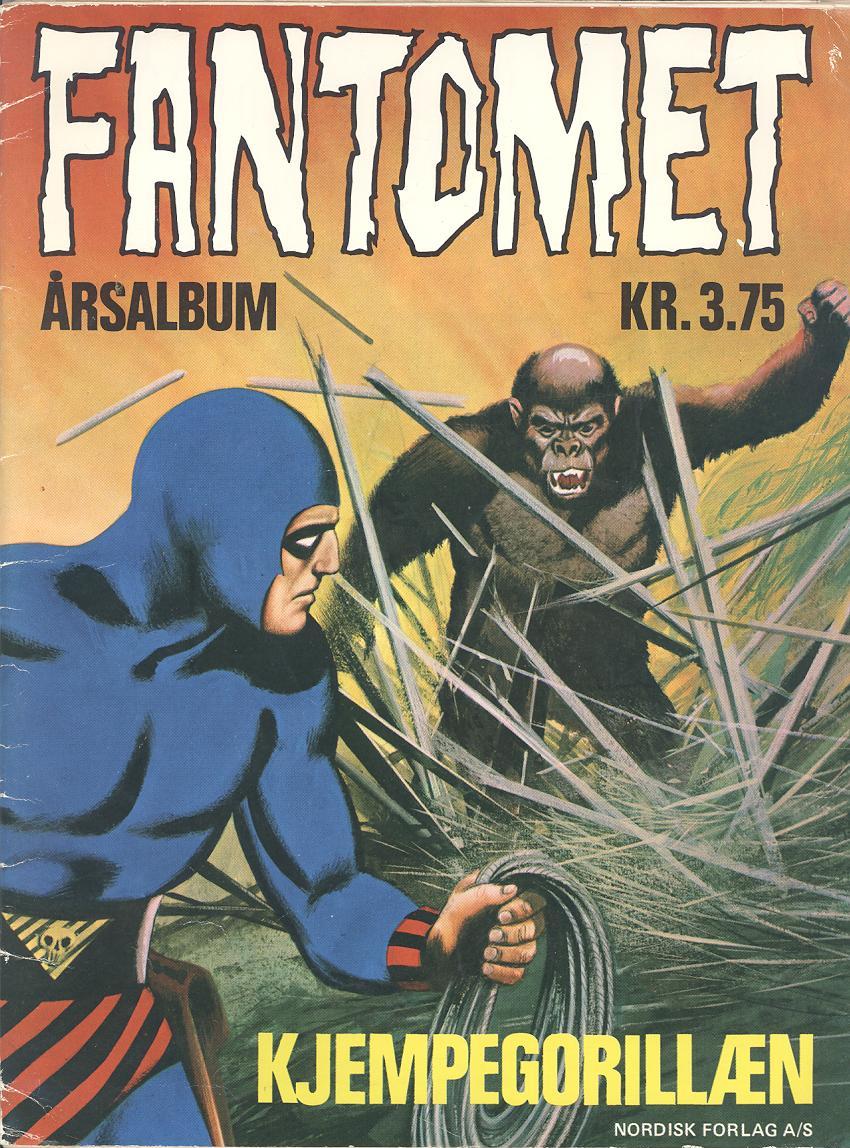
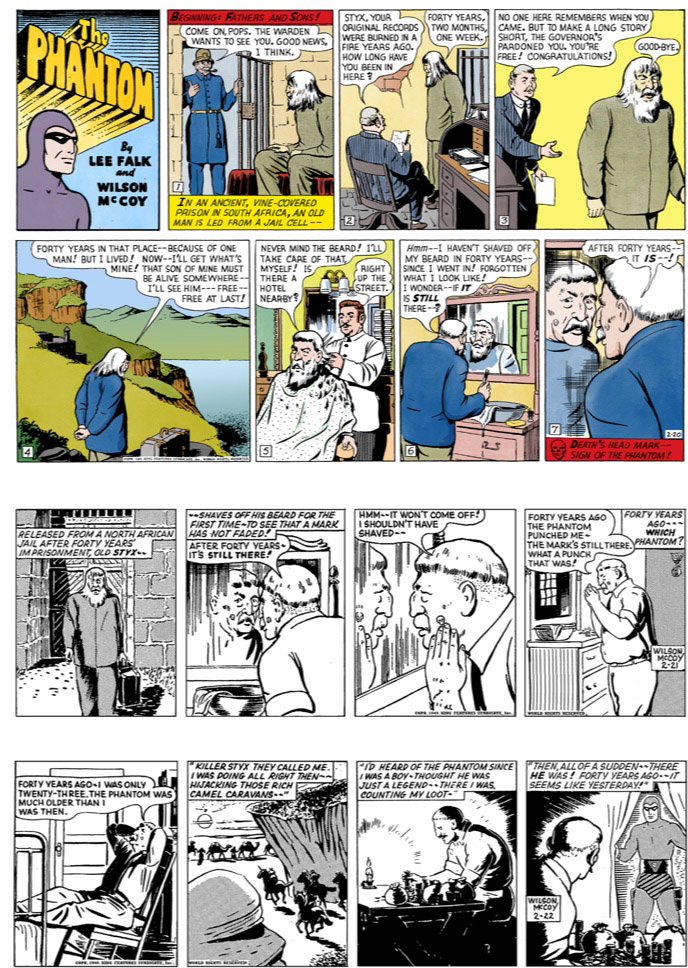
An album followed each year, with some additional specials along the way. Their main attraction was Barry's Sunday stories, although a few McCoy stories and Barry dailies appeared as well. They were all in colour.
Those albums, together with the Barry stories in the magazine, helped make his artwork my preferred version of the Phantom for many years.
Discovering the complete strips
In 1986, a new album series began publishing Falk and Barry's daily adventures. Naturally, it opened with The Slave Market of Mucar (D082), Barry's first daily story.
For a time, the publisher followed the stories chronologically. Towards the end, some were skipped, and eventually the album series stopped.
But those books had given me my first real taste of Barry's daily adventures in their original strip form. I came to love reading the Phantom that way, with the strips intact, whether daily or Sunday. The later collecting and restoration grew out of that interest.
I had started by following pictures I could not read. Now I wanted to see the stories as they had originally appeared — and to understand the people who had made them.
Part 2 — The artist behind the memories
Understanding the change of artists
Learning about the artists gave me a new way to look at the stories I had already enjoyed. I suspect many other Norwegian readers made a similar discovery. The Phantom we knew from the magazine and the newspaper belonged to a much longer history.
Lee Falk had created the strip in 1936, with Ray Moore as its first artist. Together they established the character and the world that would keep so many of us reading for a lifetime.
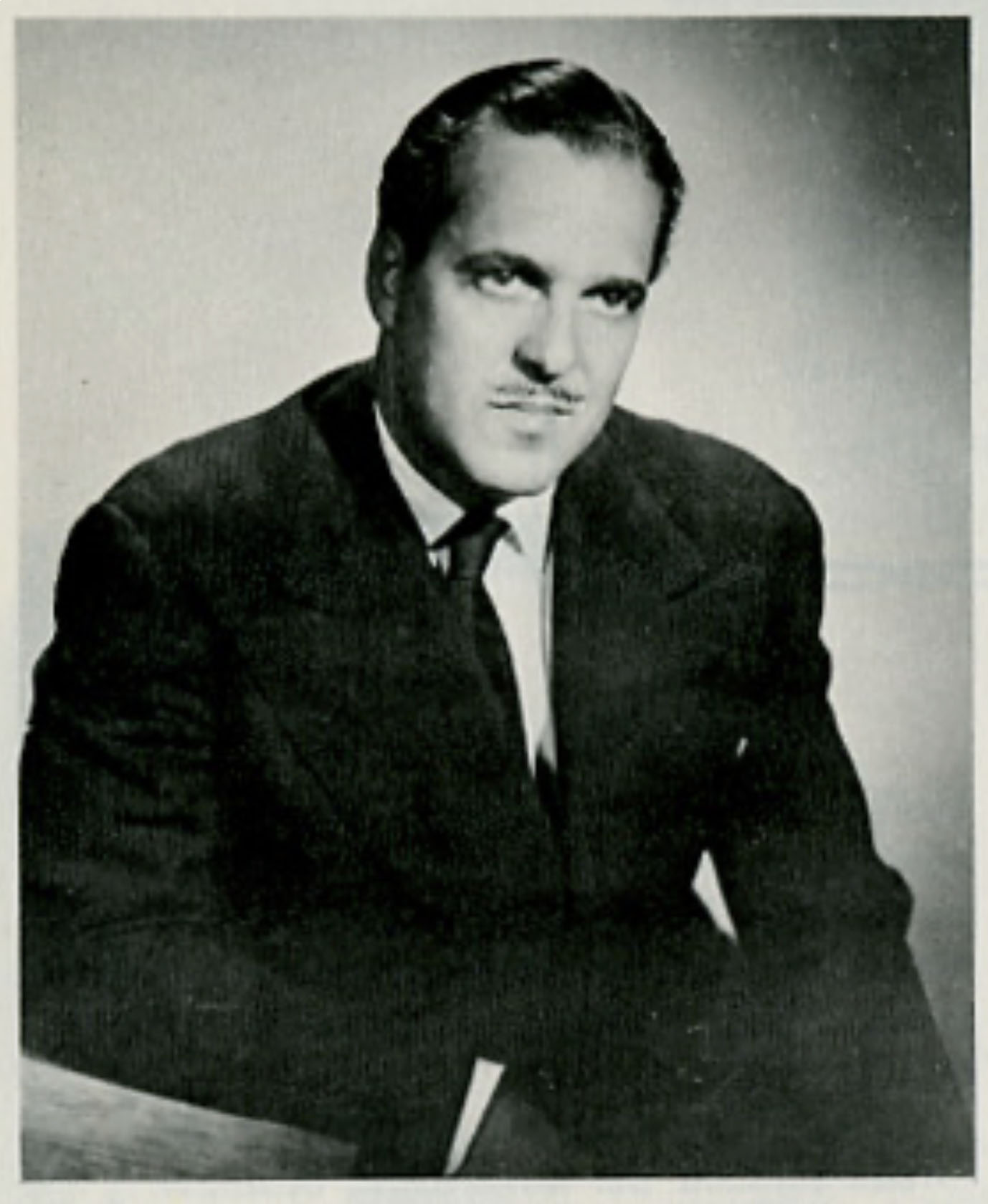
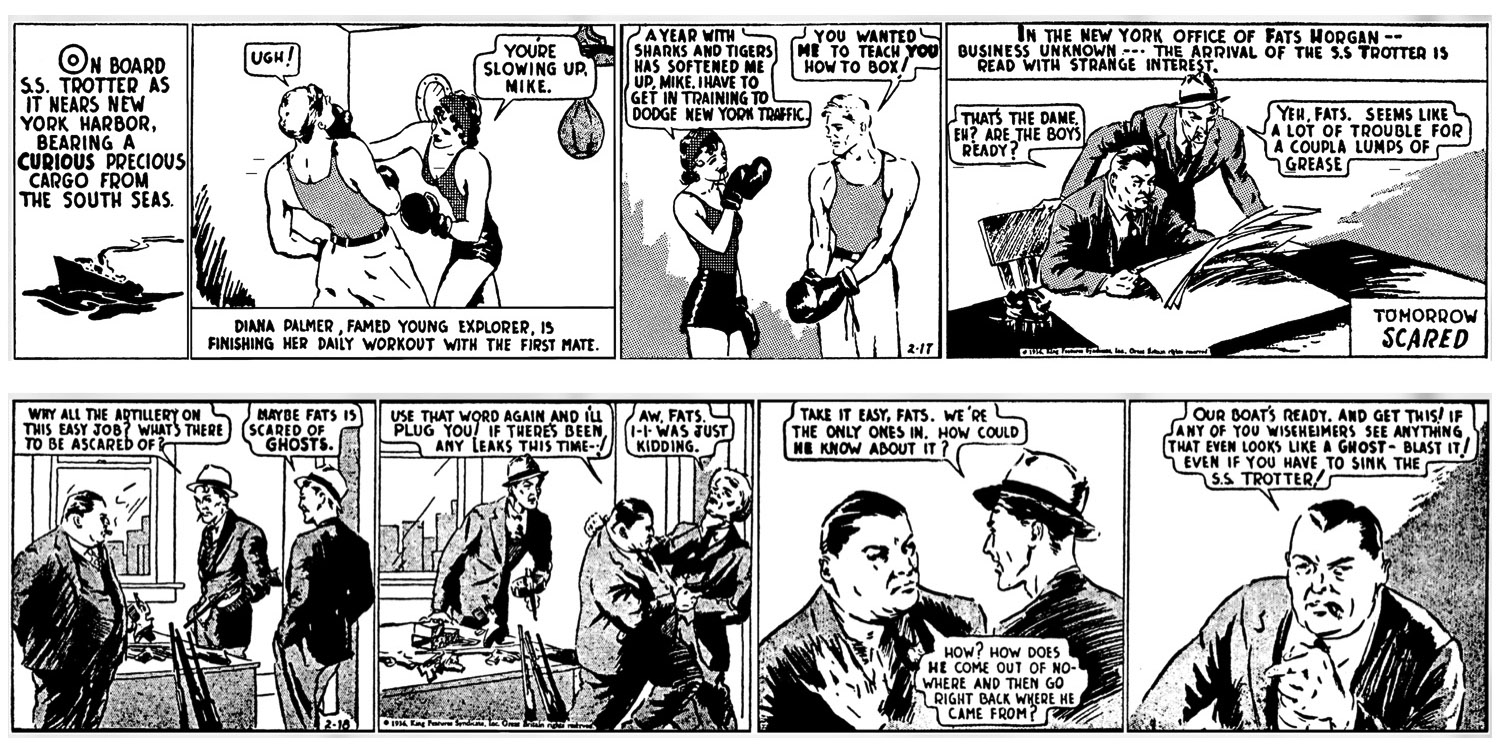
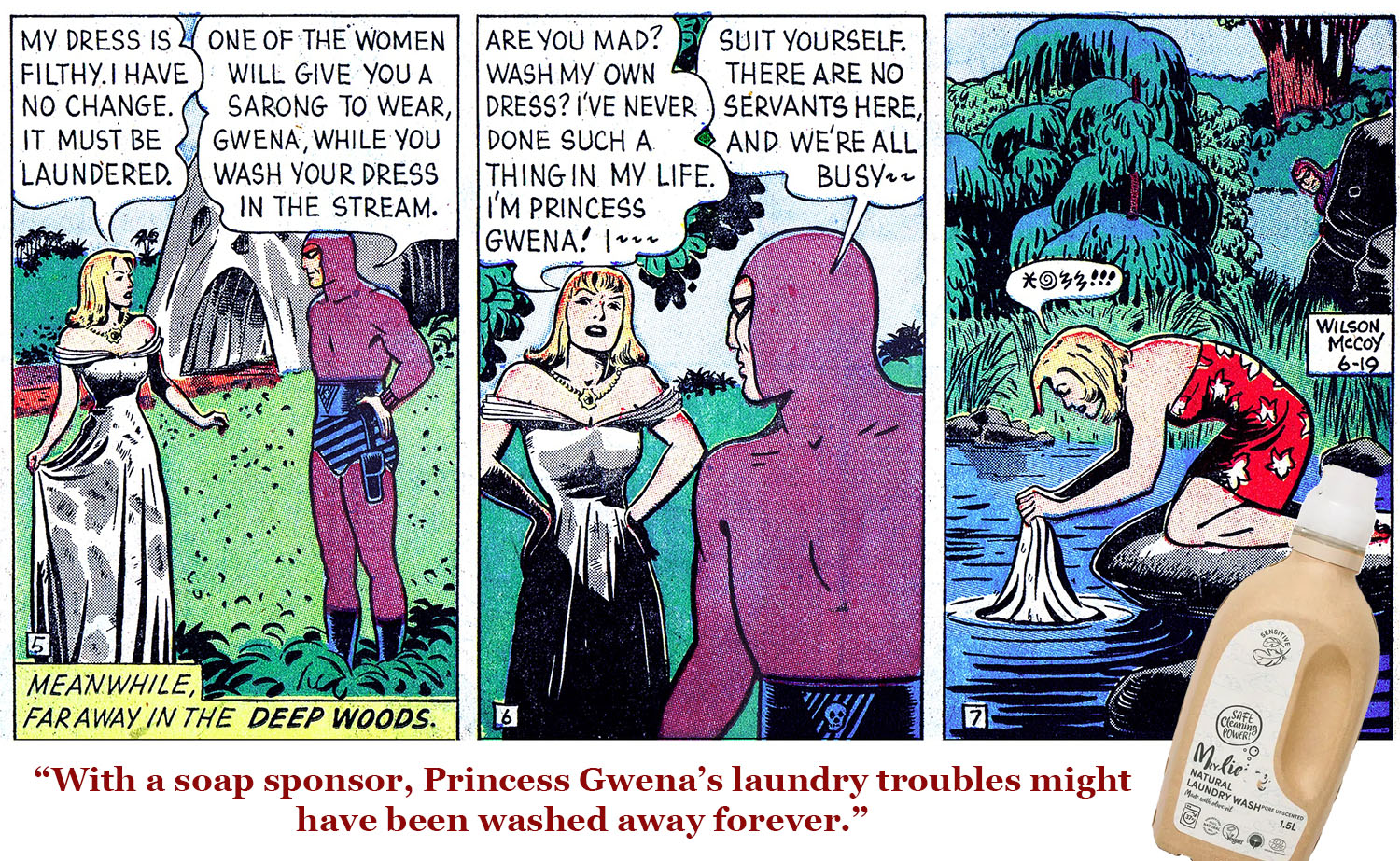
During Moore's wartime absence, his assistant Wilson McCoy took on the drawing. Moore's health problems after the war prevented a full return, and McCoy became the regular artist, continuing until his death in 1961.
Looking back, I feel that the artwork had become rather static. To my eyes, McCoy remained closely tied to the visual tradition he had inherited from Moore, rather than taking the strip in a substantially new direction. That is my personal assessment of its development, and it does not lessen the pleasure those stories have given me.
Falk and McCoy produced many entertaining adventures. Some were among the first Phantom stories I read, and I still return to them with affection. Their appeal goes beyond the quality of an individual drawing: humour, surprises and memorable situations can remain with a reader for decades.
Towards the end of McCoy's years, I sometimes felt that Falk's enthusiasm had weakened too. Yet there were ideas that opened up the world around the Phantom — the Jungle Patrol and the island of Eden among them. The strip still had possibilities. A new artist would help me see them differently.
A new hand at the drawing board
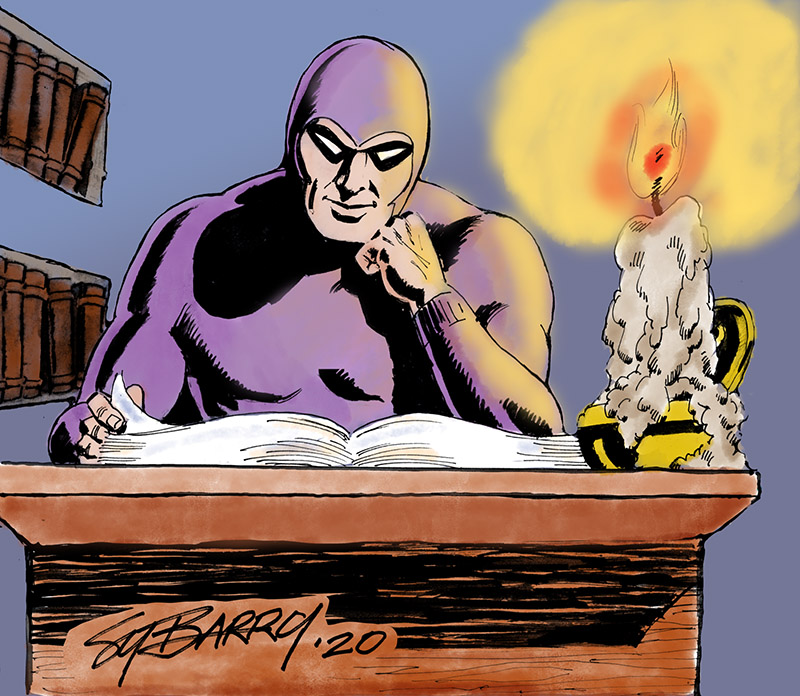
When McCoy became seriously ill, King Features approached Seymour "Sy" Barry to draw the dailies. Barry was 33, with substantial experience in comic books and in assisting his brother Dan on Flash Gordon. He was young, but hardly a beginner.
His first published Phantom daily appeared on 21 August 1961, opening The Slave Market of Mucar. King Features wanted continuity in appearance: a sudden change might unsettle newspaper editors accustomed to McCoy's work. Barry was therefore asked to redraw his first week's material closer to the previous style.
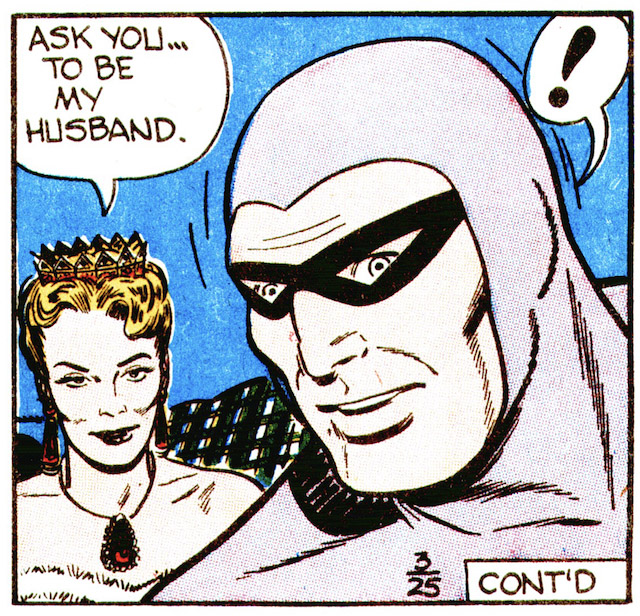
You can see that cautious beginning in the first story. But as it progresses, Barry's own approach becomes increasingly visible. The figures gain weight and movement; the shadows have more purpose. For me, the drawings begin to offer a different kind of drama.
The story itself — escaped prisoners and a slave market — was a fairly conventional adventure. What made it interesting as the beginning of a new era was the artwork. The transition was taking place before the reader's eyes.
The Sundays were a separate appointment, as I discuss in the article about Bill Lignante and the succession after McCoy. Barry eventually took on both newspaper features.
Diana — and a changing Bengal
Already in Barry's second daily adventure, The Epidemic (D083), I felt that something more was happening. Diana Palmer returned to the foreground, working as a nurse.
McCoy had given us a lovely Diana. Barry made her, to my eyes, a stunning beauty. But her work mattered as well: it gave Falk a reason to place her in situations beyond being the Phantom's girlfriend, and to send her into the wider world.
Then came Barry's fourth daily story, The Mysterious Ambassador (D085). I regard this as one of Falk's cleverest moves in a long time. Dr Luaga, already familiar as a jungle doctor, became president as Bengal changed into a republic. The Phantom's involvement gave the story a scope quite different from another encounter with a criminal gang.
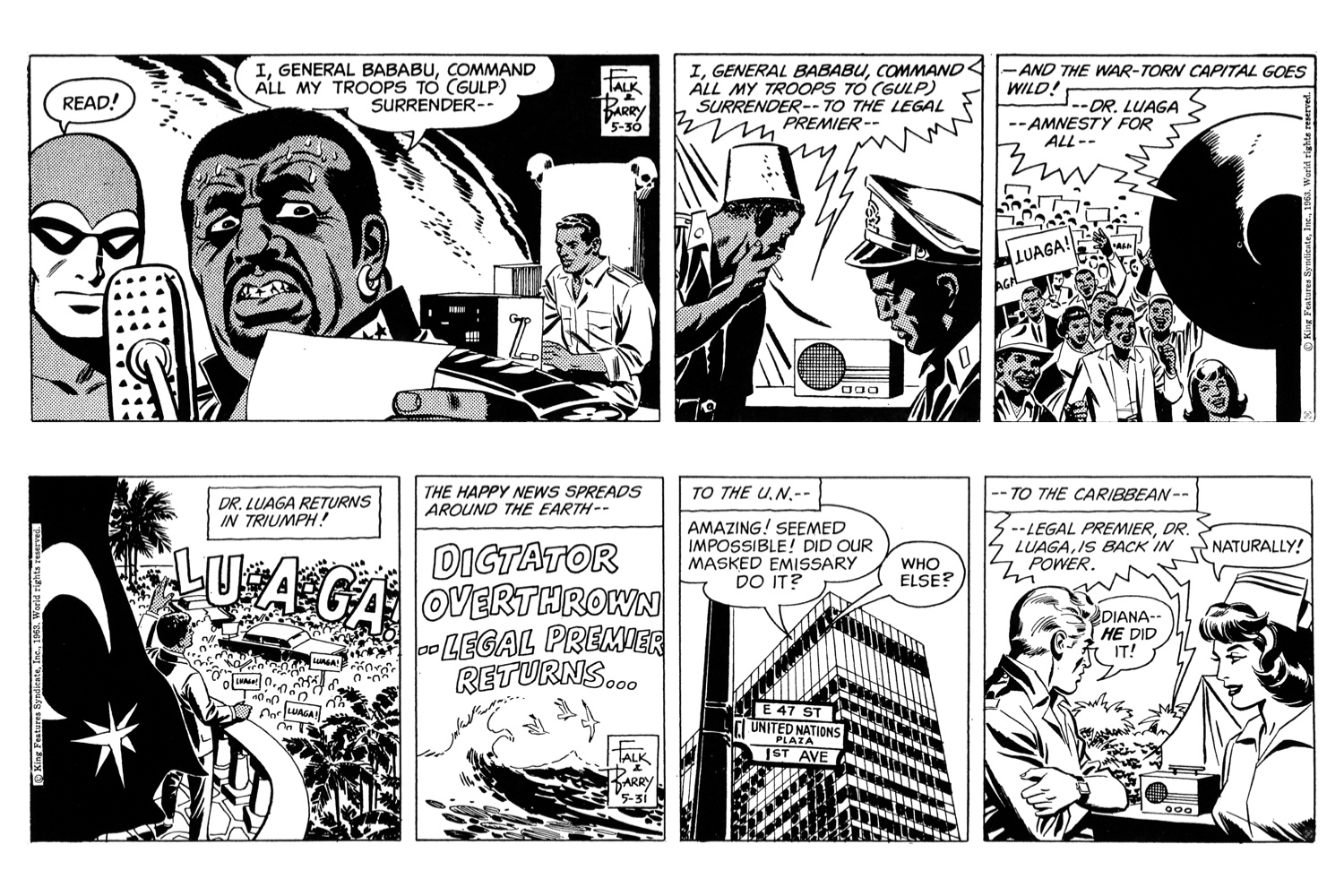
The political change and Barry's modern artwork reinforced each other. The world around the Phantom was developing, and the drawings made that development convincing.
I cannot know whether Falk felt newly inspired by his artist. What I can say is that, as a reader, I felt a renewal. Sy Barry brought new magic to a strip that had seemed to be standing still.
Thirty years of anticipation
That magic lasted for more than thirty years. The stories varied, of course, and not every one was a favourite. But finding a new Sy Barry adventure in Fantomet was always a pleasure. His drawing made me want to read it.
It was therefore a sad moment when I learned that he wanted to retire. A familiar part of my reading life was coming to an end.
Around this time, I began to discover that it was possible to track down printed English versions of all Falk's Phantom stories. I started collecting comic books, scanning the material and putting it back into strip order.
Barry's work was my main interest, but the collection could not stop with him. I wanted the whole run. In the end, I had a complete, readable collection of Lee Falk's stories, with all the artists represented. Adventures I had once encountered separately in a Norwegian magazine could now be read as parts of a much longer history.
From black and white to colour
The annual albums had shown me how much colour could add to the Phantom. I still wished that the regular Norwegian Fantomet magazine would follow their example, and was delighted when it finally did in 1991.
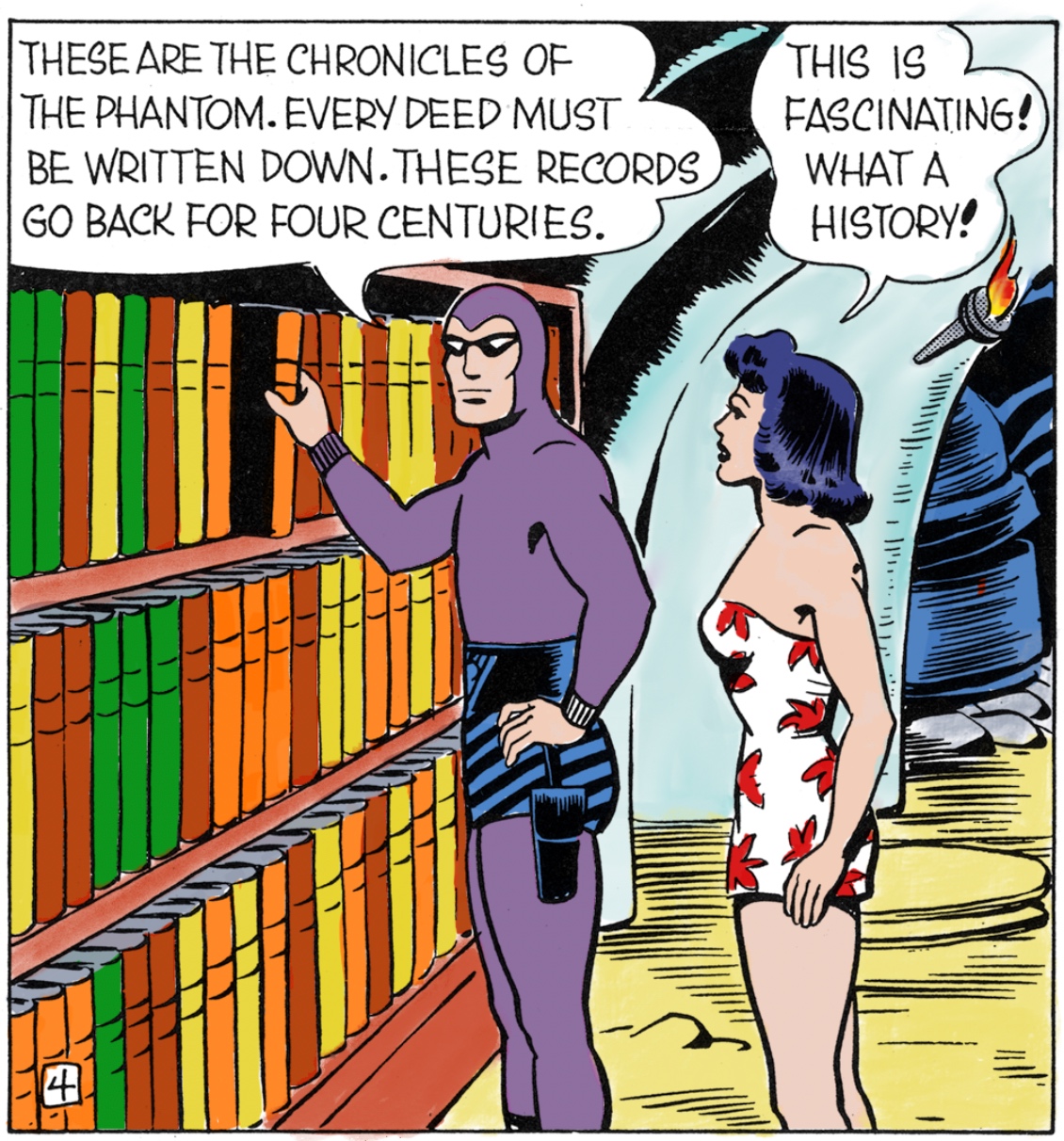
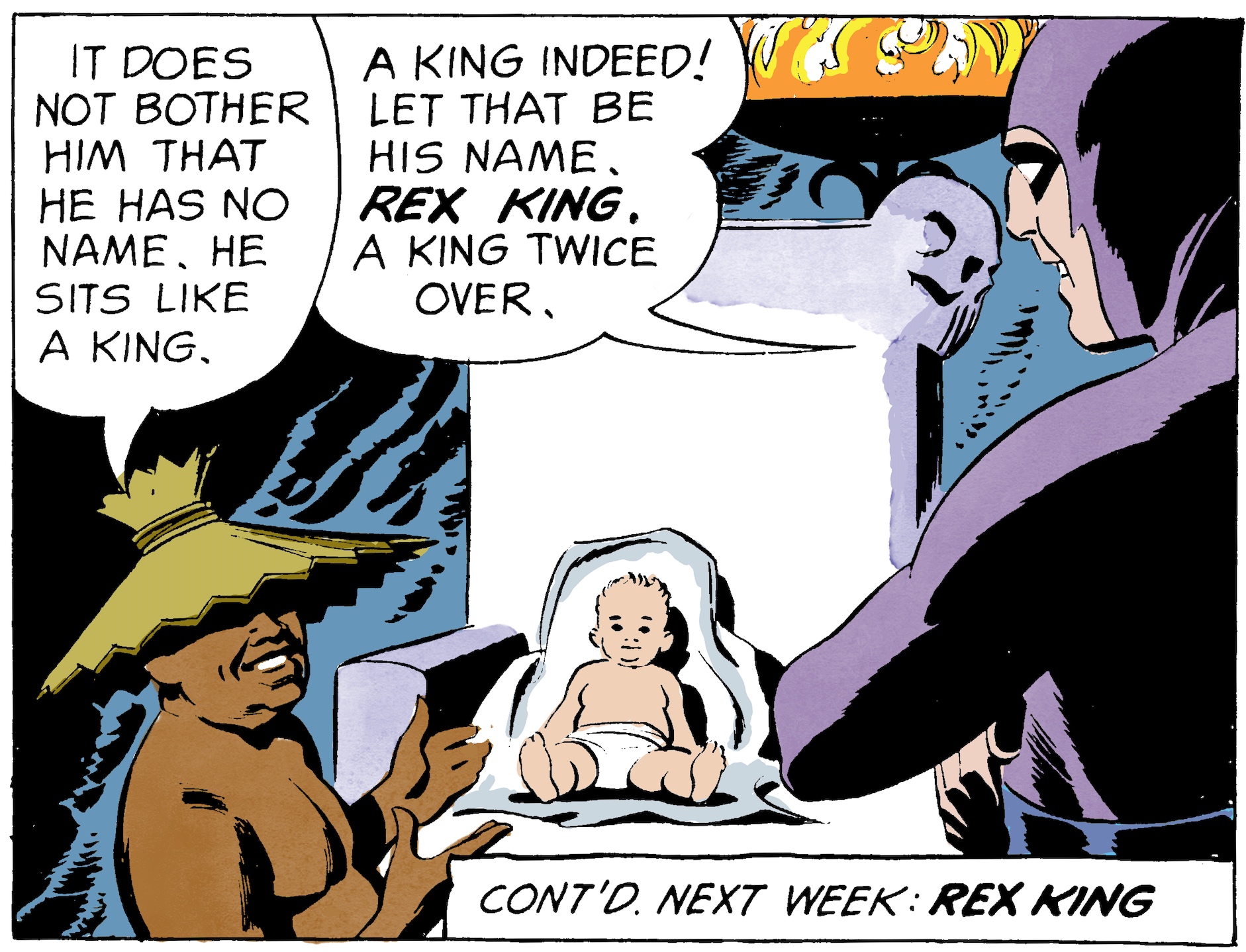
Later, as computers became capable of practical digital colouring, I began to experiment. I wanted to learn the basics, and what better material could I choose than old black-and-white Phantom strips? I already knew and loved the drawings. Working with them in colour gave me another way to enjoy them.
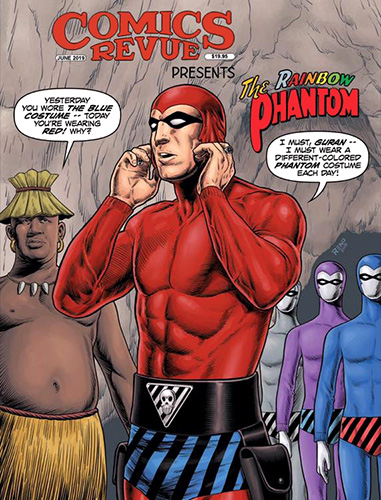
Through my Facebook page, I gradually came into contact with other readers, collectors and people involved with the series. In 2017, my first colouring work was published, with more to follow. You can read more about that in the article about coloring for Frew and editing work in Comics Revue.
What had begun as a private interest was becoming something I could share.
Lunch at Sardi's
Among the people I came to know was Jaime Diaz, a long-time collector of original artwork. He asked whether I would colour some of his originals for fun. I did.
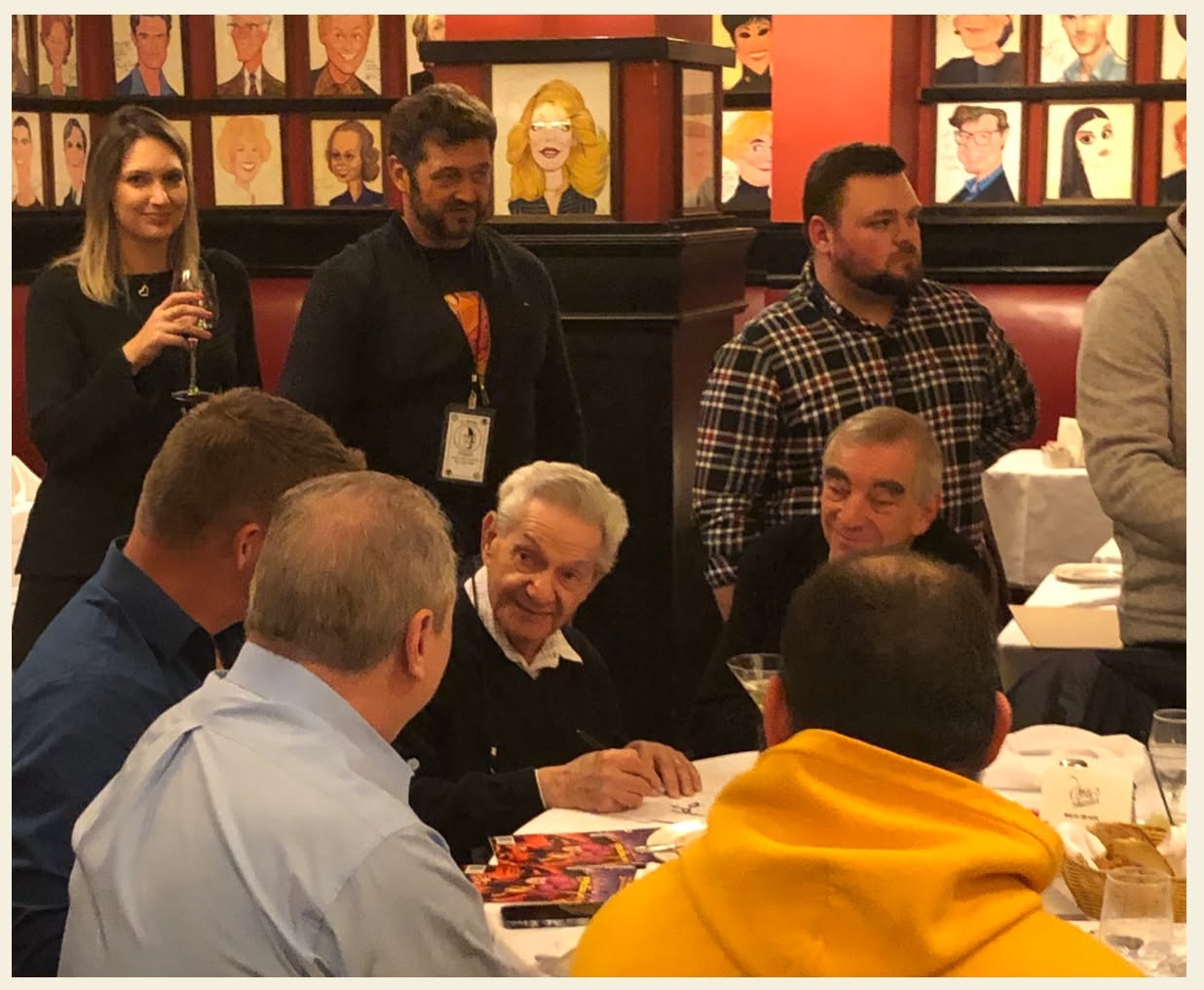
It was Jaime who suggested that I should come to New York for a lunch at Sardi's, one of Lee Falk's favourite restaurants. Sy Barry would be the guest of honour.
I have never been particularly star-struck. However much I admired Barry's work, travelling that far to meet him had not occurred to me. But the idea grew on me, and eventually my wife and I made the journey.
Meeting Sy was a great pleasure. Although surrounded by fans, he still found time for a few kind words with everyone. At the same lunch, I also enjoyed talking with fellow readers and people who wrote or drew Phantom stories.
After so many years of knowing him through his artwork, I had met the man himself.
A memory to keep
Today, 6 years after the Sardi lunch, Facebook keeps me informed about Sy, who is still drawing the Phantom despite his advanced age. I feel he has more than earned the right to lean back and enjoy the knowledge that his work had brought pleasure to readers around the world, but I am pleased to hear he still is able to do what he loves.
There are roughly thirty years between us, but I too have become aware of how quickly the years pass. I do not take another visit for granted.
Whatever happens, that lunch in New York will remain with me. The drawings had already given me decades of enjoyment. Meeting Sy added a personal memory that I will carry for the rest of my life.