When the Phantom ran seven days a week
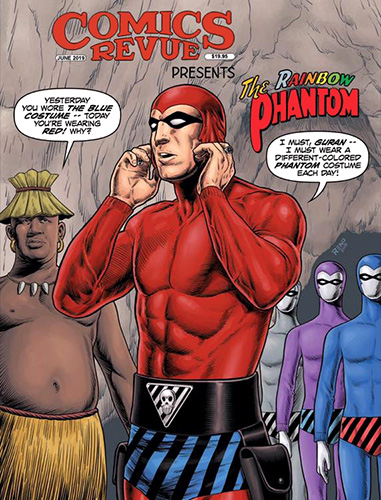
From 20 February 1949 to 7 May 1950, the Phantom’s daily and Sunday strips shared the same adventures. It was an unusual chapter in the strip’s history — and, many years later, the beginning of a five-year project for Comics Revue.
One adventure, seven days
For a newspaper adventure strip with both daily and Sunday editions, telling the same story throughout the week is a familiar arrangement. Milton Caniff’s Terry and the Pirates and Steve Canyon come to mind. Readers following both editions could stay with the characters from Monday through Sunday, rather than switching to a different adventure at the weekend.
That arrangement required some care. Not every newspaper carried both editions, and not every reader saw the strip every day. A Sunday page could therefore include a fair amount of recapitulation, allowing someone who only read the Sundays to keep up. The daily sequence could also remain understandable on its own.
Read together, however, they offered the fullest version. Some repetition was part of the design: it helped connect two reading schedules. What may seem redundant in a collected edition once served a useful purpose in a newspaper.
The Phantom’s brief departure from the rule
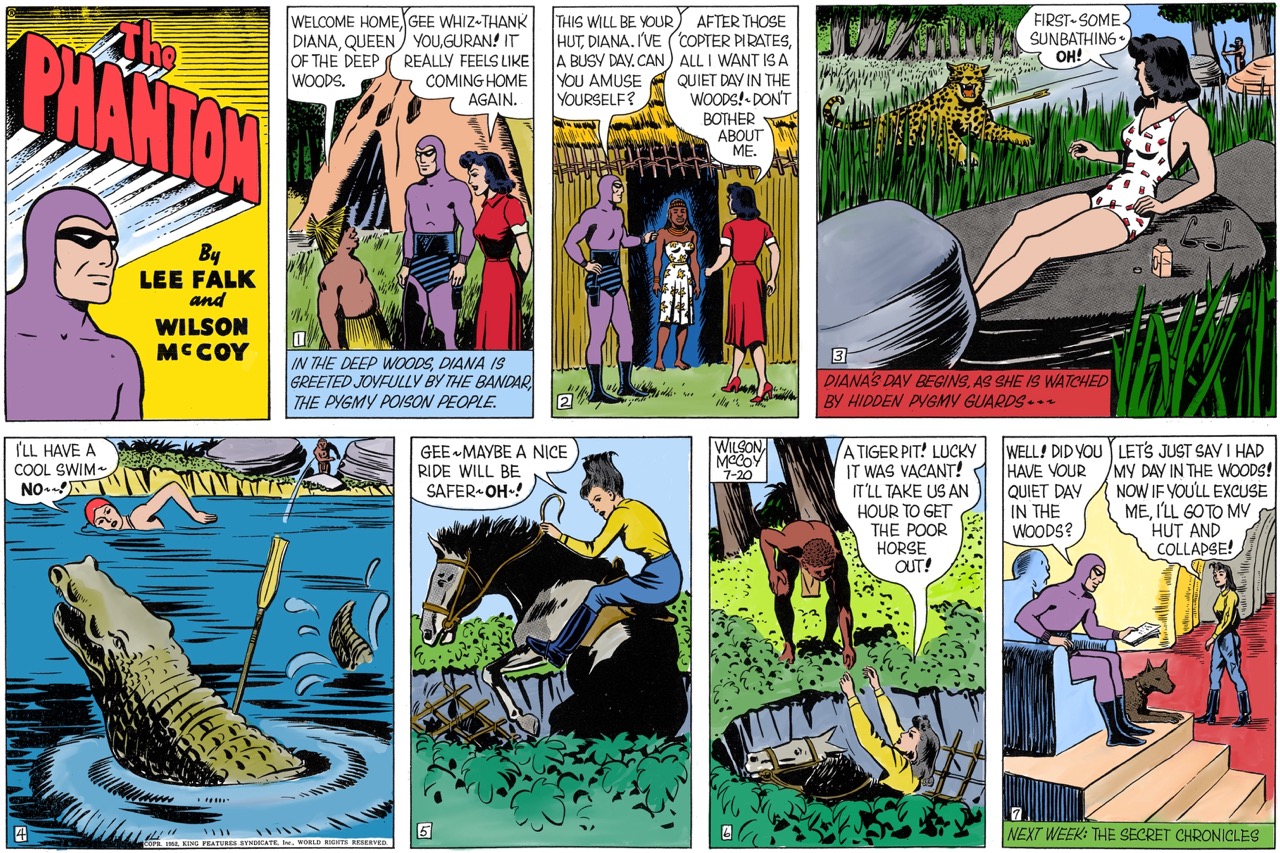
The Phantom normally worked differently. Its daily and Sunday strips told separate stories. Readers accustomed to that arrangement had little reason to look for a connection between the two.
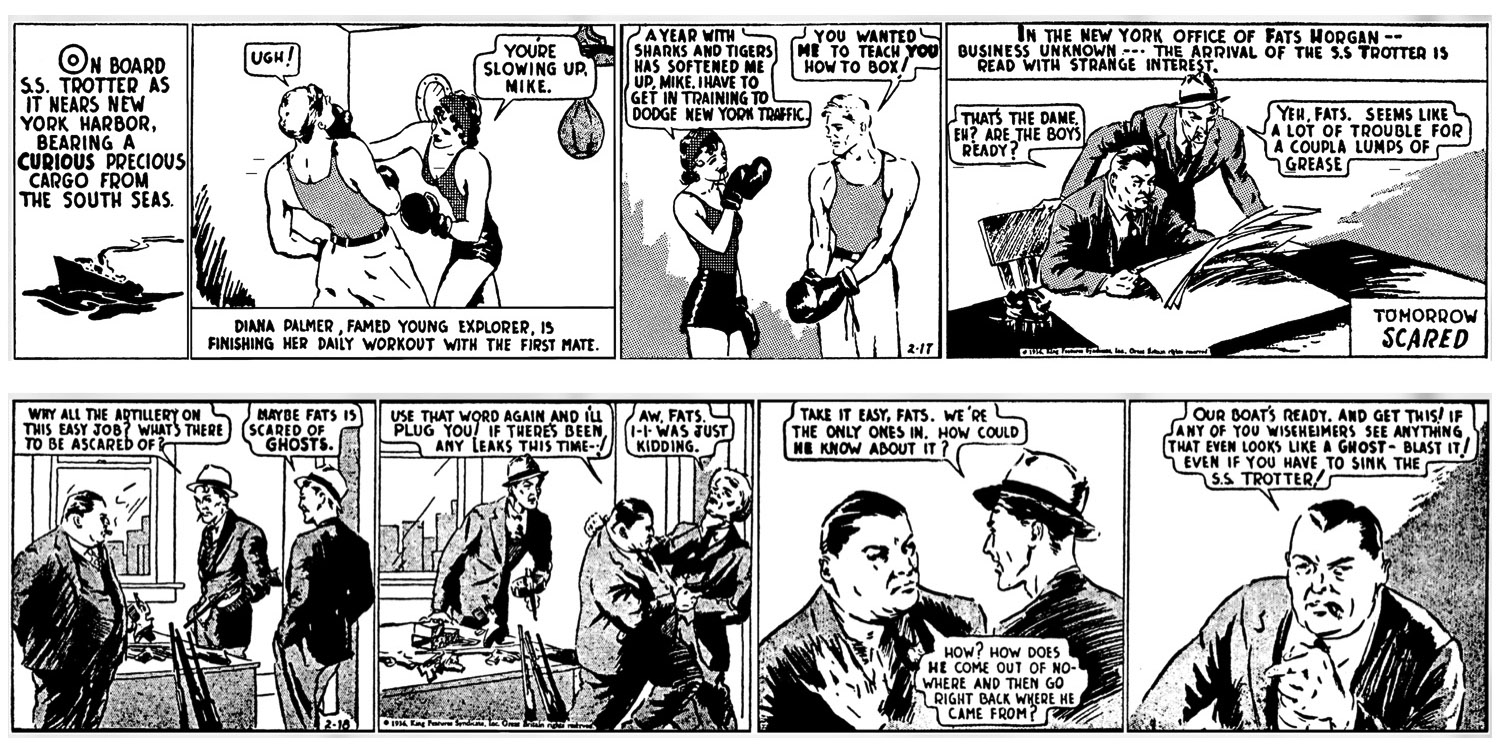
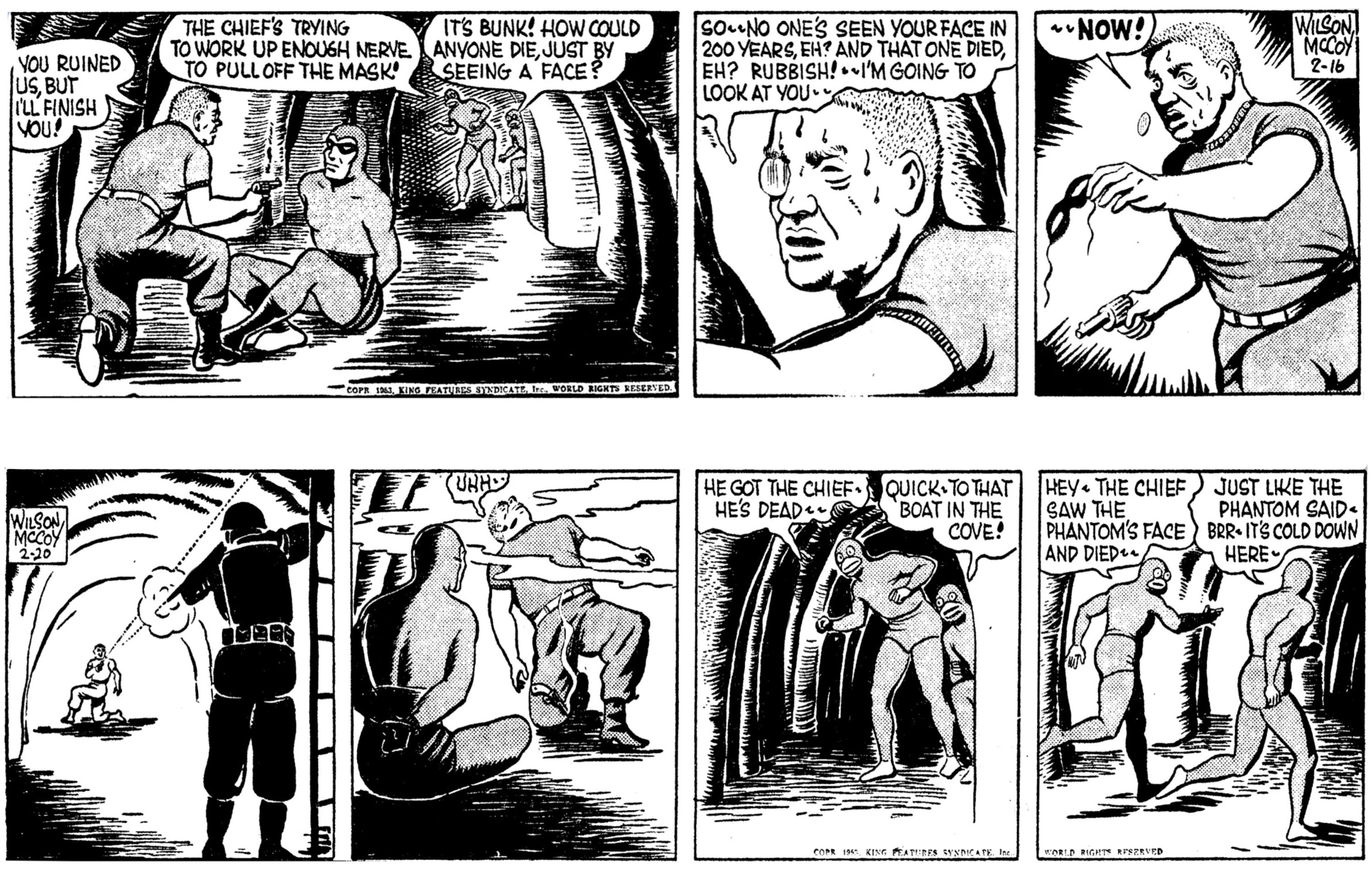
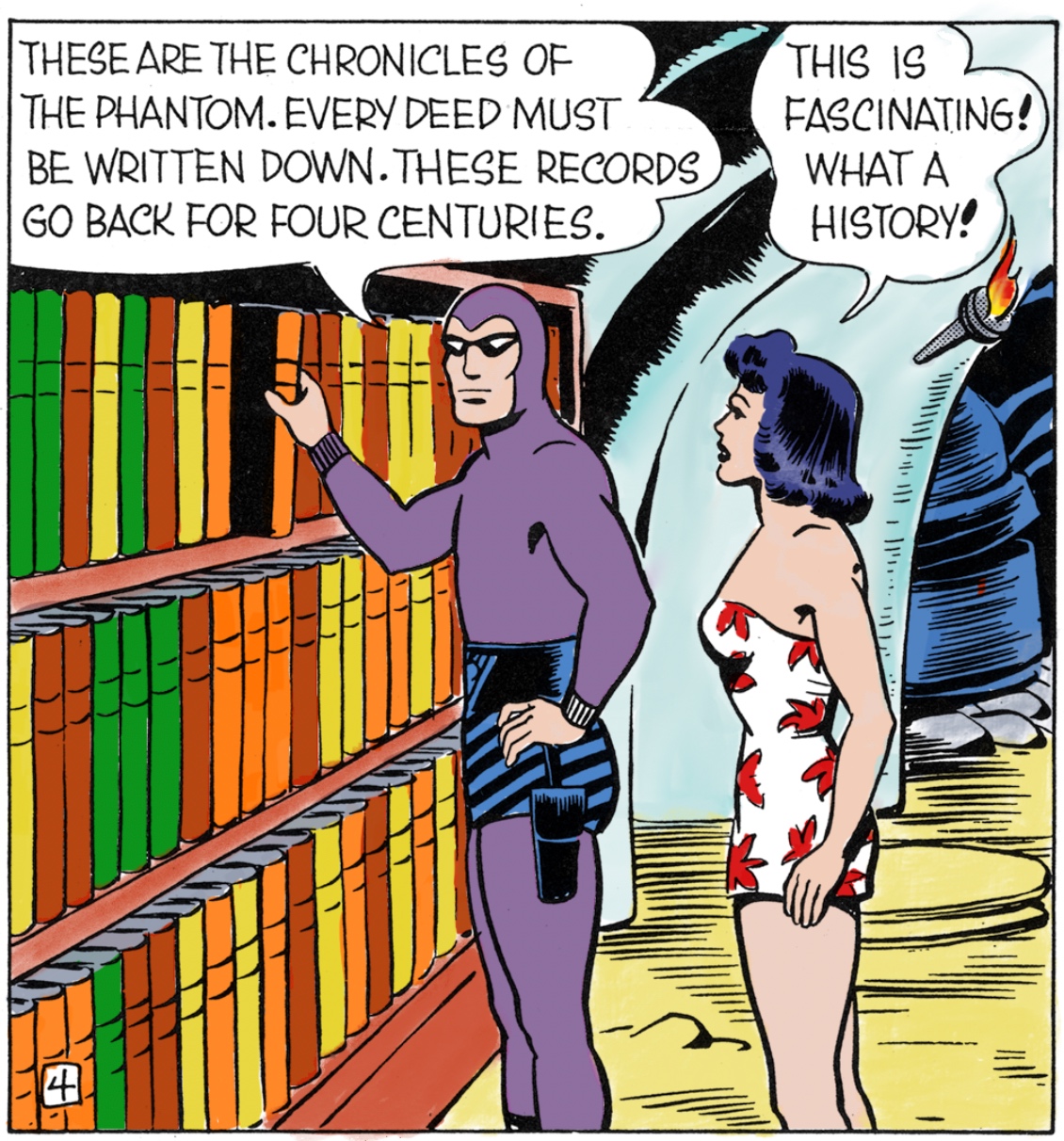
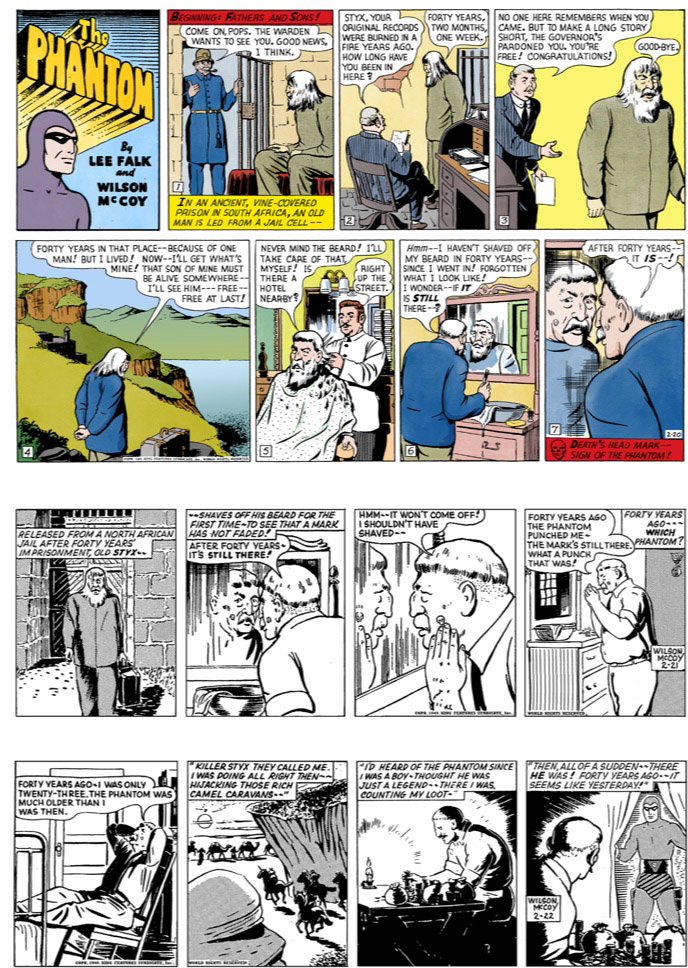
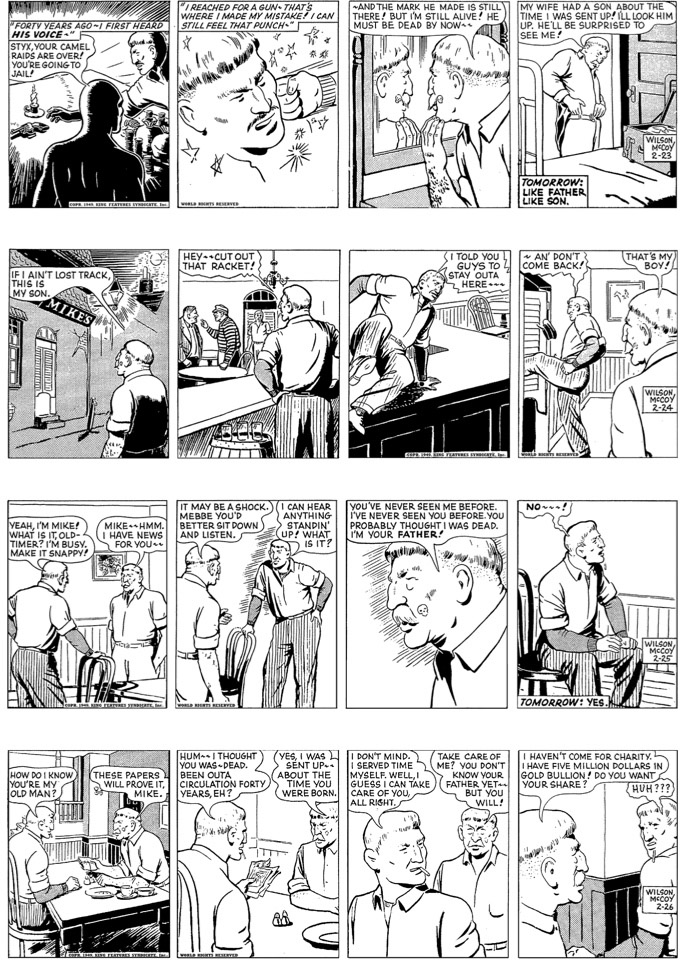
There was, however, an exception. From Sunday, 20 February 1949, to Sunday, 7 May 1950, Lee Falk and Wilson McCoy’s daily and Sunday strips formed a shared narrative sequence. Across this period, both editions followed the same adventures instead of pursuing independent stories.
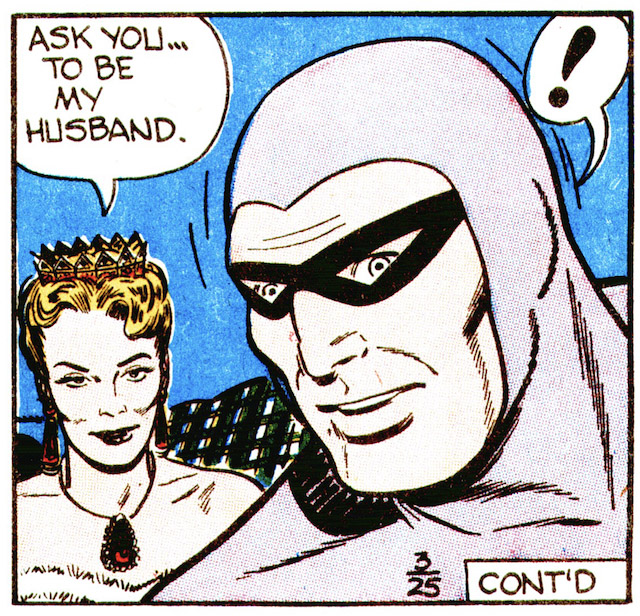
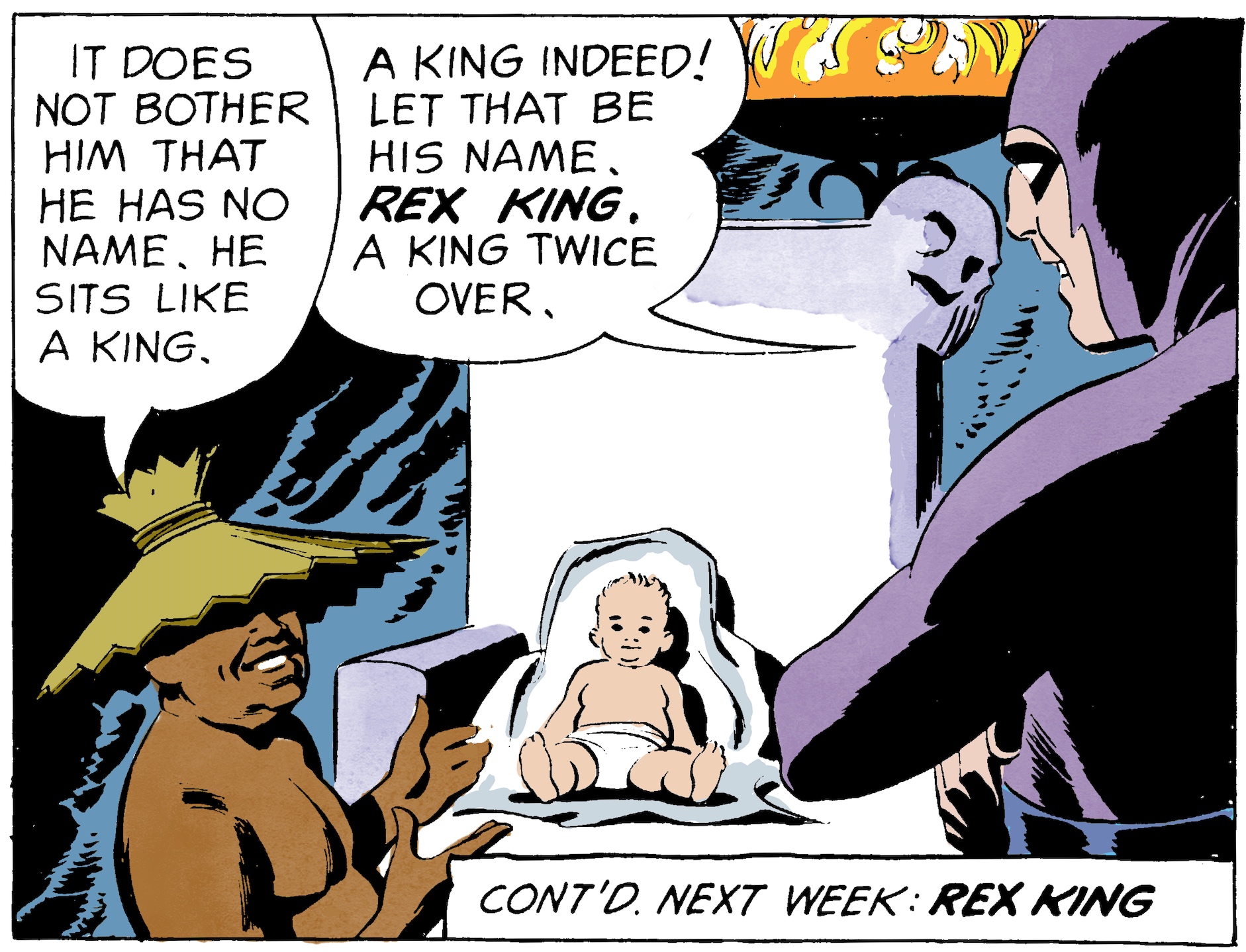
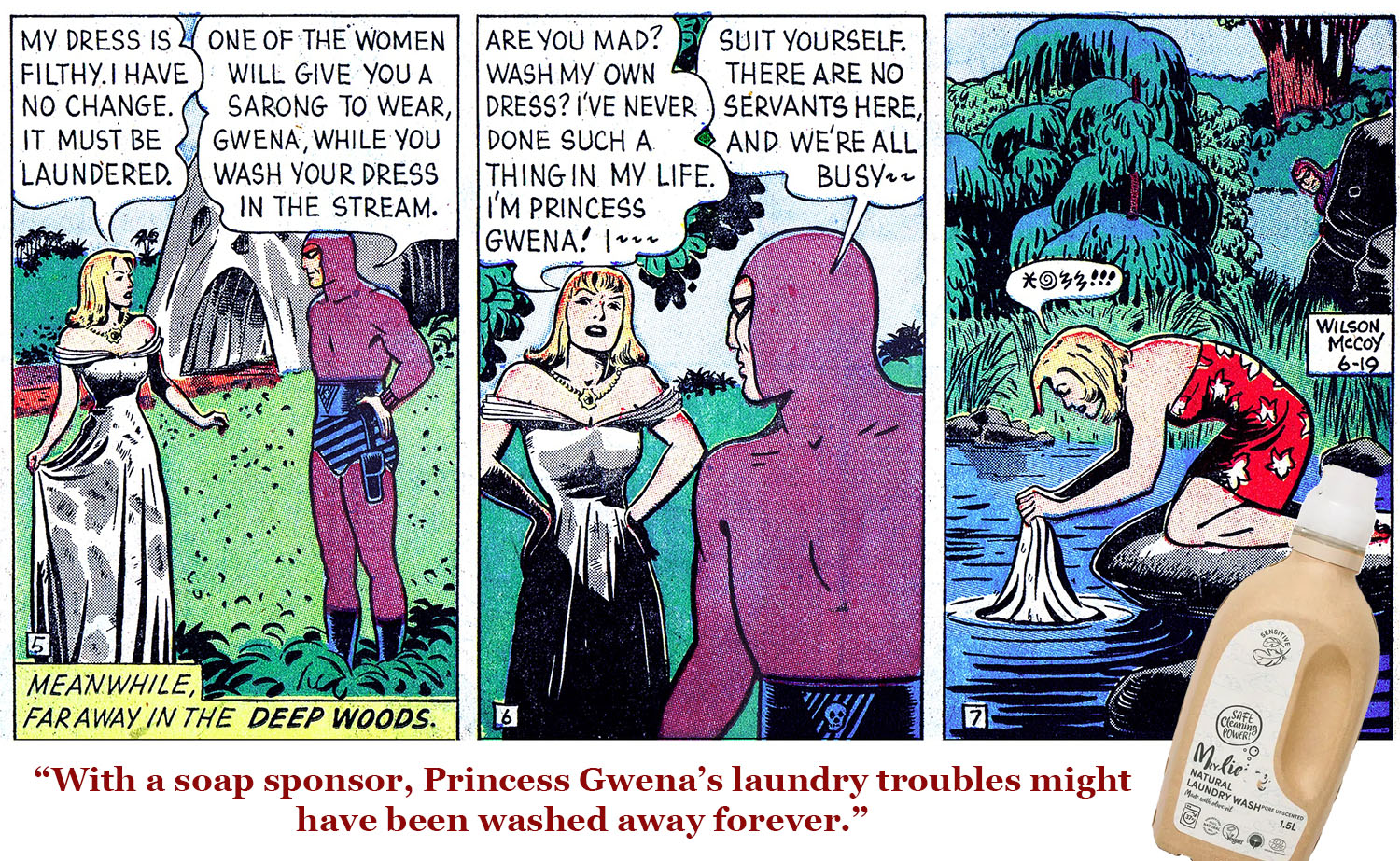
The period covered four stories: Fathers and Sons, The Flirtatious Princess, The Thuggees and The Ape Idol of the Durugu. Thus, “one story throughout the week” describes the way the strip was told, rather than one uninterrupted adventure lasting the entire period.
For a reader with both editions, Sunday belonged between Saturday and Monday. For a later collector, that apparently simple observation makes a considerable difference to how these stories should be assembled.
Why change the arrangement?
This is the question I find particularly interesting. Why did the Phantom adopt a system that other adventure strips were already using? Was it intended as an experiment, or as a permanent change that was later abandoned?
I do not have a definite answer. The strips show us when the arrangement began and ended; they do not, by themselves, tell us what Falk or King Features originally intended. Its short duration makes it tempting to call it an experiment, but that does not establish that it was planned as one.
There were practical considerations in either direction. A shared narrative allowed both editions to follow the same developing adventure. Separate stories gave newspapers greater freedom to carry one edition without any concern about the other. These are reasons why either arrangement could make sense, rather than an explanation of the particular decision made in 1949.
Whatever the original intention, the Phantom returned to separate daily and Sunday adventures. The combined period remained an exception — and exceptions are easily overlooked when a long-running strip is reprinted decades later.
How half the sequence became the familiar version
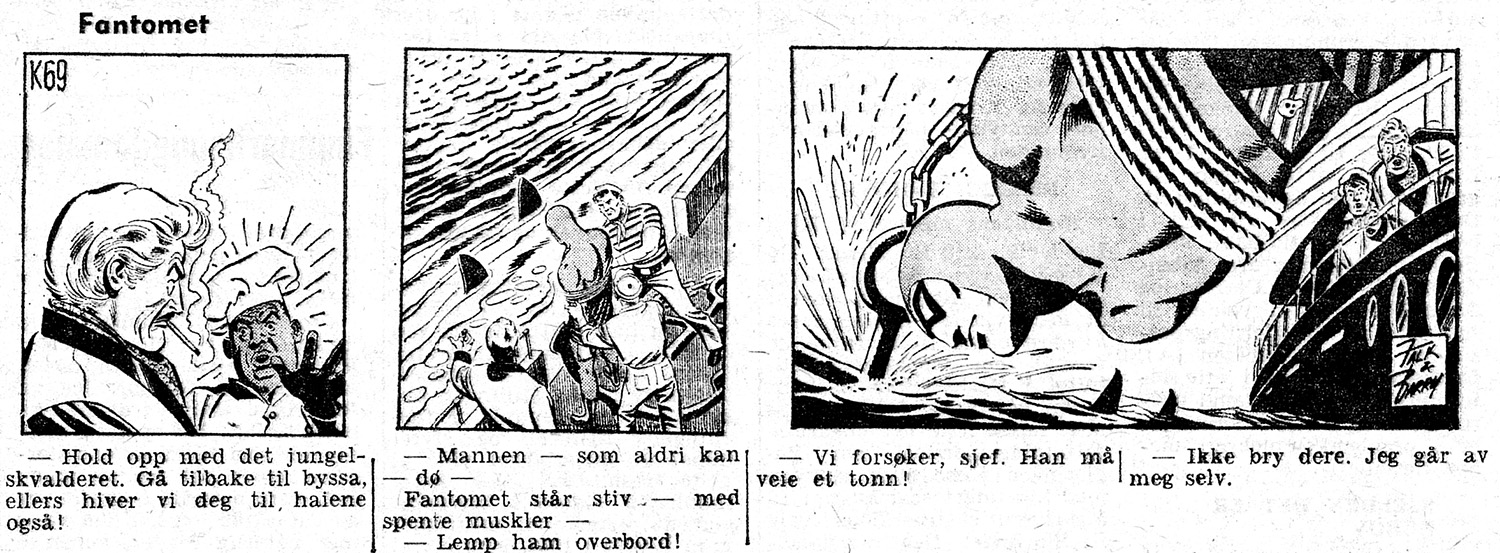
In later reprints around the world, it was not unusual for only one part of this combined run to appear. A publisher might use the daily strips without the Sundays, or present the Sunday sequence on its own.
Why? Part of the answer may lie in the very construction that had made the original newspaper arrangement possible. If one sequence could be read on its own, an omitted Sunday page would not necessarily leave an obvious hole in the plot. Readers could reach the end without realising that another set of pages belonged to the same adventure.
The available source material and established publishing routines may also have played a part. A publisher accustomed to receiving and printing dailies could continue doing so. Since the Phantom normally had separate daily and Sunday stories, treating these strips in the usual way could conceal what made this particular period different.
The result was a curious kind of forgetting. The adventures themselves remained in circulation, while their original seven-day structure became less familiar.
I encountered this among Australian fans who knew these stories through Frew’s daily-strip presentations. Some found it difficult to believe that the Sundays belonged to the same stories. That was understandable: the version they had read gave them little reason to suspect otherwise.
Rick Norwood’s question
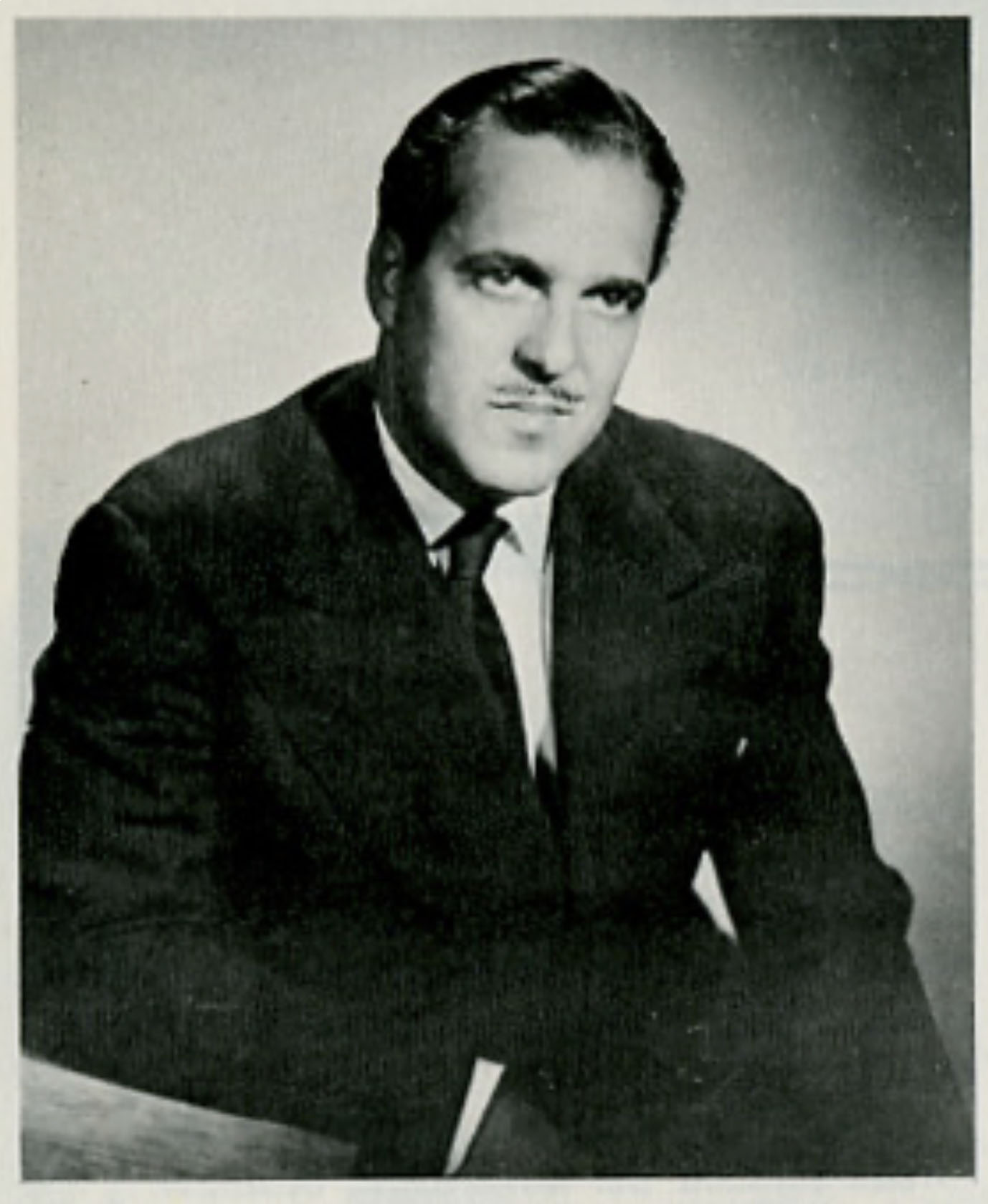
That background made a question from Rick Norwood, editor of Comics Revue, especially welcome. Did I know about this period, and could we put together a good edition of the daily and Sunday strips as a combined sequence?
It was an opportunity to present the adventures in the form that had made them unusual in the first place. But Rick wanted the full versions. Simply gathering the dates and alternating dailies with Sunday pages would not be enough.
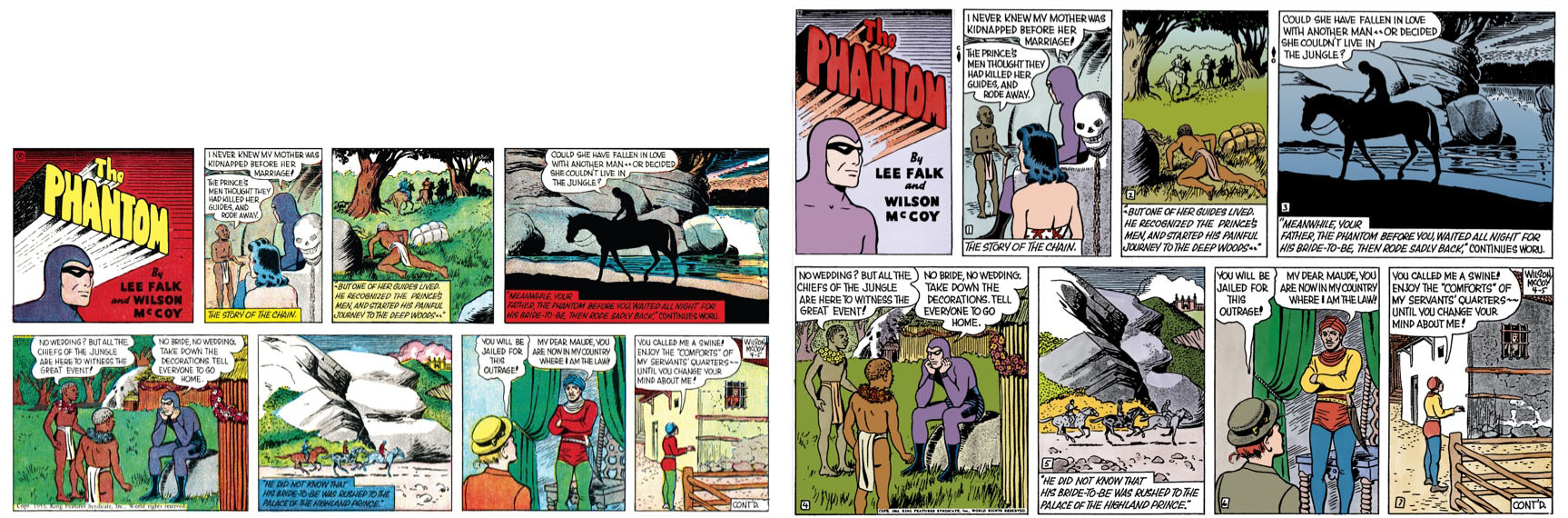
As I describe in The missing part of the picture, the daily strips had been supplied in reduced-height versions, while Sunday pages appeared in different layouts. These practices continued after the Second World War. The material available for a reprint could therefore contain all the necessary dates and still fail to show the drawings in the form we wanted.
Five years to bring the pieces together
For the dailies, the aim was to present the full-height strips. For the Sundays, we wanted the half-page versions, although much of the available material consisted of third-page newspaper tear sheets. Preparing a consistent, readable edition from those sources required considerable work.
There were really two kinds of completeness involved. One concerned the sequence: bringing the daily and Sunday instalments together in their proper order. The other concerned the pictures: presenting the fuller artwork rather than accepting the reduced versions simply because they were easier to obtain.
My work on the project extended over five years. That is a long commitment to a run originally published in little more than a year, but the finished result made it worthwhile. I was very pleased with what we achieved.
I have written more about the practical side in Bringing the classic Phantom back to print. For this particular project, the special satisfaction was seeing both parts of the original narrative brought back together, with the drawings given the room they deserved.
Reading the whole week again
As an aside, Dan Barry’s Flash Gordon also had a period in which its daily and Sunday adventures ran together. The relationship between the two editions is worth watching in any long-running newspaper strip; it need not remain the same throughout its history.
For the Phantom, this brief period deserves to be remembered on its own terms. A daily-only reprint can be familiar, enjoyable and easy to follow. The combined presentation still offers something more: the chance to read the adventures across the whole week, as Falk and McCoy arranged them at the time.
That was what made the Comics Revue project worth doing for me. We were bringing back a way of reading these stories that many later readers had never had the opportunity to experience.