← Article overview

Bringing the classic Phantom back to print

A personal account of recolouring Sunday pages for Frew and restoring Wilson McCoy’s strips for Comics Revue — and of the practical choices involved when the surviving material is less than ideal.

How it began

When I took on my first colouring assignment for Frew, for their 2017 Annual, I had no idea it would mark the beginning of nearly ten years of work and more than a thousand pages.

It began with a question from my contact at Frew: could I find suitable pages for a reprint of a Wilson McCoy Sunday story? I had the material, but the quality was rather poor. Instead of simply supplying what I had, I offered to recolour the story for him.
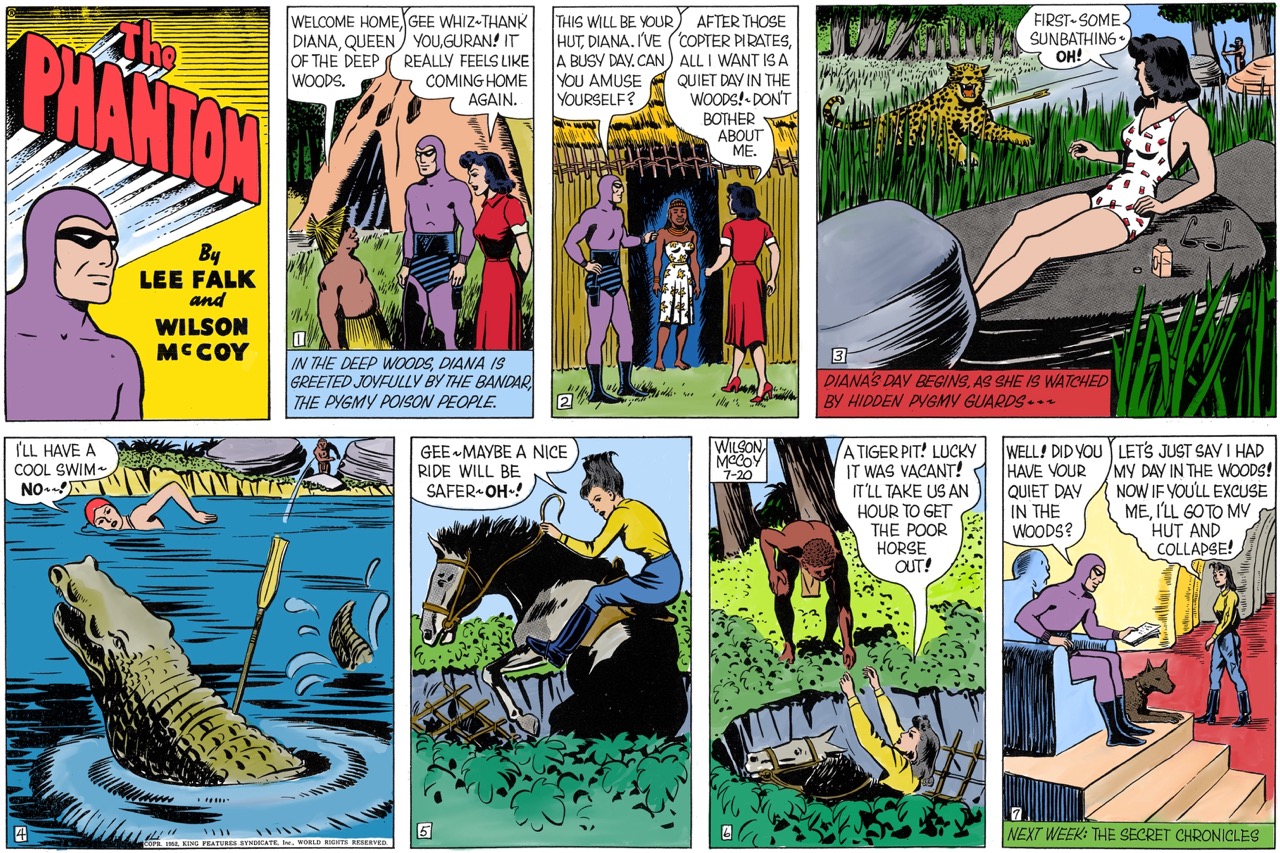
Placeholder for a complete comic strip
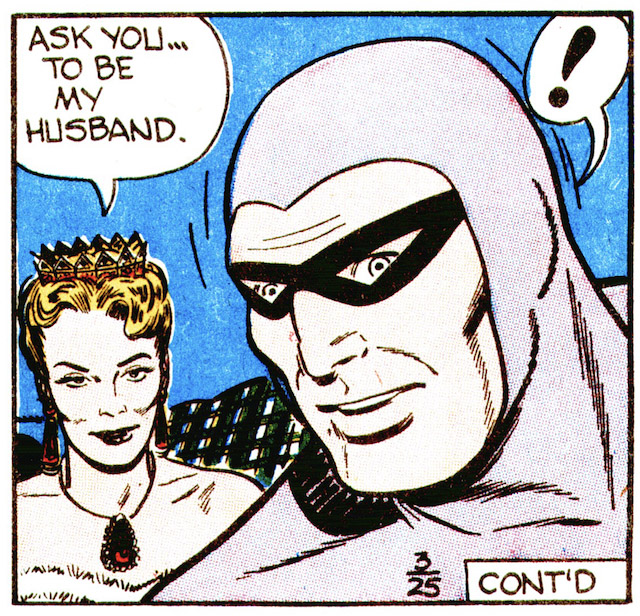
S032 – The Female Phantom Original: 20 Jul 1952 – 12 Oct 1952 Writer: Lee Falk Artist: Wilson McCoy

For that first assignment, I followed the original colours almost exactly. My aim was to prepare the pages for a fresh printing while keeping their appearance as close as possible to the old Sunday strip.

I took the next invitation as a sign that the result had been well received. Not long afterwards, Frew asked me to undertake a considerably larger colouring project covering several stories for their first trade paperback, Frew TPB 1. What had begun as an offer to help with one story was becoming an ongoing part of my work.

There is something special about this kind of work. A story may have survived in collectors’ files for decades, yet the material available for a new edition can be far from ready for print. Between the old newspaper page and the finished book lies a series of decisions about what can be preserved, what needs attention and how best to present the strip.
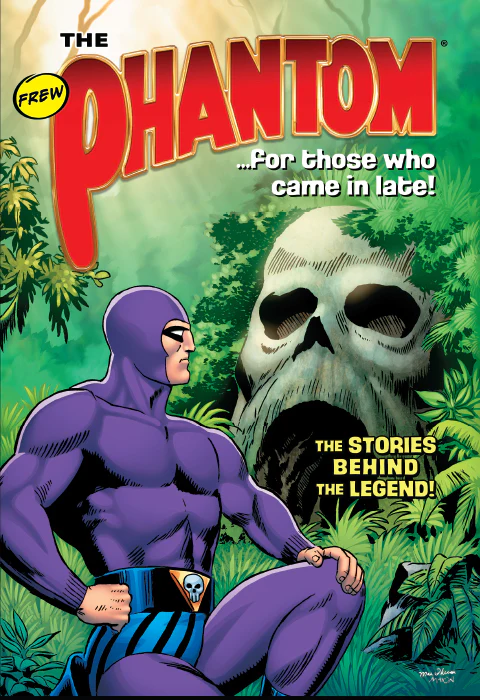
Frew's TPB #1 - I colored around 85 pages in that one - flying start.

Working with what survives

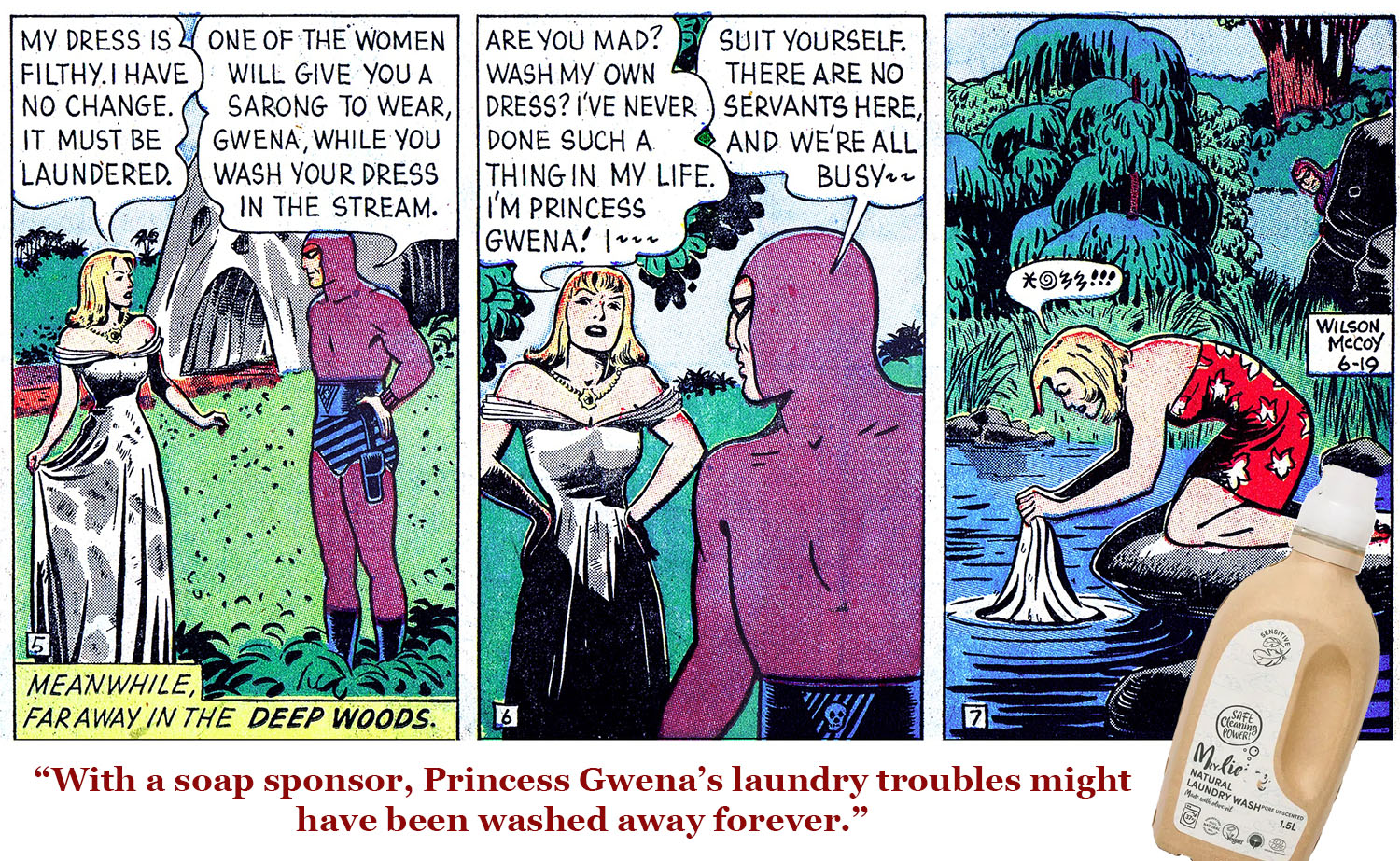
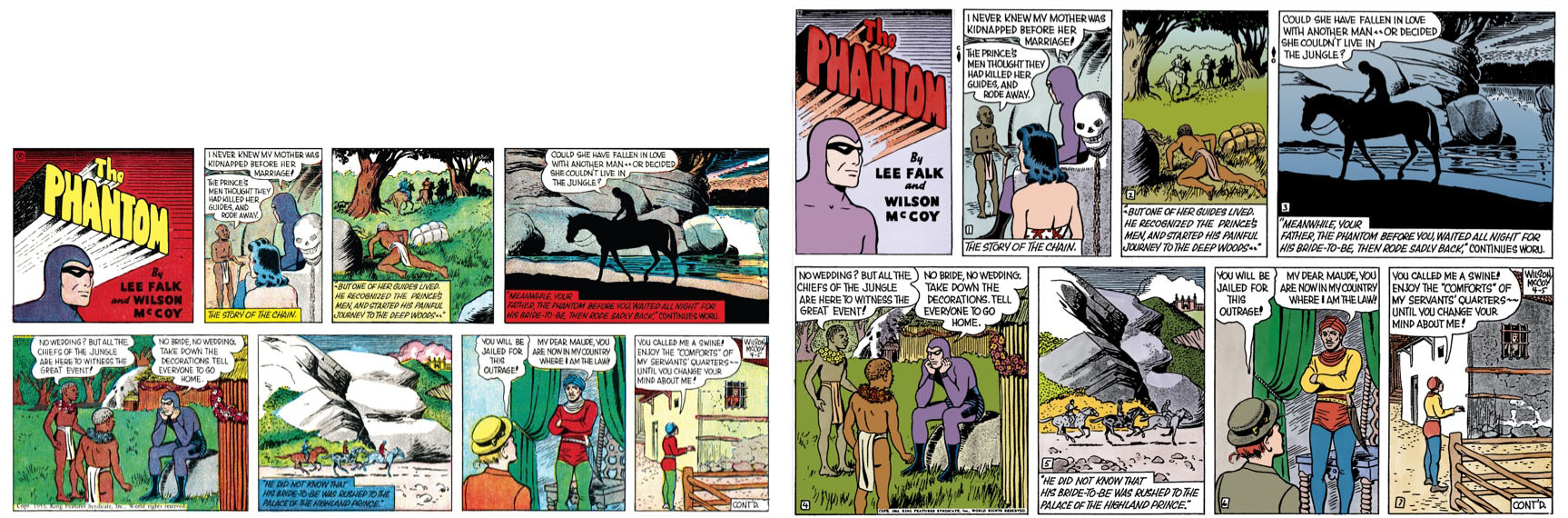
Preparing Sunday strips for reprinting, as in the Frew projects, can be difficult. Much of our source material consisted of newspaper tear sheets from a private collection, mostly in the third-page format. The print quality was often poor, and gaps in surviving collections can make it difficult to assemble a complete story.

Having an old printed page does not necessarily mean having a good source for reproduction. It may show the original colours and page layout clearly enough to serve as a reference, yet still be unsuitable for direct reprinting. Even a substantial collection may be missing some of the pages needed.

In these circumstances, recolouring can be the most practical solution. My usual aim is to follow the original colours as closely as possible. The surviving pages provide a guide, even when their print quality prevents them from being used directly in a new edition.

Colour as part of the original character

Recolouring a classic strip gives the person doing the work considerable freedom. For this project, however, the point was to use that freedom with restraint. A newly coloured page should still belong to the story and to the visual world in which it was first presented.

Colour affects more than the appearance of individual objects. It helps separate figures from their surroundings, directs attention within a panel and contributes to the atmosphere of a scene. Changing it can alter the way a familiar drawing is read, even when every black line remains in place.

Keeping close to the old colours therefore mattered. The pleasure lay in making the strip readable and attractive again while retaining its familiar character. A clean new reproduction and a respect for the earlier presentation could serve the same purpose.

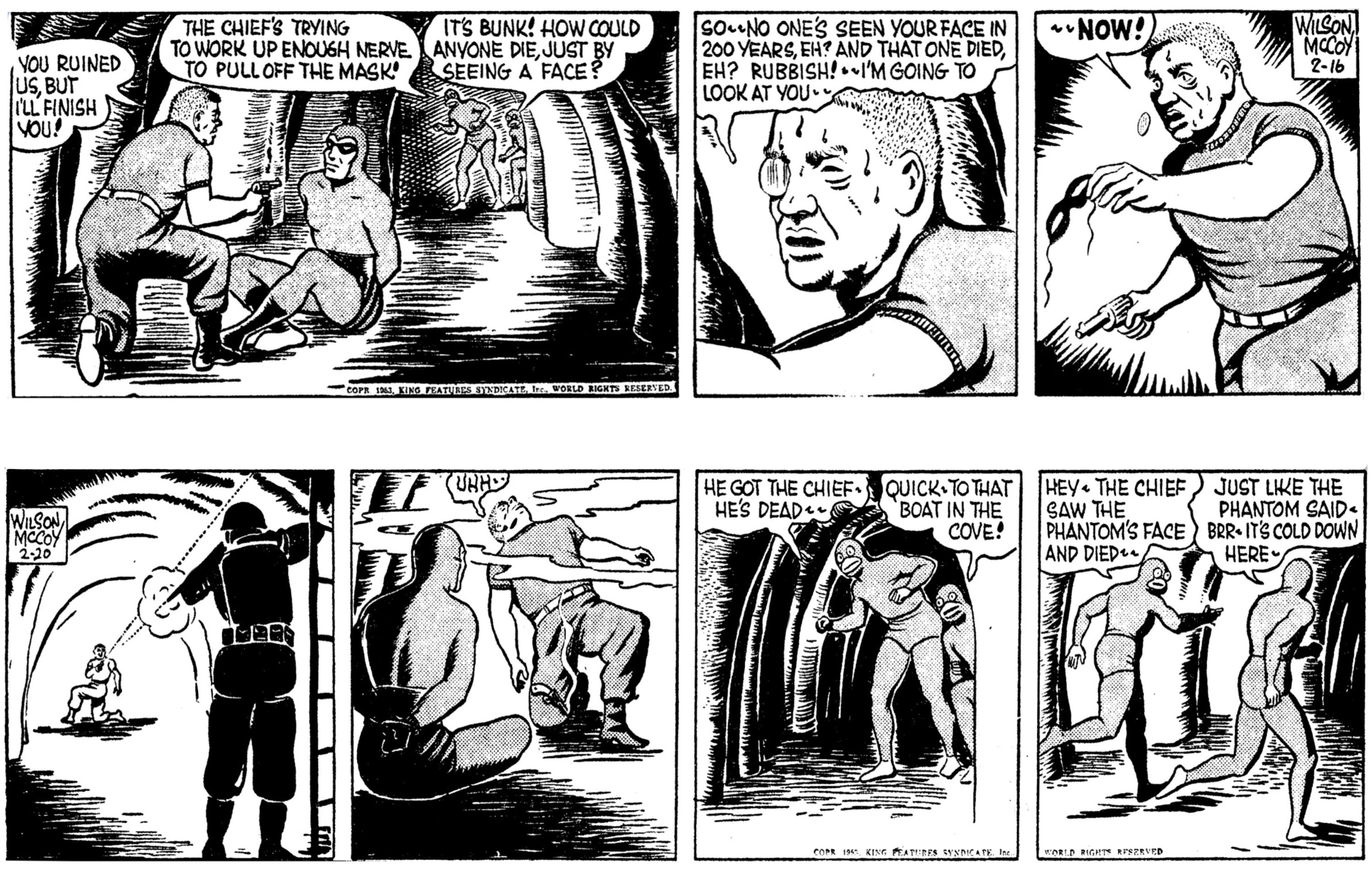
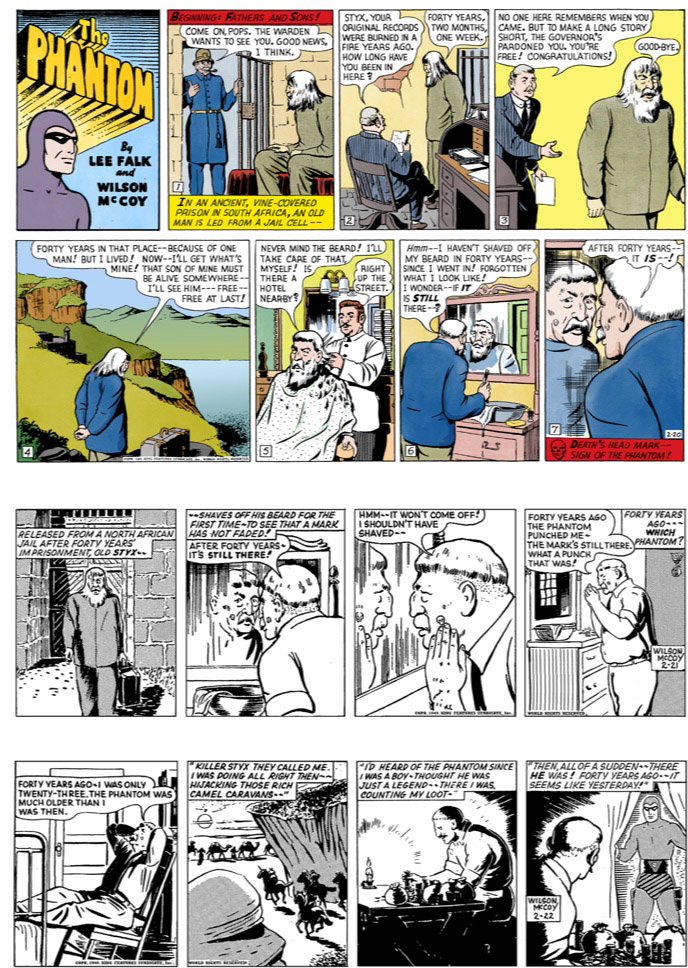
Much of my restoration work was for Comics Revue, including five years spent bringing the combined daily and Sunday story together, with Sundays restored to half-page format. I also restored many of Wilson McCoy’s reduced-height strips to their full height, recovering artwork and giving the scenes their original space.

The reward is in the reading

The work behind a reprint is easily overlooked once the finished pages are in a reader’s hands. That is understandable: the reader has come for the Phantom, the story and the drawings.

For me, seeing those pages read again is a large part of the reward. The Frew assignment and the longer commitment to Comics Revue involved different material and different practical problems, but both offered the satisfaction of returning classic strips to print.

Readers interested in classic McCoy may find these editions worth seeking out — both for the adventures themselves and for the opportunity to look more closely at the artwork.
Do you remember this differently?

Share a memory or suggest a correction. Contributions go privately to the editor and are not published automatically.

Continue exploring

Portrait of Wilson McCoyArtists · Restoration

The missing part of the picture

Wilson McCoy, wartime paper shortages and the search for complete Phantom strips.

Read article →
First image in the comparisonStories · Restoration

When the Phantom ran seven days a week

The combined daily and Sunday adventures of 1949–1950, and five years of work bringing them together for Comics Revue.

Read article →
The first Phantom strip I saw, was a Sy Barry strip.Stories · Personal memories

Phantom Stories That Have Stayed with Me

Personal favourites from a lifetime of reading the newspaper strip.

Read article →
All articles
Panels from the first Phantom daily strip, dated 17 February 1936Stories

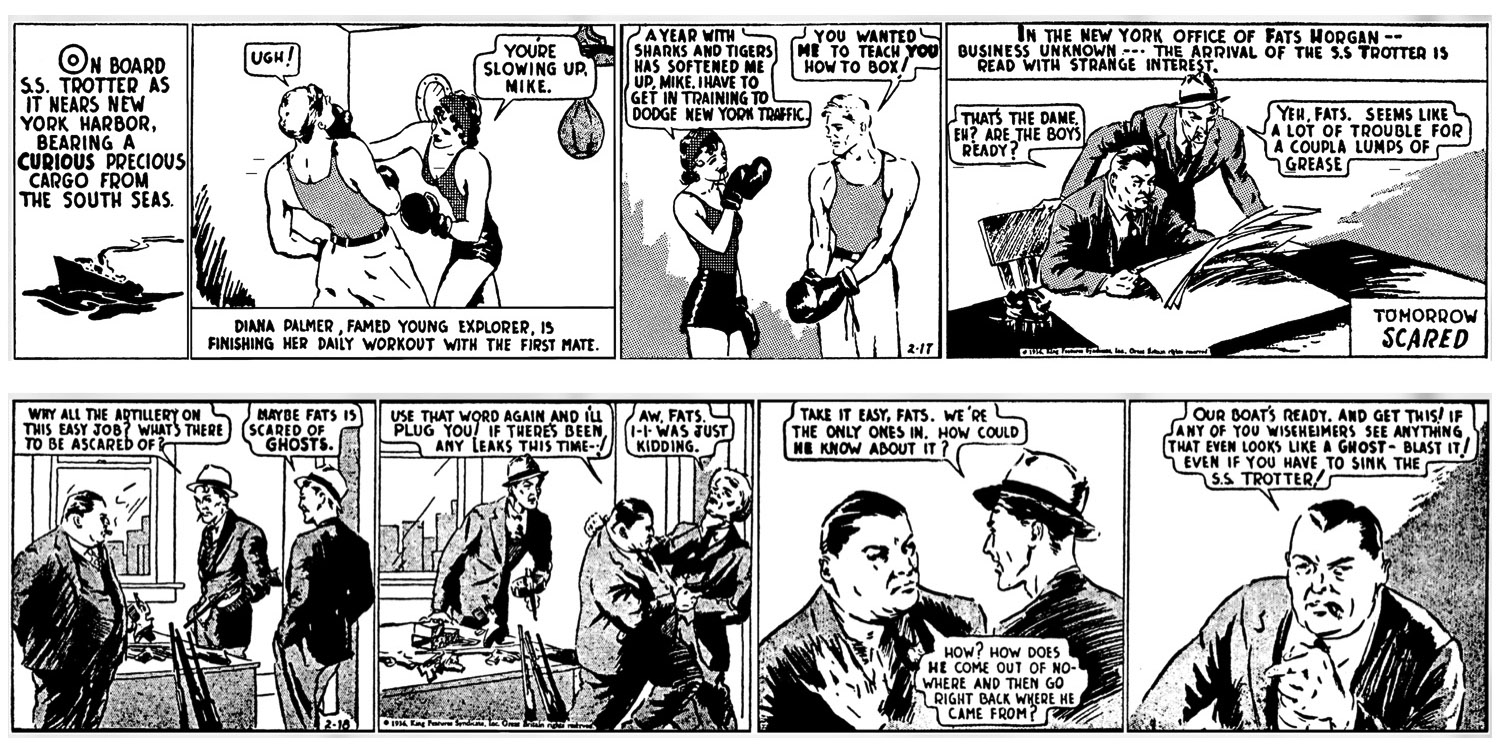
The Phantom introduction

An introduction to The Phantom and a guide to the Phantom Index.

Read article →
Portrait of Lee FalkArtists

Whose Phantom?

Lee Falk’s legacy, the newspaper creators and the limits of change — a personal view, 1936–1999.

Read article →
Portrait of Wilson McCoyArtists · Restoration

The missing part of the picture

Wilson McCoy, wartime paper shortages and the search for complete Phantom strips.

Read article →
Placeholder for a complete comic stripArtists

When the Ghost felt more mysterious

Wilson McCoy, quiet authority and strength beyond appearances — a personal reflection.

Read article →
First image in the comparisonStories · Restoration

When the Phantom ran seven days a week

The combined daily and Sunday adventures of 1949–1950, and five years of work bringing them together for Comics Revue.

Read article →
The first Phantom strip I saw, was a Sy Barry strip.Stories · Personal memories

Phantom Stories That Have Stayed with Me

Personal favourites from a lifetime of reading the newspaper strip.

Read article →
eyes behind the maskArtists

Bill Lignante and The Phantom

The eyes behind the mask, the succession after McCoy and how Sy Barry received both newspaper features.

Read article →
The Phantom reading the ChroniclesArtists · Stories

Behind the familiar names

Other hands in the writing and artwork, two versions of the Phantom’s childhood, and the questions raised by his wartime adventure.

Read article →
The Chronicles with all the Phantom history.The Chronicles

Twenty men before the present Phantom

The first twenty Phantoms: lifetimes, families and important stories, with KFS, Team Fantomen and Frew distinguished.

Read article →
The first strip I ever saw, was a Sy Barry strip.Artists · Personal memories

The Phantom, Sy Barry and me

From childhood newspaper strips and colour albums to collecting, colouring and a memorable meeting in New York.

Read article →
The Phantom reading the ChroniclesStories · Personal memories

Rex: The Boy Who Was Simply There

Memories of the Phantom’s foster son, his place in the jungle adventures and his later life in Baronkhan.

Read article →
Is the Phantom strip a soup opera?Stories

Is the Phantom a Soap Opera?

The long courtship, the wedding and the difference between an adventure serial and continuing relationship drama — a personal view.

Read article →
Norwegian Fantomet annual cover showing the blue-costumed Phantom facing a gorillaStories · Personal memories

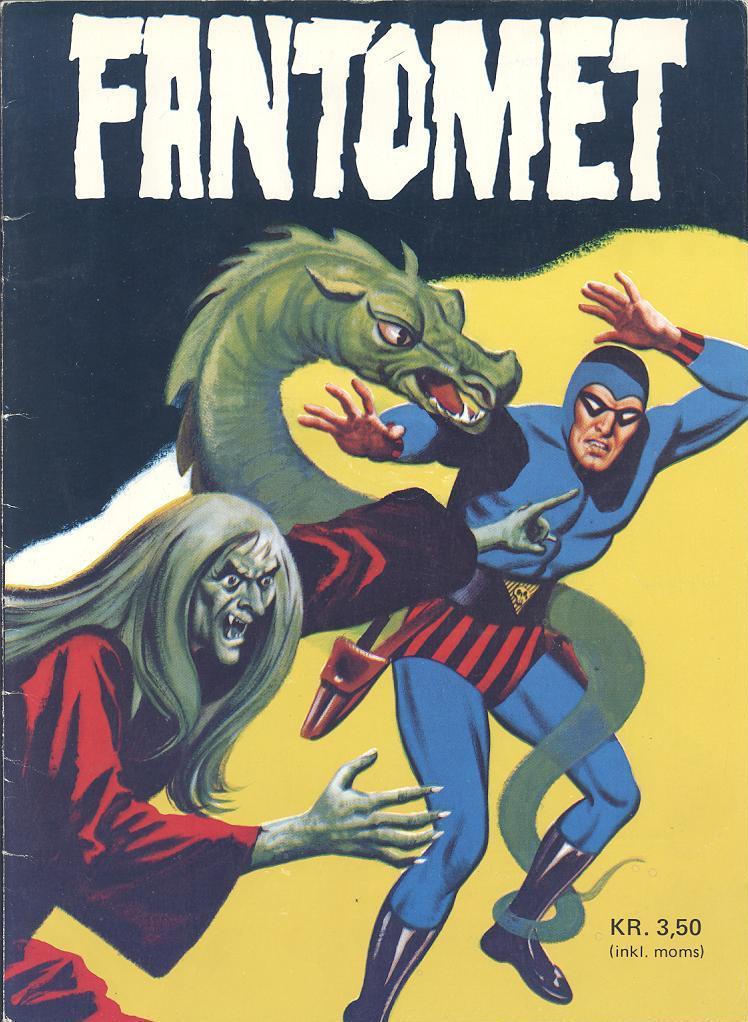
The Phantom in Colour — a Personal Preference

Norwegian memories, colour and black-and-white traditions around the world, and my own colouring work for Frew.

Read article →
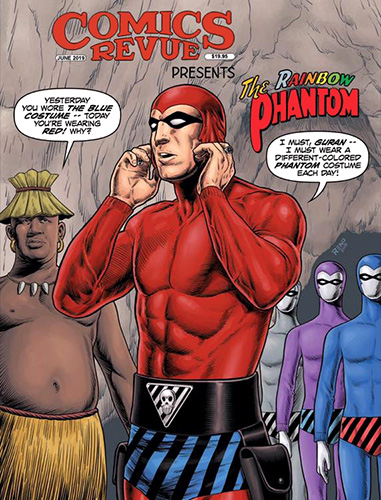
As a gimmick, editor of Comics Revue use this cover as an example for the many colors on the Phantom's suit.Design & Appearance

The Phantom’s Costume: Why So Many Colours?

There is only on "The Phantom", but still several colors on his suit! Why ...?

Read article →
Tony de Paul, writer on the Phantom strip after Falks death.Artists · Personal memories

Tony DePaul: Writing the Phantom After Falk

On 15 October 2026, Tony DePaul announced that King Features had ended his assignment as writer of The Phantom newspaper strips. In his account, That's it for me and the Phantom, Part II, he makes a clear distinction from the contract dispute in 2017: then he had quit; this time the decision was the syndicate's. He says Amy Anderson told him on 14 October that King Features wanted to take the strip in a new direction and attract younger readers.

Read article →